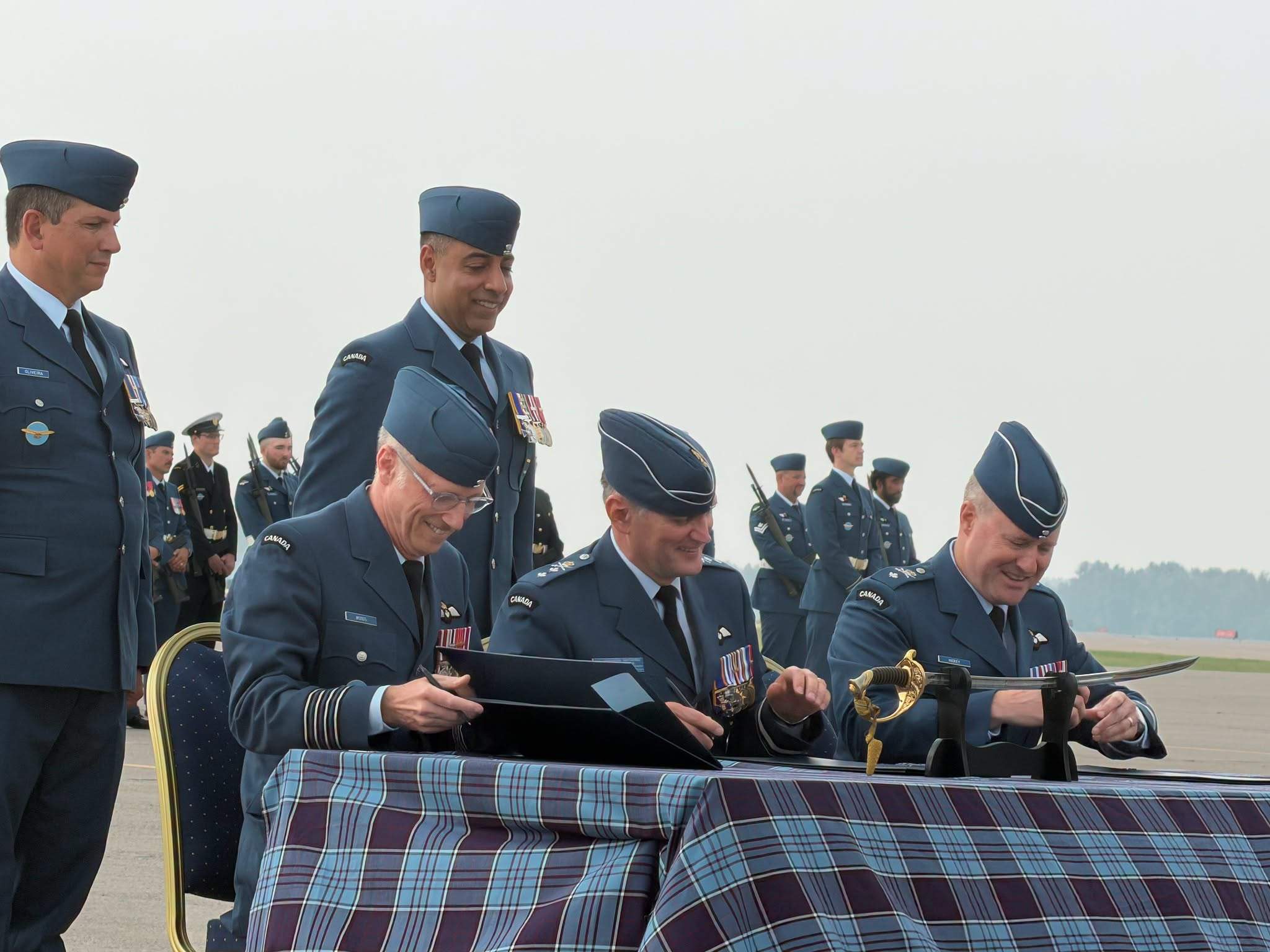
Leadership transitions in high-readiness military installations are rarely administrative paperwork. They represent a forced realignment of operational priorities, institutional capital, and technical integration schedules. When Brigadier-General Mark Hickey handed command of 4 Wing and Canadian Forces Base Cold Lake to Colonel Tim Woods on July 22, 2026, the ceremony marked more than a traditional change of command. It established a hard boundary between two distinct operational eras: the stabilization-and-modernization phase and the incoming asset-integration phase.
The Economic and Operational Cost Function of Base Command
A military wing commander operates under a severe multi-variable optimization problem. The variables include asset availability rates, pilot flight-hour generation, community infrastructure strain, and national procurement schedules.
During Hickey's tenure from July 2024 to July 2026, the objective function prioritized throughput bottlenecks in human infrastructure. The activation of the 4 Wing Dependent Medical Clinic and the expansion of the Military Family Resource Centre daycare facilities were not passive community investments. They were retention mechanisms. In remote postings like Cold Lake, Alberta, family support services dictate personnel attrition rates. By lowering domestic friction, the base maintained operational readiness across its tactical fighter squadrons without suffering chronic talent bleed.
Simultaneously, infrastructure consolidation projects laid the groundwork for national-level capital allocation. Bases cannot absorb fifth-generation tactical aircraft through simple parking space reallocation. They require secure data environments, specialized maintenance hangars, and altered fuel storage dynamics. Hickey's administration absorbed these capital expenditures, clearing the operational runway for the next leadership cohort.
The Technical Imperative of the Incoming Command
Colonel Woods inherits an installation at a critical junction in the Canadian Armed Forces procurement timeline. With over 4,500 hours of flight experience and direct background in the Fighter Capability Office and Washington-based next-generation fighter programs, Woods' appointment signals a shift from broad infrastructure preparation to narrow technical execution.
The primary mandate of the incoming command centers on the fifth-generation transition matrix. Moving from legacy platforms to advanced tactical fighters involves three simultaneous systemic shifts:
- Data-bus and secure communication architecture overhaul
- Maintenance protocol transformation from mechanical modularity to low-observable skin maintenance
- Re-architecting airspace management and training simulation parameters to match sensor fusion capabilities
The cost of failure in this transition is not merely budgetary; it is an immediate degradation of North American Aerospace Defense Command (NORAD) response metrics and international expeditionary commitments. Woods must maintain 100% operational tempo on legacy fleets while constructing parallel pipelines for new capability testing and personnel conversion.
The Regional Economic Feedback Loop
Base operations in northeastern Alberta function as a massive macroeconomic engine. 4 Wing Cold Lake acts as the single largest economic driver in the region, creating localized supply chains, municipal partnerships, and employment dependencies.
The transition of command directly affects regional procurement stability. When infrastructure projects are consolidated or accelerated at the national level, local municipal authorities must synchronize housing, utility, and educational planning. The friction observed in local zoning approvals and temporary work camp permits near Cold Lake demonstrates the acute pressure placed on municipal civic infrastructure by military population fluctuations. Woods' operational leadership team must actively manage civil-military interfaces to prevent regional supply chain bottlenecks from restricting base personnel expansion.
Strategic Execution Vector
The operational success of 4 Wing under Colonel Woods will not be measured by ceremonial execution or diplomatic engagement, but by variance reduction in the F-35 facility integration timeline. The incoming commander must deploy his specialized procurement background to insulate base-level engineering from national supply chain delays. By converting strategic acquisition theory into tactical base-level execution over the next twenty-four months, the wing will determine whether Canada's tactical air power successfully bridges the gap between legacy defense frameworks and modern multi-domain operational realities.


