Political survival in institutional environments characterized by high volatility requires a distinct mechanism for absorbing systemic shock. In Southeast Asia, traditional sovereign entities—specifically the constitutional monarchies of Thailand, Malaysia, Cambodia, and Brunei—operate within complex political ecosystems defined by military coups, shifting coalitions, and rapid economic modernization. Conventional political analysis frequently attributes the persistence of these crowns to cultural reverence or passive historical inertia. This perspective ignores the rigorous, mechanical alignment of institutional incentives that allows these offices to retain systemic utility. Sovereign survival in this region is not a byproduct of sentimentality; it is the output of a continuously optimized power-sharing calculus.
The Tripartite Matrix of Institutional Resilience
To understand how traditional institutions maintain operational relevance amid state instability, one must deconstruct the architecture of their power into three distinct operational domains: legal anchoring, economic insulation, and arbiter positioning. Discover more on a similar subject: this related article.
The first domain relies on constitutional and statutory positioning. In jurisdictions like Thailand and Malaysia, the monarchy is embedded within the supreme law of the state not merely as a figurehead, but as an ultimate constitutional backstop. When legislative gridlock or executive overreach causes a failure of governance, the crown often possesses codified or customary reserve powers to intervene. This structural placement transforms the monarch into an institutional circuit breaker.
The second domain involves structural economic insulation. Modern monarchies rarely rely solely on state allocations or archaic taxation privileges. Instead, they operate through vast, diversified asset management holdings—such as the Crown Property Bureau in Thailand or the extensive investment portfolios managed by royal households in Malaysia and Brunei. These economic engines generate independent financial velocity, decoupling institutional survival from immediate fiscal crises or shifting legislative budgets. Additional analysis by NBC News explores related views on this issue.
The third domain is the strategic maintenance of political neutrality paired with selective intervention. By positioning the office above the daily friction of partisan politics, the institution preserves its utility as an impartial mediator for the ruling elite, the military, and economic oligarchies. When factional competition threatens systemic collapse, all sides have an incentive to appeal to the crown as a neutral arbiter to legitimize a new equilibrium.
The Cost Function of Royal Legitimacy
Maintaining structural relevance incurs specific operational expenditures and systemic risks. The trade-offs governing sovereign longevity involve a delicate balance between public perception and elite accommodation.
When a traditional institution integrates too closely with a temporary ruling faction or a specific military junta, it risks alienating the broader populace, eroding its foundational legitimacy. Conversely, if the institution distances itself entirely from the apparatus of state security, it loses the protective enforcement mechanisms required to deter direct challenges to its status.
The management of public narrative represents another critical variable. In contemporary information ecosystems, traditional institutions face accelerated scrutiny. The friction between absolute sacredness doctrines—such as strict lèse-majesté statutes—and modern demands for institutional accountability creates a dynamic tension. State actors utilize legal frameworks to suppress dissent, yet this enforcement mechanism carries a hidden cost: it shifts the debate from policy alignment to questions of systemic coercion, raising the long-term risk profile of the institution.
Comparative Mechanics Across Jurisdictions
Different states within the region employ distinct operational strategies based on their unique domestic constraints.
In Thailand, the monarchy operates within a frequent cycle of military interventions and shifting constitutions. The institutional strategy relies on direct alliance with the security apparatus while retaining ultimate moral authority as the protector of the nation and religion. This tight coupling ensures immediate enforcement protection, though it exposes the crown to the direct volatility of public sentiment regarding military governance.
In Malaysia, the unique rotating constitutional monarchy model introduces a built-in structural check. The nine Malay rulers take turns occupying the federal throne for five-year terms. This rotation distributes institutional risk across multiple royal houses, preventing the concentration of systemic friction on a single individual or lineage. Furthermore, the Malaysian monarchs hold specific constitutional responsibilities as protectors of Islam and Malay special privileges, anchoring their relevance directly to the ethnic and religious social contract of the state.
Cambodia presents an instance where the monarchy acts primarily as a unifying cultural anchor within a dominant-party political landscape. Stripped of executive dominance following decades of civil conflict, the throne derives its utility from ceremonial continuity and diplomatic representation, serving to legitimize the broader political order without commanding independent coercive power.
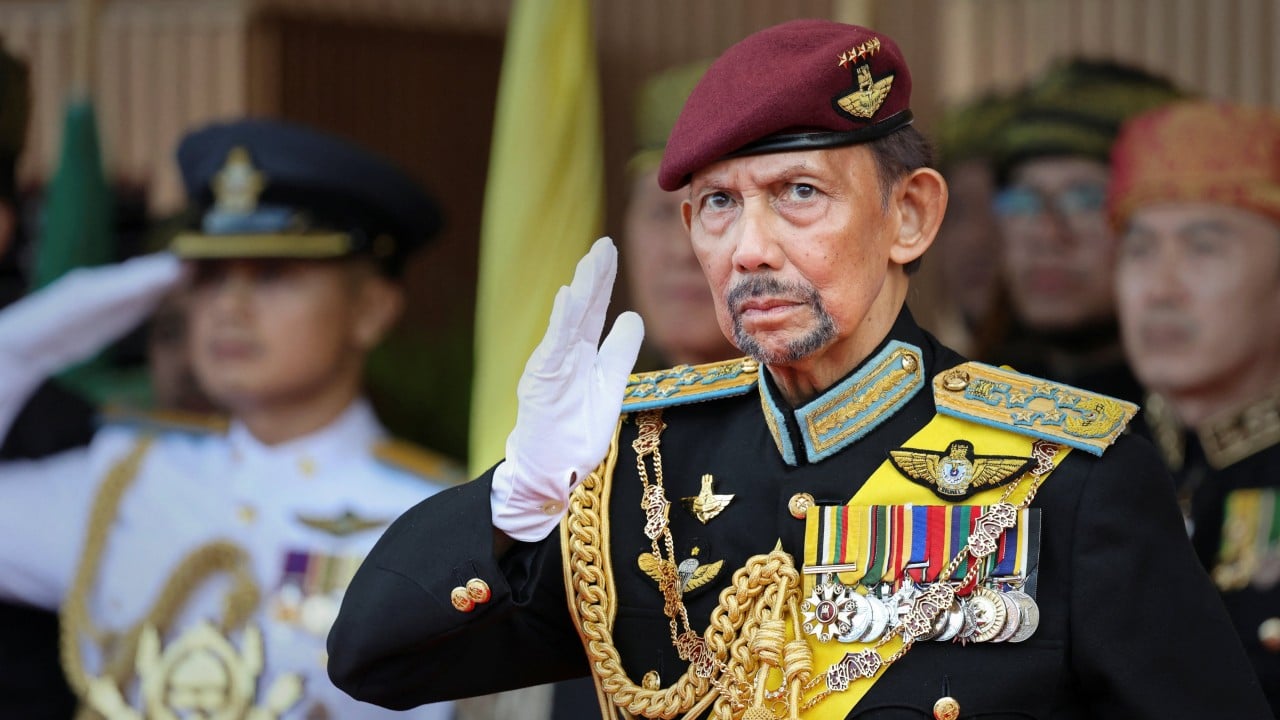
Brunei represents the absolute monarchical model, where executive authority, religious leadership, and absolute economic control are concentrated in a single sovereign entity. Here, survival is secured through direct distribution of hydrocarbon wealth to the citizenry, eliminating tax burdens and aligning economic dependence directly with sovereign stability.
Strategic Forecasting and Systemic Vulnerabilities
The longevity of these institutions depends on their capacity to adapt to generational shifts in demographics and information consumption. As younger populations across Southeast Asia demand greater transparency, traditional models of unyielding authority face structural friction.
The primary vulnerability for these institutions is not a sudden revolutionary overthrow, but the gradual erosion of normative consensus. When the utility of the crown as a neutral arbiter is compromised by perceived partisanship, its value proposition to the broader elite coalition diminishes.
To maintain operational continuity through upcoming political cycles, traditional institutions must calibrate their engagement with civil society carefully. The preservation of sovereign relevance requires maintaining sufficient distance from day-to-day administrative failures while retaining the precise legal and economic levers necessary to act as an indispensable stabilizer during systemic crises.