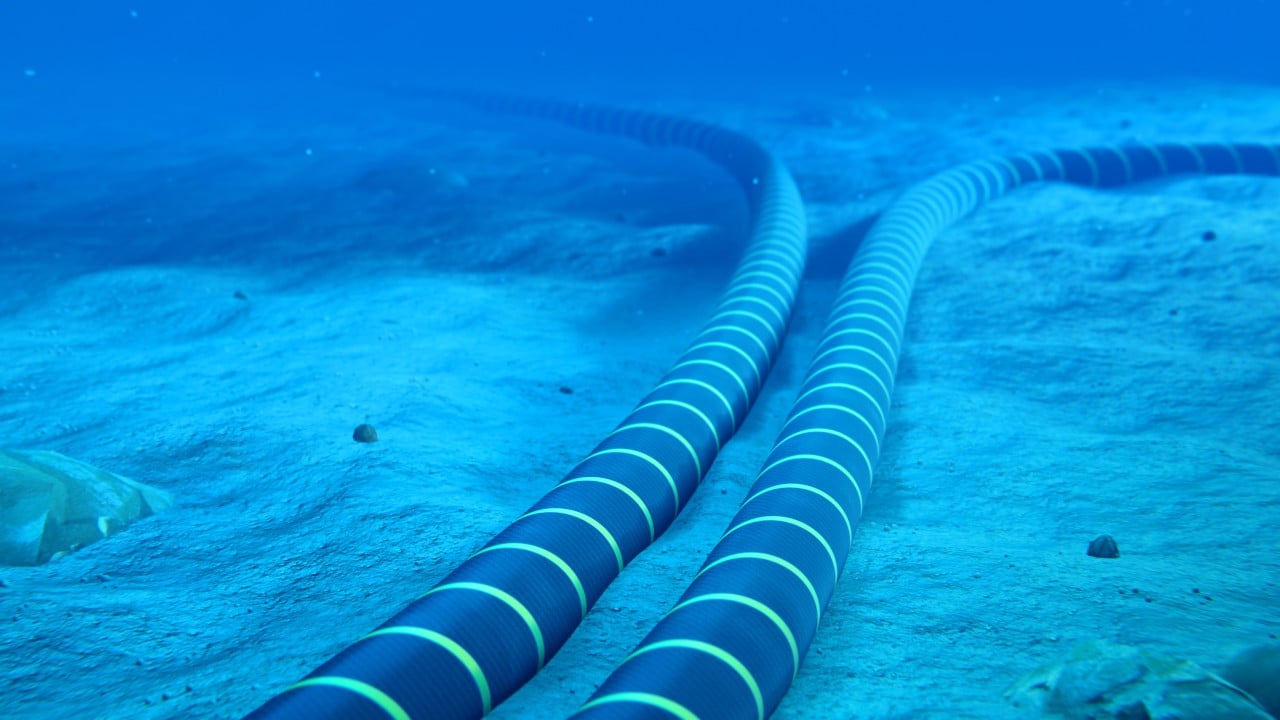
The global economy runs on a fragile glass thread resting quietly on the ocean floor.
While politicians posture about trade tariffs and cyber espionage executed from air-conditioned server rooms, the true vulnerability of modern civilization sits exposed in the dark, crushing pressure of international waters. Subsea cables carry over 95 percent of all transcontinental communications, moving trillions of dollars in daily financial transactions, state secrets, and routine data packets across ocean basins. Yet, these critical lifelines are dangerously exposed to physical interference, intentional sabotage, and systemic neglect.
China finds itself at the center of this maritime security dilemma. As both a manufacturing superpower and a primary node in global digital routing, Beijing faces mounting international pressure to fortify its underwater infrastructure against rising geopolitical hostilities. But securing a fiber-optic cable thousands of miles long is an engineering and strategic nightmare.
Understanding how these networks operate, why they are failing, and who stands to lose reveals a grim reality about the fragility of our connected world.
The Anatomy of a Blind Spot
Most people assume the internet lives in the cloud. It does not. It lives on the seabed, wrapped in layers of polyethylene, steel wire, and copper tubing, no thicker than a garden hose.
For decades, the installation and maintenance of these lines were treated as commercial utilities rather than matters of national security. Private consortia of telecommunications giants laid cables along the paths of least resistance, prioritizing cost efficiency over defensive hardening. They crossed continental shelves, navigated shallow choke points, and passed through contested maritime zones without armed escorts or constant surveillance.
That era of naive oversight is over.
Military planners in Washington, Beijing, Brussels, and Tokyo now view the ocean floor as the next contested theater of operations. The mechanics of subsea sabotage are deceptively simple. Unlike satellite communications, which require sophisticated electronic jamming or anti-satellite weaponry, cutting a fiber-optic cable requires little more than a standard commercial fishing trawler equipped with a bottom-dragging anchor.
Deniable disruption is cheap.
When a cable goes dark in the middle of the South China Sea or the Taiwan Strait, attributing blame is notoriously difficult. Was it an accidental drag by a merchant vessel operating during a storm, or a deliberate probing action by a maritime militia? International maritime law offers little recourse, and the sheer volume of commercial traffic makes continuous policing of every mile of cable physically impossible.
The Geopolitical Squeeze on Beijing
China's domestic and international digital footprint makes it uniquely vulnerable to these vulnerabilities. The nation is a primary landing station for numerous international cables, including networks connecting Asia to North America and Europe. At the same time, Chinese state-backed firms are heavily involved in laying and maintaining infrastructure across the Indo-Pacific region.
Western governments, led by the United States, have grown increasingly aggressive in blocking Chinese companies from participating in new subsea cable projects, citing national security concerns and fears of state-directed surveillance or data interception. Projects that once bypassed diplomatic scrutiny now face grueling regulatory hurdles.
In response, Beijing faces an acute strategic paradox.
If China fails to secure its underwater networks, it risks sudden isolation during a regional conflict, where adversaries could sever its connections to global financial markets and information grids with a few targeted strikes. Conversely, if Beijing militarizes its approach to subsea protection, it validates Western fears, accelerating the decoupling of global tech supply chains and hardening maritime alliances against its interests.
Protecting these assets requires transparency and multilateral cooperation, two commodities currently in short supply.
When navies operate in close proximity around critical infrastructure, the risk of miscalculation skyrockets. A routine patrol inspecting a suspicious foreign vessel near a cable landing station can easily escalate into a kinetic exchange.
The Technical Reality of Underwater Defense
Fixing the problem is far more difficult than drafting policy directives.
You cannot deploy guards along a five-thousand-mile stretch of ocean floor. Current repair methodologies are agonizingly slow. When a cable breaks due to an earthquake, anchor strike, or malicious cut, operators must dispatch specialized repair ships to grapple for the severed ends, haul them to the surface, and splice the microscopic glass fibers together in rolling seas.
This process can take weeks, during which massive volumes of data must be rerouted through alternative, overburdened pathways.
To mitigate these risks, modern network architects are turning to redundancy and smart monitoring systems. Operators now utilize distributed acoustic sensing technologies, turning the fiber-optic strands themselves into seismic sensors capable of detecting unusual acoustic signatures, such as the approach of an unauthorized anchor or suspicious vessel activity overhead.
However, detection is only half the battle. Knowing your cable is being tampered with at three thousand meters depth does not give you the immediate capability to stop it.
Furthermore, state actors are developing capabilities that go beyond simple cutting. Intelligence agencies have long suspected that specialized sub-surface submersibles can attach inductive taps to cables, siphoning data silently without interrupting the flow of information. Defending against a physical tap on the ocean floor requires surveillance capabilities that only a handful of naval superpowers possess.
The High Cost of Complacency
The conversation around subsea infrastructure often gets bogged down in abstract technological nationalism, masking the immediate economic stakes.
A coordinated, multi-point severing of key cables in the East China Sea, the Red Sea, or the English Channel would instantly paralyze global financial markets. High-frequency trading algorithms, international banking settlements, and supply chain logistics platforms rely entirely on uninterrupted, low-latency transmission. A systemic outage would not just slow down social media feeds; it would freeze global commerce within minutes.
China's calls to protect its underwater cables must be evaluated against its broader maritime ambitions. Beijing's assertion of expansive territorial claims in the South China Sea creates friction with neighboring states that also host critical landing stations and cable routes. True protection requires shared jurisdiction and cooperative maintenance agreements, yet maritime disputes in the region make such partnerships nearly impossible to sustain.
The responsibility does not rest solely on Chinese authorities. Western nations have routinely weaponized technological standards and regulatory approvals to exclude competitors, sometimes at the expense of global network resilience. By fragmenting the governance of the internet's physical layer, governments are creating a patchwork of vulnerable zones where no single entity has the authority or capability to enforce baseline security standards.
The glass threads holding the global economy together are wearing thin.
As naval competition intensifies and gray-zone tactics become the standard operating procedure for major powers, the ocean floor is transforming from a silent highway of commerce into a minefield of geopolitical leverage. Unless nations move past mutual suspicion and establish enforceable rules of the road for subsea infrastructure, the next major crisis will not happen on land. It will happen in the dark, silent depths where no one can hear the snap of a cable.