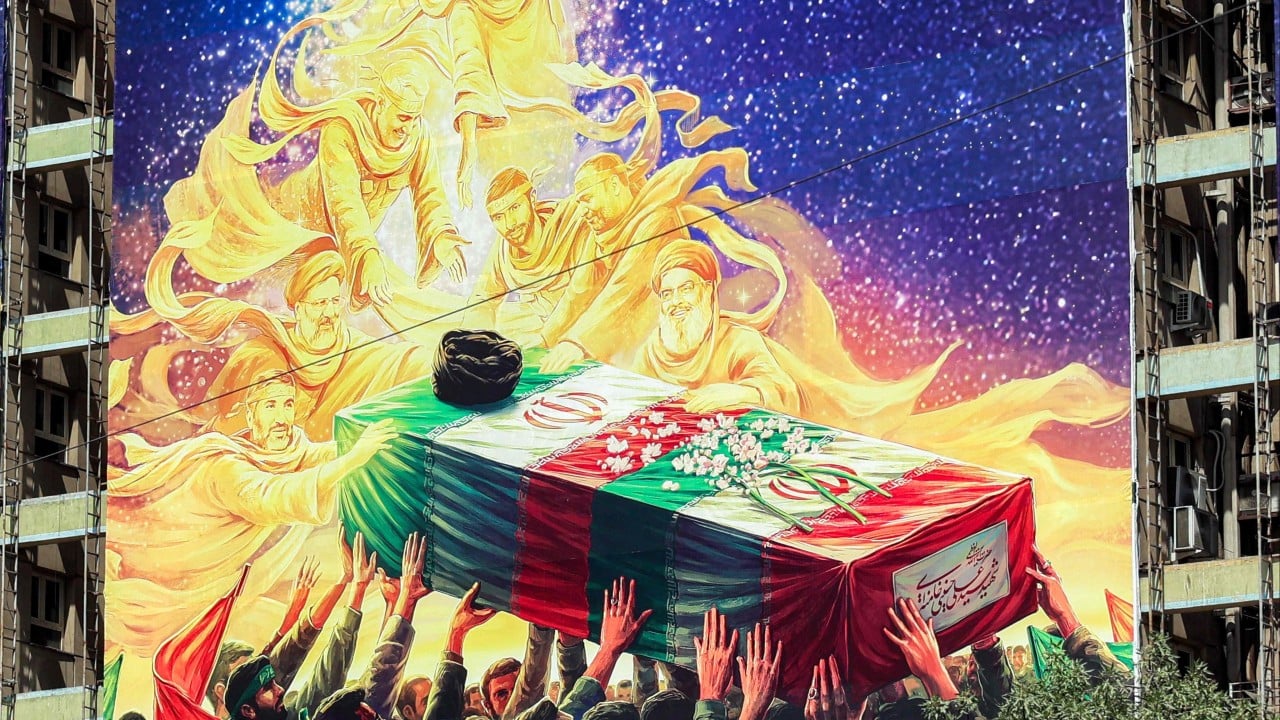
The death of a supreme leader during the opening salvos of an active war introduces an unprecedented dual-shocks crisis to the Islamic Republic of Iran: an immediate military command vulnerability and a high-stakes political succession crisis occurring simultaneously. Standard autocratic transitions rely on deliberate, highly choreographed bureaucratization to manage internal factions. When a external kinetic event truncates this timeline to zero, the regime faces an acute structural bottleneck.
The immediate state response—organizing a grand state funeral—is not merely a cultural or religious obligation. It is a highly rationalized, tactical operational deployment designed to solve a specific engineering problem: stabilizing a system under extreme stress. This analysis deconstructs the structural mechanics of the Iranian state under wartime succession, mapping the institutional friction points, the constitutional fail-safes, and the strategic risks inherent in a rapid transfer of absolute power. Discover more on a connected subject: this related article.
The Dual-Front Operational Crisis
An abrupt vacancy at the apex of Iran's dual-clerical and military structure triggers two simultaneous, competing priorities that strain the state's administrative capacity.
                  ┌────────────────────────────────────────┐
                  │ VACANCY AT THE APEX OF IRANIAN POWER   │
                  └───────────────────┬────────────────────┘
                                      │
             ┌────────────────────────┴────────────────────────┐
             ▼                                                 ▼
┌──────────────────────────┐                      ┌──────────────────────────┐
│  MILITARY COMMAND CRIT.  │                      │   SUCCESSION MECHANICS   │
├──────────────────────────┤                      ├──────────────────────────┤
│ • Armed Forces Commander │                      │ • Assembly of Experts    │
│ • Supreme National       │                      │   Constitutional Mandate │
│   Security Council (SNSC)│                      │ • Interim Council        │
│ • Kinetic Escalation     │                      │   (Pres., Judiciary,     │
│   Management             │                      │   First VP)              │
└──────────────────────────┘                      └──────────────────────────┘
The Military Command Vacuum
The Supreme Leader is not a figurehead; under Article 110 of the Constitution of the Islamic Republic of Iran, the position holds ultimate command over the armed forces, the Islamic Revolutionary Guard Corps (IRGC), and national security policy. The leader alone possesses the authority to declare war, mobilize forces, and appoint or dismiss the heads of the military branches. More analysis by NPR delves into comparable perspectives on the subject.
During an active conflict, the sudden removal of this singular decision-maker paralyzes the strategic chain of command. While operational-level commanders retain tactical autonomy, grand strategic decisions—such as regional proxy activation, ballistic missile doctrine adjustments, and asymmetric retaliation thresholds—require absolute executive authorization. The state must bridge this command gap immediately to prevent adversaries from exploiting the temporary hesitation.
The Institutional Legitimacy Deficit
Simultaneously, the regime must execute a constitutional transition under the scrutiny of domestic factions and foreign adversaries. The immediate deployment of mass public rituals serves as an information warfare tool. The grand funeral functions as a mechanism to signal institutional continuity, project a facade of domestic unity, and deter internal dissent or external opportunistic strikes. By occupying the capital's physical and informational space with state-sanctioned mourning, the regime attempts to deny operational space to opposition elements.
Constitutional Fail-Safes and Institutional Friction
To understand how Iran navigates this shock, one must evaluate the formal legal architecture designed for this contingency and the informal power dynamics that dictate actual outcomes.
The Interim Leadership Council
Article 131 of the Iranian Constitution outlines the immediate contingency protocol. If the Supreme Leader dies or becomes incapacitated, an interim council assumes the core duties of the office, subject to the approval of the Expediency Discernment Council. This interim body traditionally comprises:
- The President of the Republic (or the First Vice President, depending on broader government vacancies)
- The Head of the Judiciary
- One of the theologians from the Guardian Council
This council operates under severe functional constraints. It is fundamentally a caretaker administration; it lacks the deep theological legitimacy required to command the absolute obedience of the clerical establishment, nor does it possess the long-standing, informal patron-client networks within the IRGC necessary to enforce absolute discipline. The interim council’s primary objective is narrow: maintain systemic equilibrium for a maximum of fifty days until a permanent successor is chosen.
The Assembly of Experts Bottleneck
The formal selection of the next Supreme Leader rests entirely with the Assembly of Experts, an 88-member body of high-ranking clerics elected every eight years. Under stable conditions, the selection process involves protracted negotiation, vetting by the Guardian Council, and consensus-building among competing theological schools in Qom and political factions in Tehran.
Wartime compression fundamentally breaks this deliberative model. The Assembly cannot afford a prolonged debate without risking systemic collapse. The selection process transforms from a theological evaluation into a rapid, securitized negotiation dominated by the actors who control physical force: the IRGC leadership and the intelligence apparatus.
The Three Factional Vectors Dominating Succession
The selection of a permanent leader under kinetic duress will be decided by the relative leverage of three distinct institutional factions within the Iranian state.
                    ┌──────────────────────────────┐
                    │     THE SUCCESSION TRIAD     │
                    └──────────────┬───────────────┘
            ┌──────────────────────┼──────────────────────┐
            ▼                      ▼                      ▼
┌──────────────────────┐┌──────────────────────┐┌──────────────────────┐
│  THE IRGC APPARATUS  ││ THE CLERICAL ELITE   ││THE TRADITIONAL BURO.│
├──────────────────────┤├──────────────────────┤├──────────────────────┤
│ Focus: Kinetic force,││ Focus: Ideological   ││ Focus: State survival│
│ border security, proxy││ legitimacy, systemic││ administrative fluid-│
│ networks, assets.    ││ continuity, Qom network││ ity, economic control.│
└──────────────────────┘└──────────────────────┘└──────────────────────┘
1. The IRGC Command Structure
The Revolutionary Guard is the ultimate guarantor of the regime's physical survival. In a wartime scenario, their influence expands exponentially. The IRGC prioritizes a successor who is ideologically unyielding, deeply aligned with the "Axis of Resistance" doctrine, and dependent on the military apparatus for enforcement. The military faction favors an expedited selection process to minimize windows of vulnerability, potentially forcing a consensus candidate through the Assembly of Experts via direct political pressure.
2. The Clerical Establishment (The Qom Axis)
The senior theologians and localized clerical networks derive their power from religious jurisprudence and the administration of massive charitable trusts (bonyads). Their primary concern is preserving the theological legitimacy of the Velayat-e Faqih (Guardianship of the Islamic Jurist). They resist a pure military takeover of the political system, recognizing that if the Supreme Leader becomes a mere puppet of the IRGC, the fundamental religious justification for the state's existence erodes.
3. The Traditional Bureaucracy and Technocrats
Comprising state ministries, the regular diplomatic corps, and conventional economic administrators, this faction focuses on basic state functionality. In a crisis, their leverage is minimal compared to the IRGC, but they remain vital for managing the logistics of the wartime economy, maintaining civil services, and executing essential administrative functions during the transition period.
The Strategic Cost Function of the Public Funeral
The organization of an expansive state funeral in the midst of an active war carries significant operational costs and tactical vulnerabilities. The regime’s decision to proceed with these ceremonies reflects a calculated risk-reward matrix.
Kinetic Vulnerability and High-Value Target Concentration
Gathering the entire political, military, and clerical elite into a single, geographically fixed location during an active conflict creates an extreme security hazard. It presents adversaries with an opportunity to decapitate the remaining leadership structure in a single strike.
To mitigate this vulnerability, the state must reallocate critical defensive assets—including surface-to-air missile batteries, electronic warfare jamming systems, and elite internal security units—away from the active battlefront to secure the capital. This creates a temporary, measurable degradation of defensive capabilities along the state's borders and active military theaters.
Mass Logistics Under Threat
Managing millions of civilians in a dense urban environment under the threat of airspace intrusion or asymmetric sabotage requires flawless execution. The state must coordinate municipal logistics, communications blackouts, and emergency medical contingencies simultaneously. Any failure in crowd control, or any successful hostile disruption during the broadcasted event, would instantly shatter the illusion of control, compounding the original strategic shock.
Potential Post-Transition Scenarios
The interaction between constitutional mandates and raw factional power during a wartime vacuum yields three plausible structural trajectories for the state.
Scenario A: The Accelerated Praetorian Shift
The Assembly of Experts, operating under direct pressure from the IRGC, swiftly elects a highly conservative, relatively weak clerical figure as the new Supreme Leader. In this model, the office retains its formal constitutional authority, but actual decision-making power shifts decisively to a council of senior IRGC generals. The state transitions from a clerical autocracy with a powerful military wing into a de facto military dictatorship wrapped in religious imagery.
Scenario B: Leadership by Committee
If the Assembly of Experts reaches an irreconcilable deadlock between competing clerical factions, or if the security environment prevents a formal vote, the interim council defined in Article 131 could seek to extend its mandate indefinitely. This creates a collective leadership model.
Historical precedents in other autocratic systems demonstrate that collective leadership models are inherently unstable during active conflicts; they slow down strategic decision-making, encourage factional infighting, and invite external subversion.
Scenario C: Systemic Fractionalization
The most volatile trajectory occurs if distinct factions within the IRGC, the intelligence ministries, and regional commands diverge on who should assume power. If regional commanders refuse to take orders from an unrecognized interim authority in Tehran, the state's centralized command structure fractures. This internal friction degrades the state's ability to wage external war, forcing a defensive pivot inward to secure domestic control.
Strategic Playbook for External Observers
The immediate post-vacancy window dictates the long-term trajectory of the state's alignment. External actors evaluating this transition must avoid interpreting state-mandated pageantry as a sign of institutional stability. The critical variables to monitor are not the size of the funeral crowds, but the specific administrative movements occurring in parallel:
- Air Defense Reallocation Vectors: Track the movement of high-tier early warning radars and interceptor batteries toward urban centers; a disproportionate shift confirms acute regime anxiety regarding a secondary decapitation strike.
- Decree Sign-Off Authority: Identify which specific entity issues functional directives to regional proxy forces during the caretaker window; this reveals whether the interim council or a hidden IRGC committee has assumed operational control.
- Assembly of Experts Quorum Timelines: Monitor the speed at which the clerical assembly is convened; delays beyond 72 hours indicate significant backroom friction and a breakdown of pre-negotiated succession plans.