The Peace Process is a Suicide Pact
The global diplomatic corps is addicted to a fairy tale. They believe that if you just get enough generals, warlords, and "civil society" leaders into a carpeted room in Jeddah or Geneva, you can negotiate a country back into existence. It is a lie. Every time a Western diplomat mentions a "civilian-led transition" in the current Sudanese context, they aren't helping; they are fueling the next decade of slaughter.
The standard narrative—pushed by former officials and international NGOs—is that Sudan’s path to safety lies in a power-sharing agreement and the restoration of the 2019 status quo. This is not just naive. It is historical malpractice.
Power-sharing didn't fail in Sudan because of "bad actors." It failed because the very structure of the agreement incentivized the Rapid Support Forces (RSF) and the Sudanese Armed Forces (SAF) to cannibalize the state before the other could. You cannot "restore" a system that was designed to explode.
Stop Asking for a Ceasefire and Start Asking for a Victor
It sounds barbaric to the ears of the humanitarian elite, but the obsession with an immediate, unconditional ceasefire is actually prolonging the agony.
In the history of civil wars, conflicts rarely end through the polite consensus of two equally matched predatory elites. They end when one side wins, or when one side is so utterly depleted that they can no longer project force. By forcing "pauses" and "humanitarian corridors" that are immediately used by both the SAF and RSF to re-arm and reposition, the international community is effectively subsidizing a forever war.
Look at the data from the Uppsala Conflict Data Program. Peace agreements in the wake of fragmented military rule are notoriously unstable. When you have two distinct military architectures—the SAF’s traditional bureaucratic military and the RSF’s tribal-mercenary hybrid—the "unified national army" is a ghost. It doesn't exist. It won't exist. Forcing them to merge is like trying to graft a wolf’s head onto a lion’s body. The organism will die on the table.
The Civilian Fetish
The "pro-democracy" movement is the darling of Western op-ed pages, but let’s be brutal: the civilian leaders currently in exile have zero leverage. They have no divisions. They have no revenue streams. They have no control over the bridges or the bakeries.
Writing articles about "the path out of horror" through civilian governance is a form of political LARping. While the Taqaddum coalition meets in luxury hotels, the actual power in Sudan has devolved to local resistance committees and tribal militias. The "civilians" the West recognizes are disconnected from the "civilians" currently dodging drone strikes in Omdurman or El Fasher.
The mistake we make is treating "Civil Society" as a monolith that can simply be "inserted" back into the driver's seat. You cannot govern a graveyard. Until the security dilemma—the fundamental reality that either Hemedti or Burhan must be neutralized—is solved, talking about a civilian transition is like discussing the interior design of a house that is currently engulfed in a five-alarm fire.
The Myth of Neutrality
The United Arab Emirates, Egypt, Saudi Arabia, and Iran are not "stakeholders" to be "engaged." They are active combatants by proxy.
The "lazy consensus" suggests that we need all these regional players to come to the table. Wrong. We need to acknowledge that their interests are fundamentally irreconcilable. One wants a stable military autocracy modeled after Cairo; another wants a flexible, gold-funded mercenary network that secures regional influence.
By pretending these neighbors want a "peaceful, democratic Sudan," the West allows them to continue the flow of weapons under the guise of diplomatic engagement. If you want the war to end, you don't invite the arsonists to the fire safety meeting. You name them, shame them, and trigger secondary sanctions that make their interference more expensive than their potential gains.
The Decentralization Trap
There is a growing chorus suggesting that Sudan should be partitioned or heavily decentralized to stop the fighting. This ignores the "Resource Curse" mechanics of the Sahel.
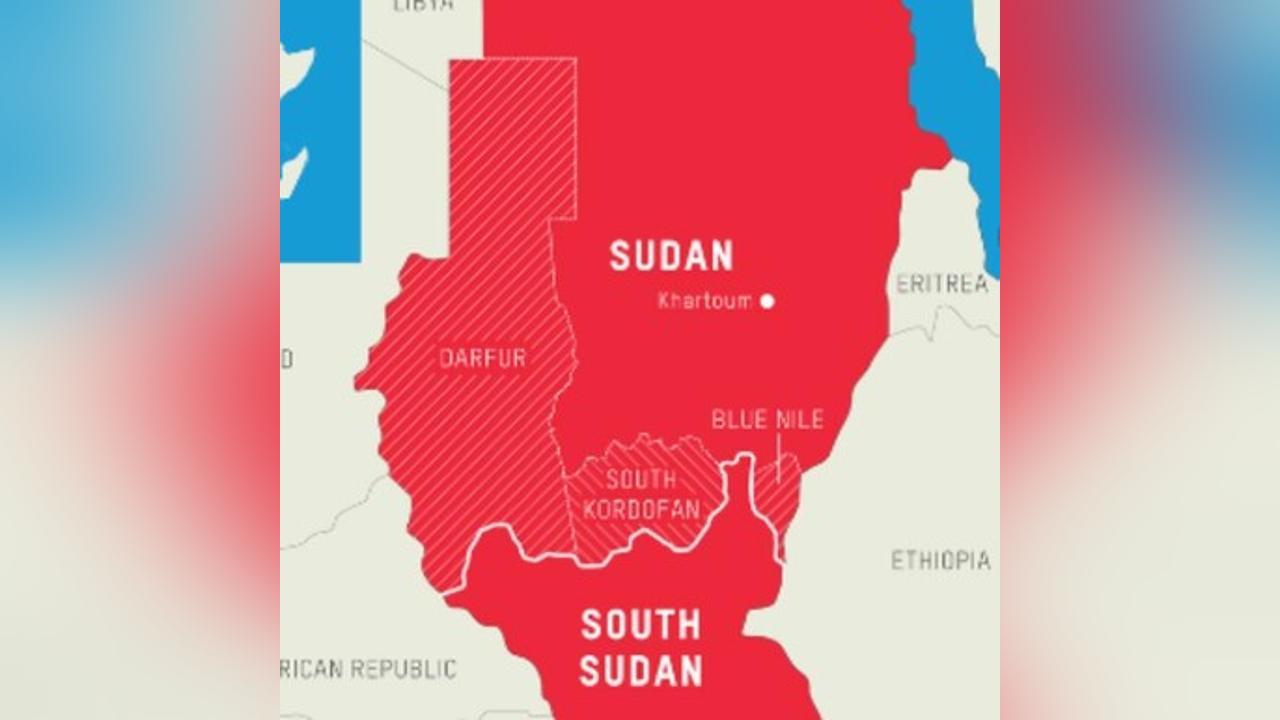
Sudan’s wealth—gold, oil, and Nile water—is geographically mismatched with its population centers and political power bases. A "decentralized" Sudan is simply a collection of smaller, more aggressive warlord states, each with its own foreign sponsor, fighting over the specific square kilometer where the gold is dug out of the ground.
Fragmentation isn't a solution; it’s the final stage of state collapse. We are watching the "Somali-ization" of the third-largest country in Africa, and the response from the "experts" is to suggest the same federalist models that failed in Iraq and Libya.
The Hard Truth About Humanitarian Aid
We are told that "aid must flow." Of course it must. But we refuse to admit that in a war of attrition, food is a weapon.
When the SAF blocks aid to RSF-controlled areas, they are using starvation as a siege tactic. When the RSF loots warehouses and "taxes" convoys, they are using international charity to pay their fighters. The humanitarian apparatus has become a logistics wing for the combatants.
If you want to save lives, you stop treating aid as a neutral commodity. You acknowledge that every bag of grain delivered is a political act. The current "neutral" approach is simply feeding the men with the guns while the children they are "protecting" continue to waste away.
Admit the Failure of the Nation-State
The biggest misconception is that Sudan is a "failing state." It isn't failing; it has failed. The version of Sudan created at independence, dominated by a small riverine elite in Khartoum while the periphery was treated as a colony for resource extraction, is dead.
The path forward isn't "rebuilding" Sudan. It’s acknowledging that the old borders and the old centralist power structures are gone forever. The "horrors of war" are the birth pangs of whatever comes next, and it won't look like a parliamentary democracy or a standard military junta.
Stop looking for a "return to normalcy." Normalcy is what got a million people killed.
Burn the old roadmap. Stop the "peace" junkets. Stop pretending the generals care about your statements of "deep concern." Sudan isn't waiting for a civilian savior; it is waiting for the international community to stop subsidizing its destruction through the delusion of a negotiated settlement between two men who would rather see the country burn than share a throne.
The war ends when the bullets run out or one man is standing. Everything else is just expensive noise.