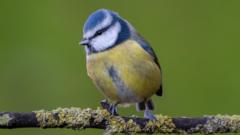
British gardens feel a little quieter lately. If you've looked at your bird feeder and wondered where the usual suspects went, you aren't imagining things. The latest data from the British Trust for Ornithology (BTO) Garden BirdWatch paints a fairly grim picture for several species across the UK. But in Surrey, the blue tit is proving to be a stubborn exception to the rule. While populations elsewhere are sagging under the weight of wet springs and shifting climates, Surrey's gardens are still buzzing with these frantic, blue-capped acrobats.
It's a weird anomaly. Usually, when a species takes a hit nationally, the decline is felt across the board. That isn't happening here. Surrey is currently a stronghold, a geographical middle finger to the downward trends seen in neighboring counties and further north. You have to ask why. Is it the specific microclimate of the North Downs? Is it the density of well-manicured gardens providing a consistent buffet? Or is it just luck?
The national slump is real
To understand why Surrey matters, you have to look at the mess everyone else is in. The BTO's long-term monitoring shows a worrying dip in blue tit sightings. We're talking about a bird that is usually a staple of British life. They're tough, they're adaptable, and they eat almost anything you put out for them. Yet, the numbers have stuttered.
Last year's breeding season was a disaster in many parts of the country. A cold, damp spring is the ultimate enemy of a blue tit chick. These birds time their egg-laying to coincide perfectly with the emergence of winter moth caterpillars. It's a high-stakes game. If the trees leaf out too early or too late because of weird weather, the caterpillars aren't there when the chicks hatch. The parents fly themselves to exhaustion looking for food that doesn't exist. In most of the UK, this "mismatch" is becoming a regular problem.
The data suggests a 10% to 15% drop in some regions. That’s a massive hit for a bird that people take for granted. If you don't see them at your feeder, the ecosystem is telling you something is broken.
Why Surrey gardens are different
Surrey isn't just lucky. It's a unique habitat. The county has one of the highest percentages of woodland cover in England, but it also has a massive amount of suburban sprawl. This combination is basically a blue tit's dream. They have the ancient woodland for traditional nesting and the suburban gardens for year-round snacks.
I've watched these birds for years. They're opportunistic. In Surrey, the "garden effect" is amplified. Residents here spend a fortune on high-quality birdseed, suet balls, and mealworms. While a wild blue tit in a forest relies entirely on the caterpillar cycle, a Surrey blue tit has a safety net. If the caterpillars fail, the bird just hops over to a feeder in Guildford or Woking and fills up on sunflower hearts.
This supplemental feeding acts as a buffer. It keeps the adults strong enough to try for a second brood if the first one fails. In more rural or less affluent areas, that safety net is thinner. The birds there live on the edge. In Surrey, they live in luxury.
The caterpillar connection
We need to talk about the oak trees. Blue tits and oaks have a relationship that’s thousands of years old. A single brood of blue tit chicks can munch through 10,000 caterpillars before they fledge. It's an insane amount of protein.
Surrey’s massive stock of mature oak trees provides a huge "nursery" for these insects. Even when the timing is slightly off, the sheer volume of trees in the county means there’s usually a pocket of food somewhere. Scientists call this habitat resilience. Because the landscape is varied—hills, valleys, woods, and gardens—there's always a microclimate that’s hitting the sweet spot.
While a flat, monoculture landscape in East Anglia might suffer a total caterpillar wipeout during a frost, Surrey’s bumpy geography protects its food supply.
Garden BirdWatch and why your data matters
The only reason we know Surrey is bucking the trend is because of citizen science. The BTO relies on thousands of people counting what lands on their bird tables. It sounds simple. It is simple. But it's the most powerful tool we have for tracking environmental shifts in real-time.
People often think their single garden doesn't matter. They're wrong. When 20,000 people in Surrey report their sightings, patterns emerge that you can't see from a lab. We can see exactly where the "red zones" are and where the "safe havens" are.
If you aren't already recording what you see, you're missing out on being part of the solution. It’s not just about counting birds; it’s about monitoring the health of the air, the insects, and the climate.
Stop cleaning your garden so much
If you want to keep Surrey’s blue tits on top, you need to stop being so tidy. This is a common mistake. People want a "clean" garden with short grass and no weeds. That’s a desert for a bird.
Blue tits need cover. They need brambles, thickets, and messy corners where spiders and aphids live. Spiders are a crucial food source, especially in winter. If you spray every aphid with pesticide, you're literally taking food out of a chick's mouth.
I’ve seen gardens in Reigate that are basically outdoor living rooms—tiled floors, plastic grass, and zero life. Then the owners wonder why the birds don't visit. You have to give them a reason to be there. Native planting is the way to go. Hawthorn, rowan, and birch are far better than any exotic ornamental plant you'll find at a big-box garden center.
Nest box blunders
Another thing Surrey residents do well—but could do better—is nest box placement. I see boxes put up in the middle of a south-facing wall in full sun. That's an oven. The chicks inside will cook before they ever see the sky.
You should face your nest boxes between north and east. This keeps them out of the direct midday sun and away from the wettest winds. Also, keep them away from the bird feeder. It sounds counterintuitive, but you don't want a busy "restaurant" right outside your front door if you're a nesting bird. It attracts predators like magpies and cats.
Speaking of cats, they're the elephant in the room. Surrey has a high cat population. If you're going to feed the birds, you have to be smart about it. Place feeders near cover so birds can dive for safety, but not so close that a cat can hide and pounce.
The bigger picture for UK wildlife
Surrey’s blue tit success shouldn't make us complacent. It should make us curious. If we can figure out exactly why they're thriving here, we can try to replicate those conditions elsewhere. Is it just the trees? Is it the bird food? Or is it something in the way we manage our suburban spaces?
The UK is one of the most nature-depleted countries in the world. That’s a hard truth to swallow. When we see a small win like the Surrey blue tit, we have to protect it. These birds are the "canaries in the coal mine." If they start to disappear here too, then we know we're in real trouble.
Current research into avian flu and other diseases like Suttonella ornithocola—which specifically hits tits—is ongoing. So far, Surrey seems to have escaped the worst of it. Keeping your feeders clean is the best way to prevent a local outbreak. Use a weak bleach solution every week. It’s a chore, but it saves lives.
What you should do right now
Don't just read this and move on. Go outside. Look at your garden or the nearest park. If you're in Surrey, appreciate the blue tits, but don't take them for granted.
Start by diversifying your bird food. Don't just throw out cheap cereal-filled mixes. Buy high-energy suet and black sunflower seeds. These provide the fats birds need to survive cold nights.
Plant a native tree if you have the space. Even a small crab apple tree makes a huge difference. It provides blossom for pollinators in the spring and fruit for birds in the autumn.
Join the BTO Garden BirdWatch. It costs less than a few bags of birdseed a year, and your data helps scientists understand why Surrey is winning. We need more "eyes on the ground" to track these trends as the climate continues to shift.
The blue tit is a small bird with a big personality. In Surrey, they're showing us that nature can be resilient if we give it half a chance. Let's make sure it stays that way. Take a look at your feeders this afternoon and see who shows up. If it's a blue tit, thank your lucky stars you're in Surrey.