If you think a heavy coat and some wool socks are enough for Canada's Arctic, you're dead wrong. Reporting in the Far North isn't just a cold assignment. It's an all-out war against physics. When the mercury hits -30°C, everything you know about journalism breaks. Your pens stop working. Your camera batteries die in minutes. Even your breath becomes an enemy, freezing into a white cloud that obscures your viewfinder and coats your eyelashes in ice.
I’ve spent time on the tundra where the wind doesn’t just blow; it bites through layers of Gore-Tex like they’re made of tissue paper. This isn’t a place for the "fast-paced" clichés of city newsrooms. It’s a place where moving too fast makes you sweat, and sweat is a death sentence. If you're heading to places like Iqaluit, Cambridge Bay, or Old Crow to cover a story, you need more than a press pass. You need a survival strategy.
The Brutal Reality of Arctic Logistics
Most reporters fail before they even land because they underestimate the sheer isolation. In the North, the plane is your only lifeline. If a blizzard rolls in—and they always do—you aren't just delayed. You're stuck. I’ve seen crews lose three days of a five-day shoot because they didn't account for "Arctic time."
Everything costs more. A bag of grapes might run you twenty bucks. A gallon of fuel is a luxury. When you're planning your budget, double it. Then add another thirty percent for the things that will inevitably break. You aren't just paying for travel; you're paying for the right to exist in an environment that wants you gone.
The biggest mistake is thinking you can do this alone. You can't. You need local fixers. These aren't just "guides." They're the people who know which ice is safe to cross and which elder will actually talk to you. Without them, you're just another southerner getting in the way.
Why Your Gear Will Fail You
Electronics hate the cold. At -30°C, the chemical reactions inside lithium-ion batteries slow to a crawl. You’ll look at your camera, see 90% charge, and thirty seconds later, the screen goes black. It's frustrating. It's also avoidable if you stop treating your gear like it’s invincible.
Keep your batteries against your skin. I’m serious. Use inside pockets, close to your chest, to keep them at body temperature. Only pull them out the second you’re ready to hit record. When you’re done, they go right back into the warmth.
Cables are another nightmare. At these temperatures, plastic becomes brittle. You try to uncoil an XLR cable and it snaps like a dry twig. Switch to silicone-jacketed cables where possible. They stay flexible when everything else is turning to stone.
And don't even get me started on "snow blindness" for your lenses. Moving a warm camera from a heated truck into the frost causes instant condensation. It fogs inside the lens elements, and you’re done for the day. You have to acclimate your gear. Put the camera in a sealed Ziploc bag before you bring it inside. Let the moisture form on the plastic, not the glass.
Layering Is a Science Not a Suggestion
If you’re wearing cotton, you’ve already lost. Cotton holds moisture. In the Arctic, moisture equals ice. You want a system that breathes while trapping heat.
- Base Layer: Thin merino wool. It stays warm even if it gets damp and it doesn't stink after four days of wear.
- Mid Layer: Heavy fleece or a "puffy" down vest. This is your insulation engine.
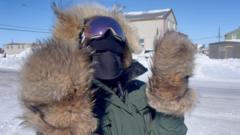
- Outer Shell: A heavy-duty parka, preferably with a coyote fur ruff.
That fur ruff isn't a fashion statement. Synthetic fur freezes and turns into a ring of needles around your face. Real fur creates a pocket of stagnant air that protects your skin from frostbite. If you’re worried about the ethics, talk to the locals. They’ll tell you why it’s been the standard for thousands of years. It works.
Don't forget your feet. Baffin boots or heavy-duty Sorels are the industry standard for a reason. You need a gap between your toes and the end of the boot. If your boots are tight, you’re cutting off circulation. Cold feet lead to bad decisions.
Building Trust in the High Arctic
Reporting in Indigenous communities requires a level of respect that many southern journalists lack. You can't just parachute in, grab a soundbite about "melting ice," and leave. That’s extractive journalism, and people are tired of it.
Take the time to drink tea. If someone invites you into their home, leave your camera in the bag for the first hour. Listen. The real stories aren't in the press releases from the territorial government. They’re in the stories of hunters who have to travel further for caribou or the youth who are balancing traditional life with the digital age.
Be honest about your intentions. If you're there to talk about climate change, acknowledge that the people living there are the ones experiencing it, not just "subjects" for your B-roll. They’re the experts. You’re just the guy with the microphone.
The Psychological Toll of the Dark
If you go in winter, you might not see the sun for weeks. The "Blue Hour" is beautiful for photos, but the constant twilight messes with your head. Your circadian rhythm goes out the window. You’ll find yourself wanting to sleep at 2:00 PM and wide awake at midnight.
Keep a routine. Eat at the same times. Force yourself to interact with people. The isolation of the Arctic can be crushing if you let it. I’ve known seasoned war correspondents who found the silence of the tundra more unsettling than a heavy-fire zone. It’s a different kind of intensity.
Practical Steps for Your Next Arctic Assignment
Don't just read this and think you're ready. Preparation is a literal lifesaver.
- Test your gear in a freezer. Put your camera and batteries in a chest freezer overnight. See how they perform. Learn the limits before you’re 200 miles from the nearest outlet.
- Buy a satellite messenger. Cell service ends the moment you leave the town limits of Iqaluit or Whitehorse. A Garmin InReach or similar device is non-negotiable.
- Learn basic cold-weather first aid. Know what frostnip looks like before it turns into frostbite. Watch your colleagues' faces for white patches. If you see one, stop and warm it up immediately.
- Pack high-calorie snacks. Your body burns an incredible amount of energy just trying to stay 37°C. Chocolate, nuts, and fats are your fuel. Forget the salad; you need calories.
The Arctic is one of the most rewarding places on Earth to tell stories. It’s raw, honest, and visually stunning. But it doesn't care about your deadline. Respect the environment, respect the people, and maybe you'll make it back with your footage—and your fingers—intact.