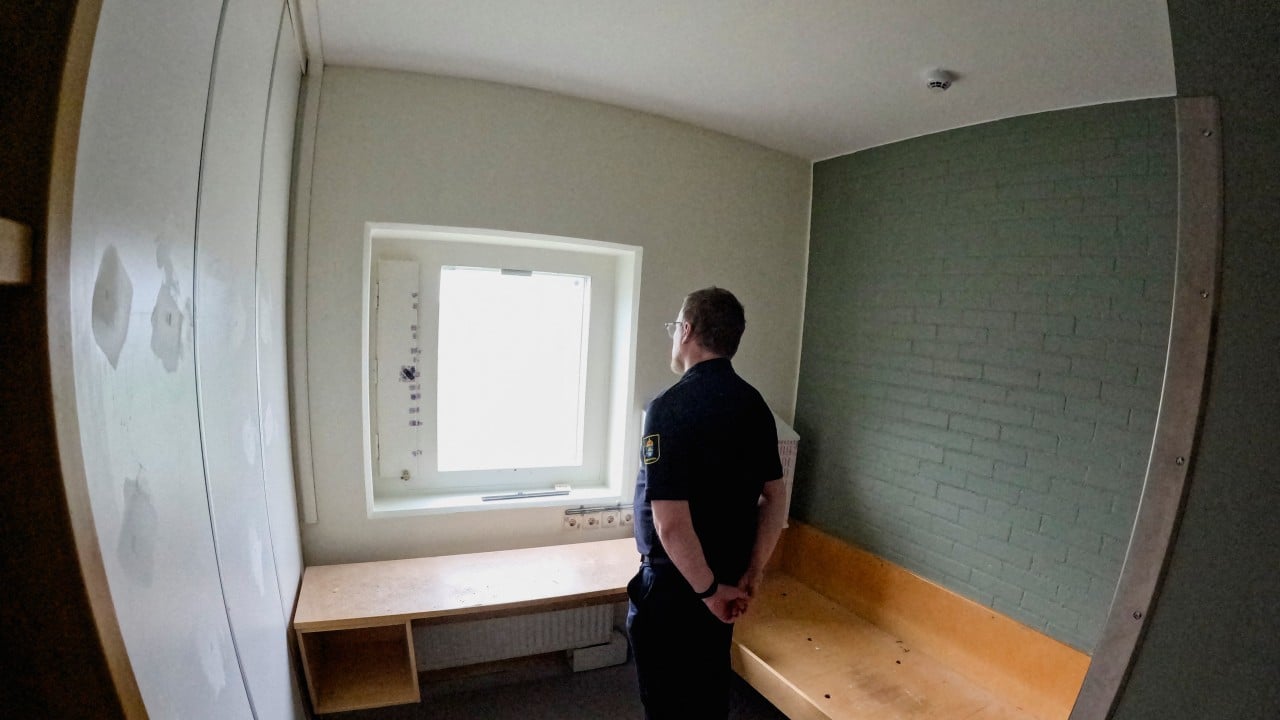
The modern Swedish state was built on a foundational promise that no child is beyond redemption, a philosophy that for decades made its justice system the envy of social reformers worldwide. That promise is dead. In its place, the minority right-wing coalition in Stockholm, heavily backed by the far-right Sweden Democrats, is constructing a policy pivot that would have been unthinkable a generation ago. Starting July 2026, Sweden is set to lower its age of criminal responsibility from 15 to 13. The country is rapidly converting wings of existing adult penitentiaries into specialized youth facilities designed to hold children who are barely old enough to enter seventh grade.
This drastic legislative shift targets a brutal, localized reality: heavily armed, loosely organized street gangs are using social media to recruit children as contract killers. Because minors under 15 previously faced zero prison time, syndicates realized they could purchase a murder for hire by offering a teenager a designer tracksuit and a few thousand kronor. Last year alone, 52 children under 15 faced trial for murder or attempted murder. Justice Minister Gunnar Strommer framed the emergency bluntly, noting that the state is no longer dealing with petty theft or teenage mischief, but with targeted, cold-blooded executions.
Yet behind the tough-on-crime political theater lies a far more troubling structural reality. The decision to build child prisons represents a total capitulation of Sweden's famed welfare state, shifting the burden of a deep societal failure onto the shoulders of prepubescent inmates.
The Collapse of the Social Safety Net
For decades, the Swedish National Board of Institutional Care, known as SiS, managed juvenile offenders through a network of special youth residential homes. The underlying thesis was entirely therapeutic. Children who committed crimes were viewed as fundamentally vulnerable individuals requiring state-mandated social care and psychological rehabilitation rather than punitive isolation.
The system collapsed under the weight of organized crime. Over the past decade, these unlocked or lightly secured SiS homes transformed from therapeutic sanctuaries into active recruitment hubs for gangs. Hardened gang lieutenants realized that sending a young recruit to an institutional home was not a disruption to business; it was an networking opportunity.
A devastating report by the Swedish National Audit Office exposed the rot inside the system.
According to the audit, nine out of ten young gang members placed in state-run youth homes relapsed into criminal behavior. Furthermore, eight out of ten eventually ended up in adult prisons.
The state was essentially running an state-funded incubator for career criminals. The failure of SiS provided the perfect political ammunition for the current government to argue that the softly-softly approach had directly fueled the current gang warfare epidemic.
Puberty Behind Rebars
To understand how radical this shift is, one must look at what life will actually look like inside the retrofitted walls of facilities like Rosersberg prison, north of Stockholm. Three of the eight designated prisons are racing to open their youth wings to coincide with the law's enactment. Prison administrators are suddenly finding themselves forced to balance high-security correctional protocols with the basic developmental needs of children.
Prison Governor Gabriel Wessman has openly acknowledged the unprecedented operational friction his staff faces. The incoming inmates are children who will grow up inside these institutions, experiencing the entire turbulent arc of puberty while locked behind heavy metal doors.
The compromise struck by the prison service highlights the absurdity of the situation. Inmates will be locked in their cells for 11 hours a night, a slight reduction from the 14 hours mandated for adult convicts. They will have access to a dedicated school curriculum, a private cafeteria, and a gym. Because cell phones and internet access are strictly prohibited, guards plan to offer chess lessons to foster concentration.
More tellingly, prison staff are quietly preparing for the emotional fragility of their new population. Wessman noted that it is entirely normal for 13-year-old boys in the outside world to still sleep with stuffed animals. Consequently, the prison service is considering placing a soft toy in every cell to comfort children who have never spent a single night away from their parents, yet have successfully operated automatic weapons on behalf of international drug cartels.
The Expert Consensus Ignored
The political momentum behind this reform has ignored massive resistance from the very institutions tasked with keeping Sweden safe. During the legislative consultation phase, a clear majority of the 126 authorities consulted, including the national police force and the Swedish Prison and Probation Service itself, voiced severe skepticism or outright opposition.
Professional unions are sounding the alarm over a massive deficit in specialized training. The union representing social workers and prison employees, Akademikerförbundet SSR, has criticized the breakneck speed at which the government is forcing the legislation through parliament ahead of the tight September elections.
The core issue is competence. A guard trained to manage an aggressive 35-year-old career criminal cannot simply apply those exact same methods to an emotionally volatile 13-year-old. Working with children requires deep pedagogical training, trauma-informed care expertise, and an understanding of adolescent brain development. Shoving children into retrofitted adult spaces without an entirely separate, highly trained workforce risks exacerbating the exact behavioral pathologies the state claims it wants to cure.
Children's rights organizations, including the prominent association Bris, argue that the reform is fundamentally counter-productive and directly violates the United Nations Convention on the Rights of the Child, which Sweden formally enshrined into domestic law in 2020.
The Myth of the Structural Deterrent
The political justification for lower criminal responsibility relies entirely on the classical theory of deterrence. The government believes that if a 13-year-old knows they will go to an actual prison instead of a comfortable social care home, they will think twice before accepting a contract killing on encrypted apps like Signal or Telegram.
This logic completely misunderstands how modern street gangs operate. Gang leaders do not operate on the same legal logic as state prosecutors. If the age of criminal responsibility drops to 13, the syndicates will simply adjust their logistics. They will begin recruiting 11-year-olds and 12-year-olds to carry the bags, spot the targets, and pull the triggers.
The gangs leverage an inexhaustible supply of vulnerable youth, often concentrated in segregated, economically marginalized suburbs where integration has completely stalled. For a marginalized child facing systemic exclusion, the immediate prestige, money, and protection offered by a local gang leader will always carry more weight than the abstract, long-term threat of a prison sentence.
Locking up a 13-year-old does nothing to disrupt the adult leadership structure running the cartels from villas in Turkey or Spain. It simply creates a vacancy on the street, one that is instantly filled by another child.
Sweden is embarking on a highly volatile social experiment, currently limited to a five-year trial period. By treating the symptoms of societal fracture with steel doors and soft toys, the state is creating a permanent class of institutionalized youth, ensuring that the cycle of violence will continue long after the current political cycle concludes.