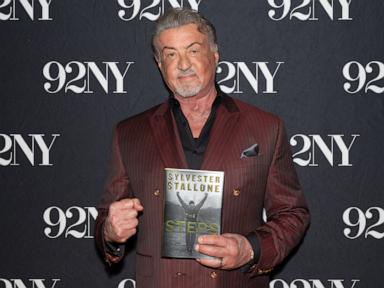
Sylvester Stallone reaching eighty years of age while marking fifty decades of the Rocky franchise offers a rare vantage point on Hollywood grit. Most cultural artifacts from the nineteen-seventies have dissolved into nostalgic footnotes. Yet the story of an unheralded Philadelphia club fighter endures not because of high-minded cinematic theory, but because of raw, unvarnished survival.
When Stallone sat down to reflect on turning eighty and celebrating fifty years of his signature creation, the media churned out the usual celebratory talking points. They highlighted the box office triumph, the underdog trope, and the unexpected Academy Awards. But they glossed over the sheer brutality of how the project came to life. Hollywood lore loves a clean narrative. The reality was a desperate hustle born out of near-poverty, stubborn refusal, and an actor who had less than one hundred dollars in his bank account when he wrote the script.
The Margin Between Stardom and Destitution
Look past the red carpets and the bronze statue in Philadelphia. In the winter of nineteen seventy-five, Stallone was a struggling bit-part actor whose biggest claim to fame was a minor role in a low-budget exploitation film and a brief appearance in The Lords of Flatbush. He was trying to sell his dog because he could no longer afford the kibble.
That specific kind of hunger shaped Rocky from its inception. The film was never meant to be a polished corporate franchise. It was a lifeline. When Irwin Winkler and Robert Chartoff offered him thirty-five thousand dollars just to buy the script while locking him out of the lead role, a sensible actor with an empty stomach would have taken the cash and run. Stallone refused. He gambled his entire livelihood on the condition that he had to play the title character, despite the studio wanting a bankable name like Robert Redford or Ryan O'Neal.
That obstinacy cost them upfront. The studio slashed the budget to barely one million dollars, forcing a compressed twenty-eight-day shooting schedule. Crew members worked double shifts. Cold Philadelphia streets served as natural soundstages. The famous running scenes through the Italian Market were captured guerrilla-style, with a handheld camera mounted in the back of a truck, long before permits or traffic control could be secured.
The Mechanics of the Cinematic Underdog
Cultural critics often reduce Rocky to a simple motivational poster. That misses the structural brilliance of the screenplay. Stallone understood that audiences do not root for winners. They root for people who keep standing after taking a beating.
The original film avoids clean resolutions. Rocky Balboa does not win the championship belt in the final frame. He loses a split decision to Apollo Creed. He stumbles back to his corner, bleeding, swollen, and calling out for Adrian. By denying the audience the conventional Hollywood fairy-tale victory, Stallone achieved something far more enduring. He captured the exhaustion of ordinary labor.
This mechanical truth explains why the character survived half a century across multiple sequels and the Creed spin-off series. The franchise has always been a barometer for aging. When Rocky is young, he fights for dignity. When he is middle-aged, he fights against obsolescence. When he is a trainer, he fights against mortality. The physical decay visible in Stallone's own face across the decades maps directly onto the character's journey, creating a meta-narrative that studio executives could never have manufactured in a boardroom.
Hollywood Economics and Creative Control
Revisiting this milestone at fifty years also reveals how modern studio production has shifted away from the kind of gambles that birthed the character. Today, a screenplay written by an unknown actor with strict demands to star in it would be instantly flagged by automated coverage software and shelved by risk-averse executives.
The industry now operates on pre-existing intellectual property, algorithmic casting, and massive international box office hedging. Rocky succeeded because the gatekeepers had no alternative. United Artists was in a precarious financial position, and the modest budget represented a calculated risk on a low-cost property.
Stallone's later career serves as a masterclass in how to manage creative property across generational shifts. While many actors from his era lost control of their franchises to corporate buyouts and legal disputes, Stallone fought relentlessly—sometimes bitterly—to retain ownership stakes and creative input. Even when the quality of the sequels dipped into self-parody during the nineteen-eighties, he eventually regained control of the narrative architecture, culminating in the critically acclaimed Creed transition where he handed the baton to a new generation while preserving the emotional core of the original mythos.
The Weight of an Icon
Reaching eighty brings a unique kind of reckoning. An actor who spends decades associated with a single fictional creation risks being consumed by it. Every red carpet appearance, every interview, and every public statement is filtered through the lens of a fictional southpaw from Kensington.
Yet Stallone leaned into the weight rather than running from it. He understood that the cultural resonance of the character belongs to the audience. When construction workers, corporate executives, and athletes alike still quote the training montages or climb the art museum steps, they are not celebrating a film. They are acknowledging their own private struggles against insurmountable odds.
The fifty-year longevity of the franchise proves that authenticity cannot be faked with digital de-aging or multi-million-dollar marketing pushes. It survives because it was forged in an apartment with no heat, by a man who refused to sell his creation for a quick paycheck, capturing a universal truth about the refusal to stay down when the world counts you out.