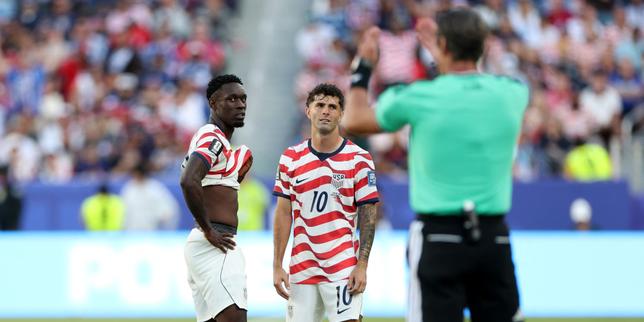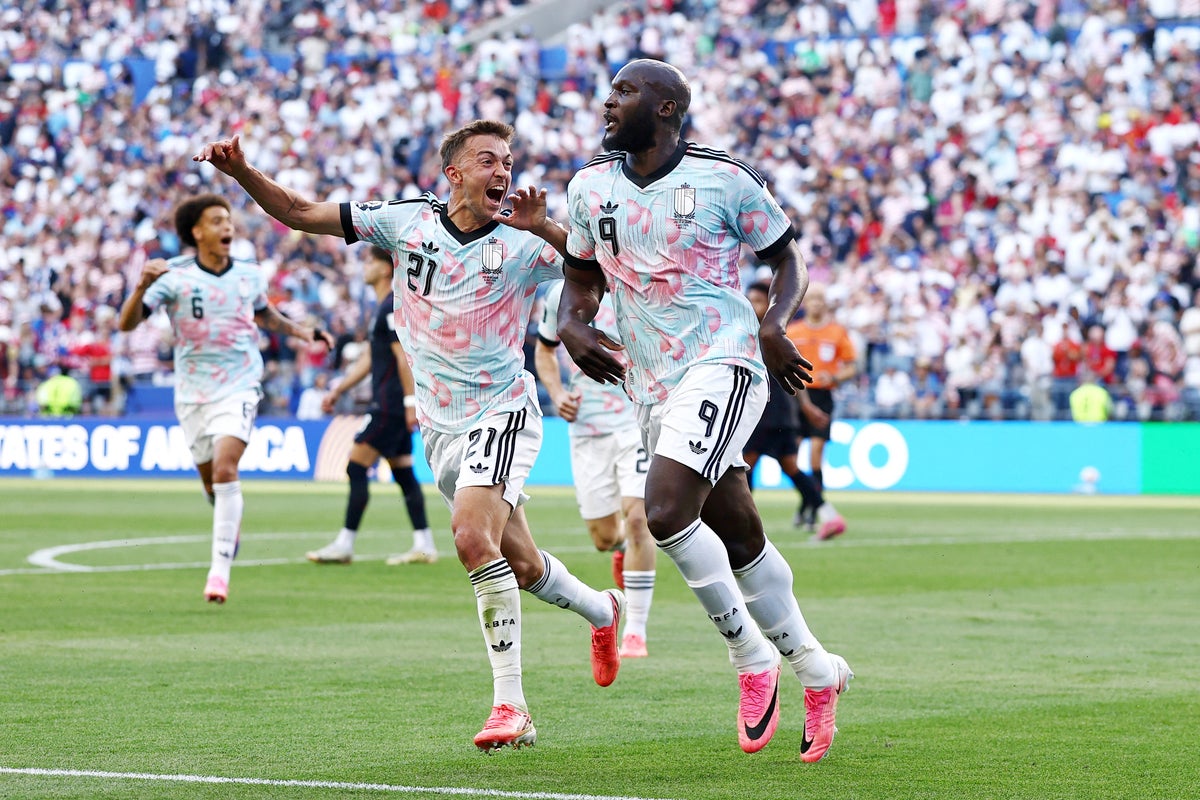
The United States Men’s National Team needed a savior, but they brought back a ghost. Folarin Balogun’s return from suspension was supposed to inject lethal instinct into a staggering World Cup campaign, but instead, the striker spent ninety minutes isolated, starved of service, and completely neutralized in a crushing defeat. The easy narrative, the one lazy commentators grab for immediately, is that Balogun shrank under the pressure. It is a neat, tidy explanation that completely misses the point. The brutal truth is that the USMNT’s tactical framework left their star forward stranded on an island, exposed a systemic breakdown in midfield creation, and proved that throwing talent onto a pitch without a coherent supply line is a recipe for international disaster.
When a world-class striker finishes a crucial match with fewer touches than his own goalkeeper, blame does not rest solely on the player's shoulders. It points to a profound failure of execution from the coaching staff down through the spine of the team.
The Anatomy of Isolation
To understand why Balogun had little impact, look at the geometry of the pitch during the match. Modern strikers rely on predictable, rehearsed patterns of service. They need low crosses driven into the corridor of uncertainty, or quick, vertical passes through the lines to catch retreating defenders on their heels.
Against a deeply set, disciplined defensive block, the USMNT did the exact opposite. They played a slow, deliberate brand of horseshoe football. The ball moved from left fullback to left center back, across to the right center back, out to the right winger, and back again. By the time the ball moved across the pitch, the opposing defense had already shifted, closed the gaps, and doubled down on Balogun.
- Zero Service in the Box: Balogun received exactly one pass inside the eighteen-yard box during his entire time on the pitch.
- Static Positioning: Because the midfield failed to break the first line of pressure, Balogun was forced to drop forty yards deep just to touch the leather, completely removing him from the danger zone.
- Predictable Crosses: The few balls sent into the penalty area were hopeful, high-looping crosses easily gathered by tall, static center backs.
This was not a failure of effort from the striker. It was a mathematical certainty of failure driven by a lack of imagination further down the pitch.
The Midfield Vacuum
The absence of a true progressive passer in the center of the park has become the defining flaw of this generation of American soccer. In this match, that flaw turned fatal. The midfield trio looked busy, running hard and winning their share of physical duels, but they operated with blinders on when possession was secured.
When Balogun made sharp, horizontal runs to peel off the back of the central defenders, the ball was routinely played backward or sideways. International soccer moves too fast for hesitation. A window to feed an elite forward stays open for a fraction of a second. If a midfielder takes three touches to settle, look up, and decide, the window slams shut.
This hesitation forced the USMNT into wide areas where they were easily choked out against the touchline. Without a threat through the middle, opponents do not have to respect the central space. They can simply spread out, smother the wingers, and let the lone striker starve.
The Myth of the Plug and Play Striker
There is a persistent belief among fans and certain sectors of the sports media that an elite number nine can fix a broken offense by sheer force of will. This is a fantasy. Erling Haaland, arguably the most devastating finisher on the planet, looks ordinary when Manchester City’s creative engine stalls. Expecting Balogun to create his own shots against a packed international defense while receiving no service is a fundamental misunderstanding of his skillset.
Balogun is a sharp, technical knife. He is not a battering ram. He excels at exploiting tiny defensive fissures, using his acceleration to latch onto clever through-balls, and finishing with minimal touches. If a system requires him to win long aerial punts against two physical center backs with his back to goal, that system is broken.
Structural Overhaul or Continued Mediocrity
Fixing this issue before the next critical match requires more than just changing personnel. It requires an entirely different philosophy of how the team attacks. The coaching staff must prioritize verticality over possession metrics. Keeping 65% of the ball means absolutely nothing if none of that possession threatens the opposition's penalty area.
The introduction of a genuine creative playmaker, someone willing to risk turning the ball over in exchange for a high-reward vertical pass, is no longer optional. The team must also look at using a two-striker system to provide Balogun with a partner to absorb the physical punishment from center backs, freeing him up to operate in the spaces where he is actually dangerous.
If the USMNT continues to roll out the same slow, predictable, wing-reliant attacking patterns, they will get the exact same results, regardless of who is wearing the number nine shirt. Elite strikers do not create goals out of nothing. They finish the chances their team creates for them. Right now, this team is creating nothing, and blame belongs anywhere but on the man stranded at the top of the formation.