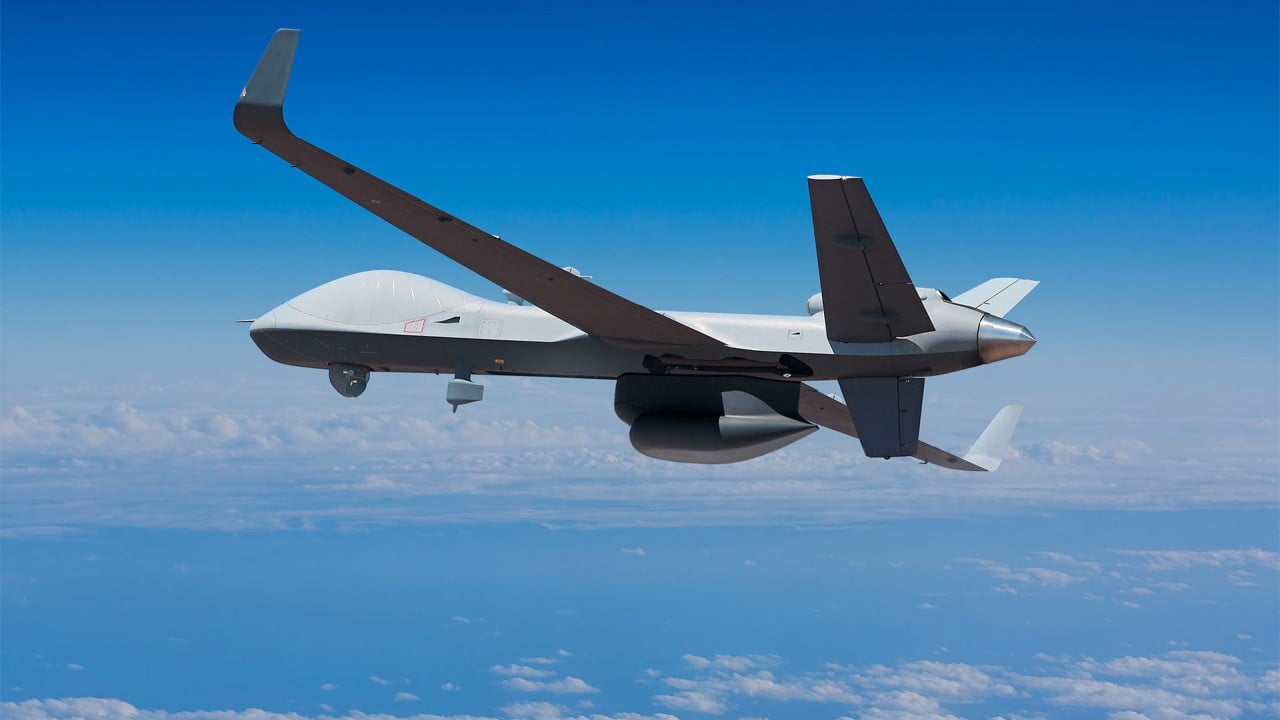
Drones don't win wars by themselves, but they change how you watch an enemy move. Taiwan's recent flight testing of its newly acquired US-made MQ-9B SkyGuardian drones at Hualien Air Force Base marks a massive shift in how Taipei plans to handle constant pressure. For years, defense analysts have argued about how a smaller military can track an opponent that outnumbers them on every front.
The arrival of these high-altitude, long-endurance aircraft gives us a clear look at how asymmetric defense is actually playing out on the ground.
The Grey-Zone Problem Nobody Talks About
Beijing's strategy isn't always an all-out amphibious invasion. Most days, it looks like a slow squeeze. Coast guard cutters, fishing fleets without transponders, and military aircraft cross median lines so often that routine patrols turn into exhaustion tactics. This is what military strategists call grey-zone harassment.
When you scramble a crewed fighter jet every single time a People's Liberation Army drone or ship pokes across the line, you burn through airframe hours, exhaust pilots, and spend an absurd amount of money on fuel.
That's where the MQ-9B changes the math. With an endurance stretching past thirty hours, a single drone can loiter quietly, tracking maritime movements without risking a pilot's life or wearing out tactical fighter fleets. It shifts the burden of fatigue right back to the other side.
What the SkyGuardian Actually Brings to the Table
Let's clear up a common misconception. These aren't heavily armed strike platforms designed to dogfight or bomb fleets out of the water on day one. They are intelligence, surveillance, and reconnaissance (ISR) workhorses.
The four drones purchased from General Atomics are equipped with advanced sensors that can map out naval traffic, track ship signatures, and feed continuous data feeds back to command centers. Analysts at Taiwan's Institute for National Defense and Security Research have pointed out that the real power of the MQ-9B lies in its data-link compatibility.
Because these systems share architecture with US platforms, they create an interoperable web of awareness. If a Chinese amphibious transport moves out of port, the drone doesn't just see it—it transmits targeting data across secure networks that can cue shore-based anti-ship missiles long before a landing fleet reaches the open strait.
The Limits of Big Tech in a Small Space
Military hardware always sounds invincible in a press release, but reality is messier. Analysts familiar with Taiwan's defensive posture point out real-world friction points that hardware brochures leave out.
For one, electronic warfare is going to be brutal in any conflict. If communication links are jammed, a high-end drone loses its tether to operators unless it has robust autonomous fallback programming.
Furthermore, relying on a handful of expensive, large platforms has risks. Hualien Air Base on the eastern coast provides some natural shelter thanks to mountain tunnels, but large runways are obvious targets. If a conflict spikes, these high-value assets need to survive the opening minutes while parked or taxiing.
To make this strategy work, Taipei isn't just buying four big drones and calling it a day. They are pairing high-altitude systems with a massive ecosystem of smaller, cheaper coastal attack drones designed for mass distribution. The MQ-9B acts as the eye in the sky, while smaller units form the swarm at sea level.
What Happens Next in the Strait
The flight tests at Hualien are just the opening phase of operational integration. As the remaining units arrive, the real test will be how well Taiwan's military trains operators to handle jammed navigation, lost satellite links, and constant cyber interference.
Hardware is easy to buy with a defense budget appropriation. Building an institutional culture that can fight through degraded conditions is much harder.
Watch how quickly these platforms get baked into routine daily patrols. If Taiwan can successfully use long-endurance unmanned systems to maintain eyes on grey-zone movements without blinking, it neutralizes one of Beijing's favorite psychological tools.