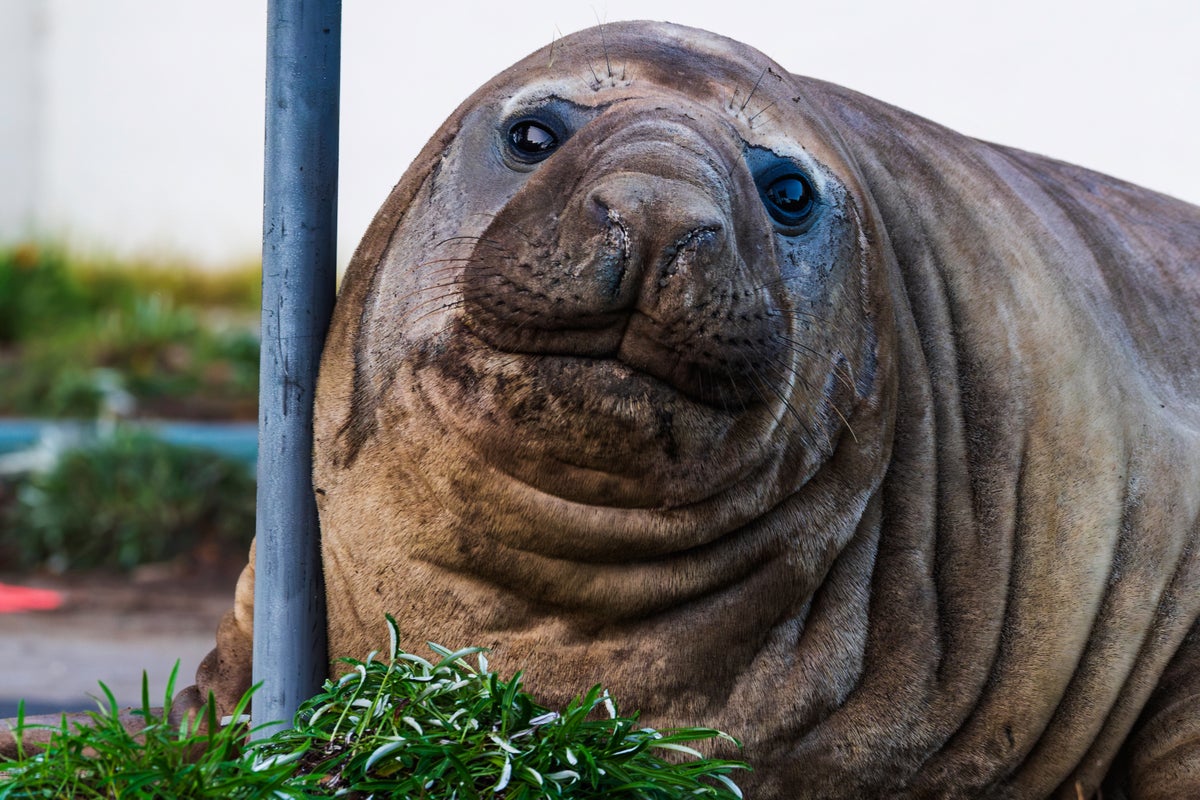
Neil is a bit of a jerk. He picks fights with parked cars, smashes through municipal barriers, and treats traffic cones like personal chew toys. He doesn't care about your morning commute or your property values.
Yet, this five-year-old southern elephant seal is easily the most popular resident in southeast Tasmania. Independent Senator Jacqui Lambie recently described him as "the only bloke in Tasmania who can stop traffic, ignore everyone, and still be loved for it."
But behind the viral TikTok videos and the amused headlines lies a frustrating reality. Neil has hit the one-tonne mark. He's no longer a clumsy 40-kilogram pup tangled on a sandbar. He is a massive marine predator experimenting with dominance behaviors, and his human neighbors are dangerously close to crossing a line that could cost Neil his life.
The Science of Sparring With a Toyota LandCruiser
When Neil squishes his massive bulk against a suburban fence or headbutts a parked SUV, he isn't trying to terrorize locals. He is lonely, and he's practicing.
Most southern elephant seals live thousands of kilometers south in the subantarctic waters around Macquarie and Heard islands. Neil's birth in Tasmania back in October 2020 was a biological anomaly. Experts suspect he was the pup of an inexperienced, young mother who wandered way off course. Because he was born on a southeast Tasmanian beach with no colony around him, Neil thinks this stretch of coast is home.
He is hardwired to return to his birthplace multiple times a year to moult and rest. This biological routine is known as a "haul out." In a normal colony, a young male like Neil would spend his time on land sparring with other juveniles. They rear up, crash their massive chests together, and bite each other to prepare for the brutal battles of adulthood.
Without any peers around, Neil has had to improvise.
"In the absence of other young males, he sort of has to learn his fighting behavior or his social behaviors by doing things like sparring with bollards and traffic cones," explains Dr. Clive McMahon, a marine ecologist at the Sydney Institute of Marine Science.
When you see Neil sleeping tightly wedged against a wooden fence, it isn't random. He's likely trying to mimic the physical contact of a crowded seal colony. He wants to feel something solid next to him. But a fence doesn't fight back, so he tests his strength against whatever is handy. Right now, that means local infrastructure.
Loving a Wild Animal to Death
Neil's online presence is explosive. A single clip of him destroying bollards near a phone box clocked roughly 17 million views. But that internet stardom has created a nightmare for wildlife managers.
Wildlife authorities are terrified that Neil will suffer the same fate as Freya, the famous walrus euthanized in Norway after crowds ignored repeated warnings and crowded her for selfies. Kris Carlyon from Tasmania's Department of Natural Resources and Environment didn't mince words at a recent Hobart press conference. He warned that the public risks "loving Neil to death."
The behavior from some onlookers has been downright reckless. Wildlife officers have documented people hauling small babies within arm's reach of the seal to snap photos. Others have tried to offer him food.
Let's be clear about the math here. Neil weighs 1,000 kilograms right now. He can move surprisingly fast when motivated. When he reaches full maturity, he will likely tip the scales at 3,000 kilograms or more. You wouldn't hand your infant to a polar bear or a bison for a quick Instagram story. Neil deserves that exact same level of caution.
The local government has stopped naming the specific towns Neil visits during his six-week haul outs to keep crowds away. If the public can't police itself, the state will have to step in.
The Real Cost of Disobeying the Rules
Rangers view relocation as a stressful, risky last resort. If Neil is forced into a corner by aggressive crowds, or if he accidentally injures someone who got too close, the outcome won't be fun TikTok content. It will mean permanent removal or, in a worst-case scenario, euthanasia.
If you happen to encounter Neil during his Tasmanian vacation, the rules aren't suggestions. They're law.
- Maintain a 20-meter perimeter from Neil at all times, even if he looks completely fast asleep.
- Keep your dogs on a leash and at least 50 meters away. A dog bark can trigger an aggressive defensive response from a wild seal.
- Never block his path to the water. An elephant seal trapped away from the ocean is a panicked, dangerous animal.
The state isn't bluffing about enforcement either. Disturbing or touching native wildlife carries stiff penalties under Tasmanian law, including fines reaching up to $16,000 and the potential for a 12-month prison sentence.
Enjoy the fact that a prehistoric giant has chosen to share a neighborhood with humans. Watch him from a safe distance, take your photos with a zoom lens, and let the big guy crush his traffic cones in peace.


