The air along Florida’s Indian River Lagoon used to taste like sulfur and decay. When the toxic algal blooms arrived, they came with an oily, suffocating heaviness that kept families indoors with their windows bolted shut. Millions of fish turned belly-up, washing ashore in silver, stinking drifts.
For Alex Webster, watching a vibrant estuary die wasn't just an abstract headline. It was a childhood soundtrack.
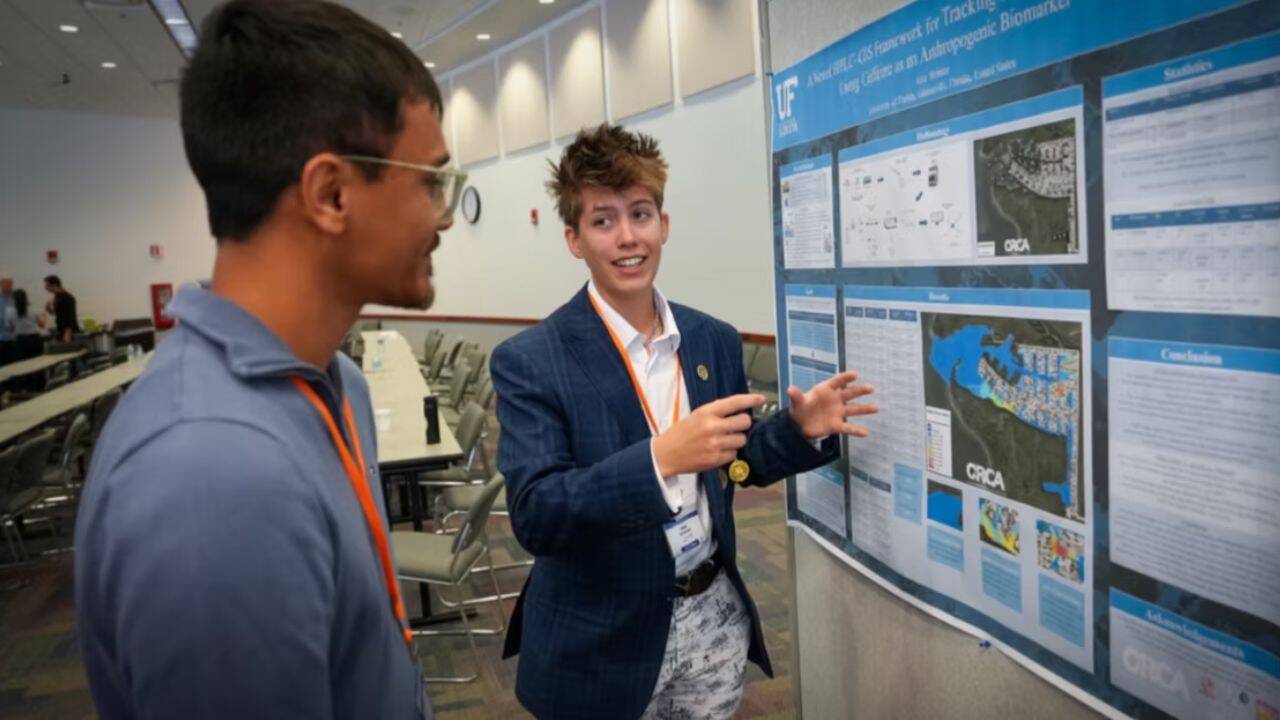
While most teenagers cope with ecological anxiety by scrolling past bad news on glowing screens, Webster decided to change the entry barrier for saving the planet. He did something deceptively simple. He handed people a tree and told them to name it.
Through an initiative called My Pet Mangrove, the Florida student began inviting everyday people—from elementary schoolers to busy commuters—to adopt tiny, sprouted mangrove propagules. Not as a corporate offset credit. Not as a distant donation to a faceless nonprofit. But as a living houseplant. A pet.
To understand why this matters, you have to look past the cozy framing of a potted coastal sapling and stare down the brutal math of climate change.
Mangroves are ecological powerhouses. These salt-tolerant coastal forests do something extraordinary that concrete seawalls never could: they lock away carbon at rates up to four times higher than terrestrial tropical rainforests. They absorb the crushing kinetic energy of hurricane storm surges, filter agricultural runoff before it chokes marine life, and provide a vital nursery for juvenile fish.
Yet, for decades, humans have treated these tangled coastal guardians like worthless brush, paving over them to make room for waterfront condos and concrete marinas.
The problem with saving an ecosystem is its scale. When scientists talk about gigatons of carbon sequestration and shoreline stabilization, the human brain switches off. It feels too big. Too heavy. Too overwhelming for a single person holding a coffee cup on a Tuesday morning.
Webster understood a fundamental truth about human behavior: we do not protect what we understand. We protect what we love. And we love what we name.
Consider what happens when a student walks home carrying a pencil-thin green propagule tucked inside a plastic cup of brackish water. Suddenly, a global crisis has a pulse.
Participants in the program collect or receive these sprouted pods, nurture them on kitchen windowsills, and watch them unfurl their first leathery leaves. They monitor the roots. They check the water level. A psychological shift occurs. The mangrove stops being a random weed in the mud and becomes an individual responsibility. It becomes theirs.
Months later, those same people return to the water's edge to plant their grown seedlings back into the eroding shoreline. They are no longer just volunteers completing community service hours. They are foster parents returning a dependant to the wild.
This hyper-local approach has earned widespread recognition, including a Slingshot Challenge Award from the National Geographic Society. But the real victory isn't written in awards ceremonies or grant proposals. It is written in the dirt of Florida's tidal zones, where root systems are knitting fractured coastlines back together one potted plant at a time.
Conservation has long suffered from an image problem. It demands sacrifice, solemnity, and a degree in marine biology. It treats the public like an audience of guilty polluters rather than capable stewards.
Webster flipped the script. He proved that fighting environmental collapse doesn't always start with a massive legislative campaign or a million-dollar endowment. Sometimes, it starts on a sunny windowsill, with a teenager handing you a green shoot, a cup of water, and a simple instruction to keep it alive.
The tide rolls in against the bulkhead, dark and relentless, but beneath the surface, a million tiny roots are holding the ground.