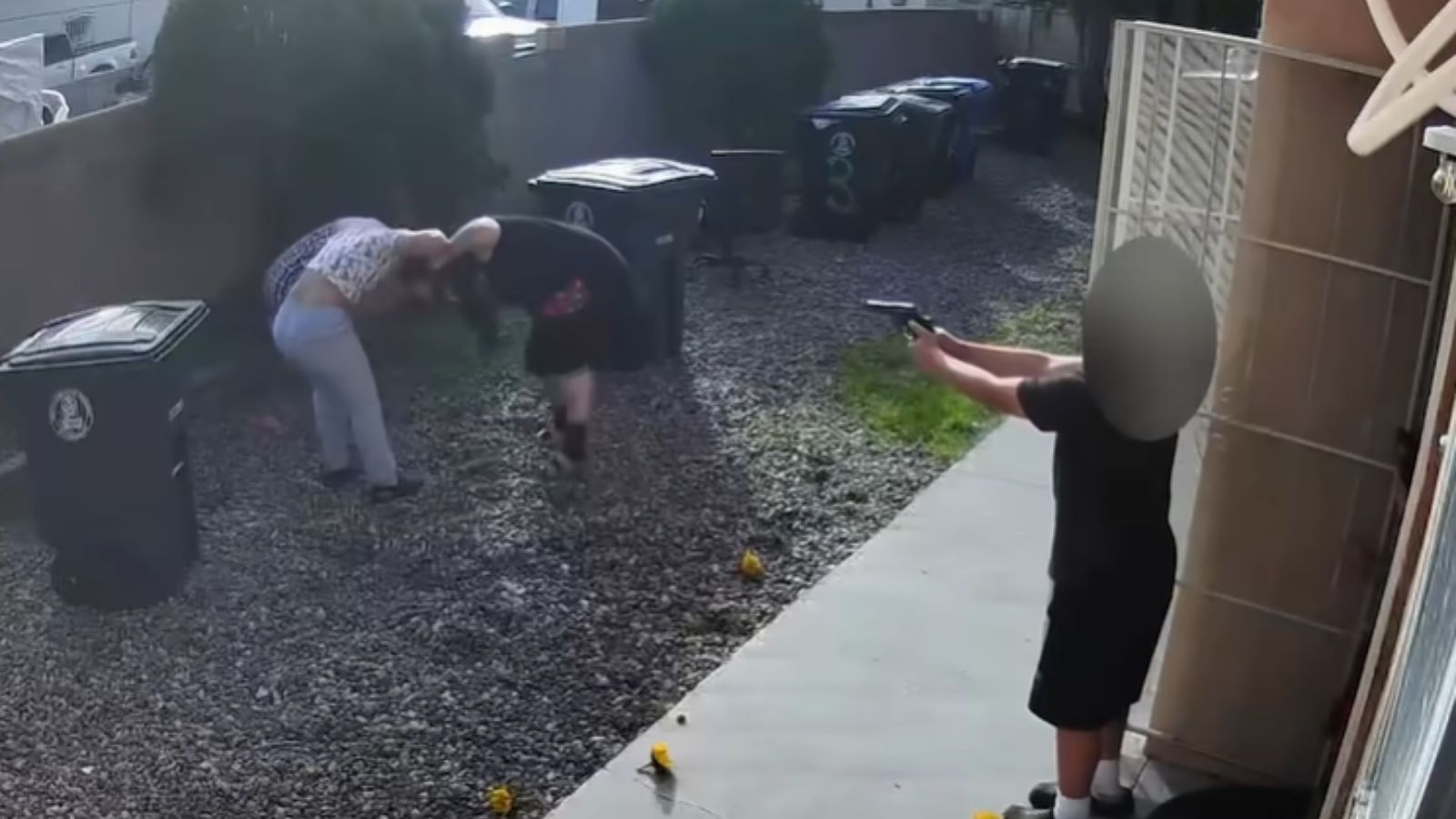
When a ten-year-old boy shoots a sixteen-year-old girl over an argument about loud music, the initial shock usually centers on the sheer absurdity of the catalyst. Yet veteran crime analysts and pediatric sociologists recognize a far grimier reality behind these headlines. A lethal outcome following a trivial dispute requires three distinct failures occurring simultaneously—unsecured access to a loaded firearm, an underdeveloped adolescent prefrontal cortex operating without adult mediation, and an environment where lethal force has become the default conflict resolution tool.
The viral footage and eyewitness accounts of a bystander warning that the child was going to shoot someone before the fatal shot rang out expose a terrifying breakdown in adult supervision. Most coverage stops at the horror of the surveillance video. That approach misses the systemic architecture that puts a handgun into the hands of a fourth-grader during a neighborhood squabble. For another view, check out: this related article.
The Anatomy Of A Preventable Tragedy
A ten-year-old does not purchase a firearm at a licensed dealer. He does not pass a background check, nor does he acquire ammunition through legitimate commercial channels. Every single time a child of that age commits a shooting, an adult within his immediate orbit has failed in their most basic duty of care.
In cases involving elementary-school-aged shooters, law enforcement investigations almost always trace the weapon back to a parent, an older sibling, or a relative living in the same residence. The gun is rarely locked in a biometric safe. More often, it is tucked under a mattress, left inside an unlocked glove compartment, or resting on a high closet shelf that a curious or agitated child can reach with a dining room chair. Related analysis on this trend has been shared by Associated Press.
Consider a hypothetical scenario common to urban and suburban precincts across the country. An adult buys a compact nine-millimeter pistol for home defense, leaves a round chambered for quick access, and hides it in a nightstand drawer. To the adult, the weapon represents security. To a ten-year-old boy embroiled in a heated shouting match outside his front door, that same firearm represents an instant equalizer against an older, larger teenager.
The bystander's recorded warning—"he's going to shoot someone"—highlights the eerie visibility of the escalation. Unlike premeditated adult homicides, which often involve concealment and planning, child-perpetrated shootings are frequently telegraphed. The child retrieves the weapon, brandishes it in plain sight, and operates on pure, unfiltered impulse.
Neurological Reality Versus Lethal Hardware
To understand why an argument over music volume turns fatal, you have to look at basic human neurobiology. At ten years old, the human brain is nowhere near equipped to weigh permanent consequences against temporary anger.
- The Prefrontal Cortex: This region governs impulse control, emotional regulation, and long-term risk assessment. In a ten-year-old, this neural hardware is fundamentally incomplete, remaining under construction until the mid-twenties.
- The Amygdala: Responsible for threat detection and the fight-or-flight response, the amygdala is hyper-reactive during late childhood and early adolescence. A perceived slight, public humiliation, or loud confrontation triggers an overwhelming flood of adrenaline and cortisol.
- Consequence Blindness: Children at this developmental stage often grasp death as an abstract concept rather than an irreversible biological reality. Pulling a trigger feels like a way to make a loud, scary noise or to force an opponent to back down, much like scenes witnessed in media or neighborhood street culture.
When you pair a hyper-reactive amygdala with a hair-trigger mechanical device designed to kill at close range, the margin for error drops to zero. A fistfight between a ten-year-old and a sixteen-year-old ends in bruises, tears, and perhaps a lecture from an angry parent. Introducing an unsecured handgun turns a minor neighborhood nuisance into a homicide investigation and destroys two families in less than three seconds.
Why Bystander Warnings Fail To Stop The Escalation
Audio and video recordings from modern street disputes frequently capture neighbors, friends, or passersby predicting the violence moments before it happens. People hear the threats. They see the child storm back into a house or reach into a waistband. Yet nobody intervenes effectively.
This paralysis stems from a mix of disbelief and self-preservation. Most adults simply cannot process the idea that a child who still plays with toys is genuinely preparing to execute a teenager over a Bluetooth speaker or a car stereo. By the time the brain overrides that disbelief and recognizes the silhouette of a real firearm, the distance is too great and the window to act has closed.
Furthermore, stepping between an armed child and their target carries immense physical danger. A ten-year-old lacks grip strength, muzzle discipline, and trigger control. Even if the child intends only to fire a warning shot into the air or the ground, recoil and panic frequently cause the muzzle to dip directly toward the chest or head of whoever is standing closest. Bystanders who realize a weapon is present instinctively duck, scatter, or pull out their phones rather than charge a panicked child holding a loaded pistol.
The Legal Quagmire Of Child Shooters
Once the yellow crime scene tape goes up and the medical examiner arrives, the legal system faces an impossible task. Prosecutors, judges, and juvenile defense attorneys must apply statutory frameworks written for rational actors to a suspect who may barely weigh eighty pounds.
Across different jurisdictions, the age of criminal responsibility varies wildly. Some states set the minimum age for juvenile court prosecution at ten or twelve, while others have no statutory minimum at all, relying instead on common-law standards that require prosecutors to prove the child understood the moral wrongfulness of the act.
| Legal Dimension | Standard Adult Homicide | Ten-Year-Old Perpetrator |
|---|---|---|
| Intent (Mens Rea) | Assumed based on voluntary actions and use of a deadly weapon. | Heavily contested due to cognitive immaturity and developmental stage. |
| Competency | Evaluated for severe psychiatric illness or intellectual disability. | Often found incompetent simply due to normal childhood brain development. |
| Detention Facility | County jail followed by state prison upon conviction. | Secure juvenile detention or specialized pediatric psychiatric residential care. |
| Parental Liability | Non-existent unless the parent actively aided and abetted the crime. | Increasingly scrutinized through child access prevention and manslaughter charges. |
Putting a ten-year-old on trial for murder rarely satisfies anyone's definition of justice. If the court finds the child incompetent to stand trial—a frequent outcome when forensic psychologists evaluate fourth-graders—the criminal case stalls indefinitely. The child enters state custody for psychiatric stabilization and behavioral therapy, while the victim's family is left without a conviction, a trial, or any formal reckoning in open court.
Even when a juvenile court adjudicates a ten-year-old delinquent for manslaughter or murder, state laws typically mandate release from juvenile detention once the offender turns eighteen or twenty-one. The system is built on the premise that children can be rehabilitated, yet juvenile facilities often lack the clinical resources to treat severe trauma, profound impulse disorders, and the psychological fallout of having taken a human life before hitting puberty.
Shifting Accountability To The Gun Owner
Because prosecuting a ten-year-old yields bleak and unsatisfactory results, district attorneys across the country have aggressively shifted their focus toward the adults who supplied the weapon through negligence.
Child Access Prevention (CAP) laws have existed on the books in various states for decades, though they were historically treated as low-level misdemeanors carrying minor fines. That prosecutorial posture has hardened dramatically over the past few years. When a child uses an unsecured firearm to kill a neighbor, a classmate, or a sibling, prosecutors now routinely file felony charges against the gun owner, ranging from criminal negligence and reckless endangerment to involuntary manslaughter.
The legal theory is straightforward. A firearm is an inherently dangerous instrumentality. Just as a property owner can be held criminally liable for leaving high explosives or toxic chemicals within reach of neighborhood children, a gun owner who leaves a loaded pistol accessible to a ten-year-old bears direct causal responsibility for the resulting bloodshed.
Critics of aggressive parental prosecution argue that losing a child to the juvenile justice system is punishment enough, or that strict storage laws infringe upon the ability of law-abiding citizens to access their firearms rapidly during a home invasion. Those arguments crumble quickly in front of a jury when surveillance video shows a ten-year-old walking out of a house with a parent's pistol to settle an argument over loud music.
The Normalization Of Lethal Conflict Resolution
Beneath the legal debates and hardware failures lies a deeper cultural rot that rarely makes the evening news broadcast. Why did a ten-year-old view a firearm as the appropriate response to a dispute over music in the first place?
Children absorb their conflict-resolution strategies directly from the environments they inhabit. When a child grows up in a household or neighborhood where minor disrespect is met with immediate, overwhelming aggression, that child learns that backing down equals social death.
- Hyper-Vigilance: Kids raised in chronically unstable or high-crime environments operate with elevated baseline stress hormones. They interpret neutral actions—a loud song, a sideways glance, a sharp tone—as direct existential threats.
- Weaponizing Status: In environments where adults display firearms during arguments or treat gun ownership as the ultimate symbol of authority, a ten-year-old quickly deduces that holding a gun commands instant respect from older teenagers and adults alike.
- Absence Of De-escalation Models: If a child never sees an adult walk away from an argument, compromise with a neighbor, or call a mediator to handle a noise complaint, the child literally lacks the cognitive scripts required to defuse tension peacefully.
A sixteen-year-old girl playing music loudly is engaging in standard, mildly annoying teenage behavior. In a healthy community, that friction is resolved by a neighbor asking her to turn it down, an eye roll, and everyone moving on with their afternoon. When lethal hardware enters an environment starved of basic de-escalation skills, normal teenage friction becomes a death sentence.
The Digital Echo Chamber And Viral Trauma
Modern surveillance cameras, doorbell rigs, and smartphone videos have fundamentally changed how the public consumes these tragedies. Twenty years ago, a neighborhood shooting resulting from an argument over music would have been a brief, grim item in the local metro section, accompanied by a grainy photo of police cruisers.
Today, the entire sequence—from the verbal spat to the bystander's chilling warning to the fatal muzzle flash—is captured in high definition and uploaded to social media within hours. Millions of strangers watch a sixteen-year-old lose her life and a ten-year-old ruin his over nothing.
This hyper-visibility creates a secondary wave of trauma while distorting public understanding of the crisis. Viewers fixate on the shock value of the video clip, trading outrage in comment sections and demanding harsh retribution against a ten-year-old child. Meanwhile, the quiet, unglamorous realities that actually prevent these shootings—mandatory safe storage enforcement, community violence intervention programs, and early childhood behavioral health screening—receive a fraction of the attention.
What Actually Stops Child-Perpetrated Shootings
Eliminating every interpersonal argument between kids and teenagers is impossible. Loud music, territorial disputes, and hurt feelings are permanent fixtures of human adolescence. Preventing those moments from turning into homicides requires severing the link between adolescent anger and lethal weaponry.
- Mandatory Physical Barriers: Biometric safes, lockboxes, and trigger locks introduce a crucial time delay. Even if a ten-year-old knows a firearm exists in the home, an impenetrable steel barrier forces the child to stop, during which the initial spike of adrenaline fades and rational thought returns.
- Uncompromising Felony Liability: Gun owners must face guaranteed felony prosecution whenever an unsecured firearm is used by a minor in a crime or accidental shooting. Financial penalties and community service do not alter behavior; the certainty of prison time does.
- Targeted Pediatric Intervention: Schools and pediatricians must treat chronic aggression and emotional dysregulation in elementary-aged children with the same urgency as physical illness, connecting high-risk families with behavioral specialists before a crisis occurs.
Every time a camera captures a child pulling a trigger over a trivial dispute, the footage serves as an indictment of the adults who left the weapon within reach and the society that tolerated the conditions leading up to the shot. Until gun owners face severe, inescapable consequences for leaving loaded firearms accessible to children, the next fatal argument is already ticking down in a bedroom or a parked car somewhere near you.