Silence has a weight.
You can feel it in the air of a courtroom before the gavel drops, thick and suffocating like summer humidity before a typhoon, pressing against your eardrums until the fluorescent lights overhead seem to hum louder than human voices. On November 19, 2024, that silence settled permanently over a Hong Kong courtroom as a judge read out the numbers that would erase a decade of a young man’s life. Four years and eight months.
Wait. Look at the numbers again.
If you skimmed the headlines, you might have seen the number ten. Ten years for Benny Tai, the legal scholar who conceived the plan. Up to ten years threatened across the board. Four years and eight months for Joshua Wong, the skinny kid with the bowl-cut hair and oversized glasses who once stood on the hood of a car and accidentally woke up a city. Whether it is four years and eight months added to a sentence he was already serving, or the broader shadow of a decade-long purge that swallowed 45 of Hong Kong’s brightest pro-democracy voices in a single afternoon, the math arrives at the exact same place. A generation has been locked away.
Most news reports give you the cold mechanics of the event. They tell you about the Hong Kong 47. They mention the Beijing-imposed National Security Law of 2020. They list the charge—conspiracy to commit subversion—and move on to the next ticker item.
They miss the point entirely. They treat a human tragedy like a box score.
To understand what happened in that West Kowloon courtroom, you have to forget the legal jargon for a moment. You have to smell the tear gas on Harcourt Road in 2014. You have to feel the tremor in your hands when you drop a paper ballot into a plastic box, wondering if the simple act of voting will soon be classified as treason.
The Kid Who Didn't Blink
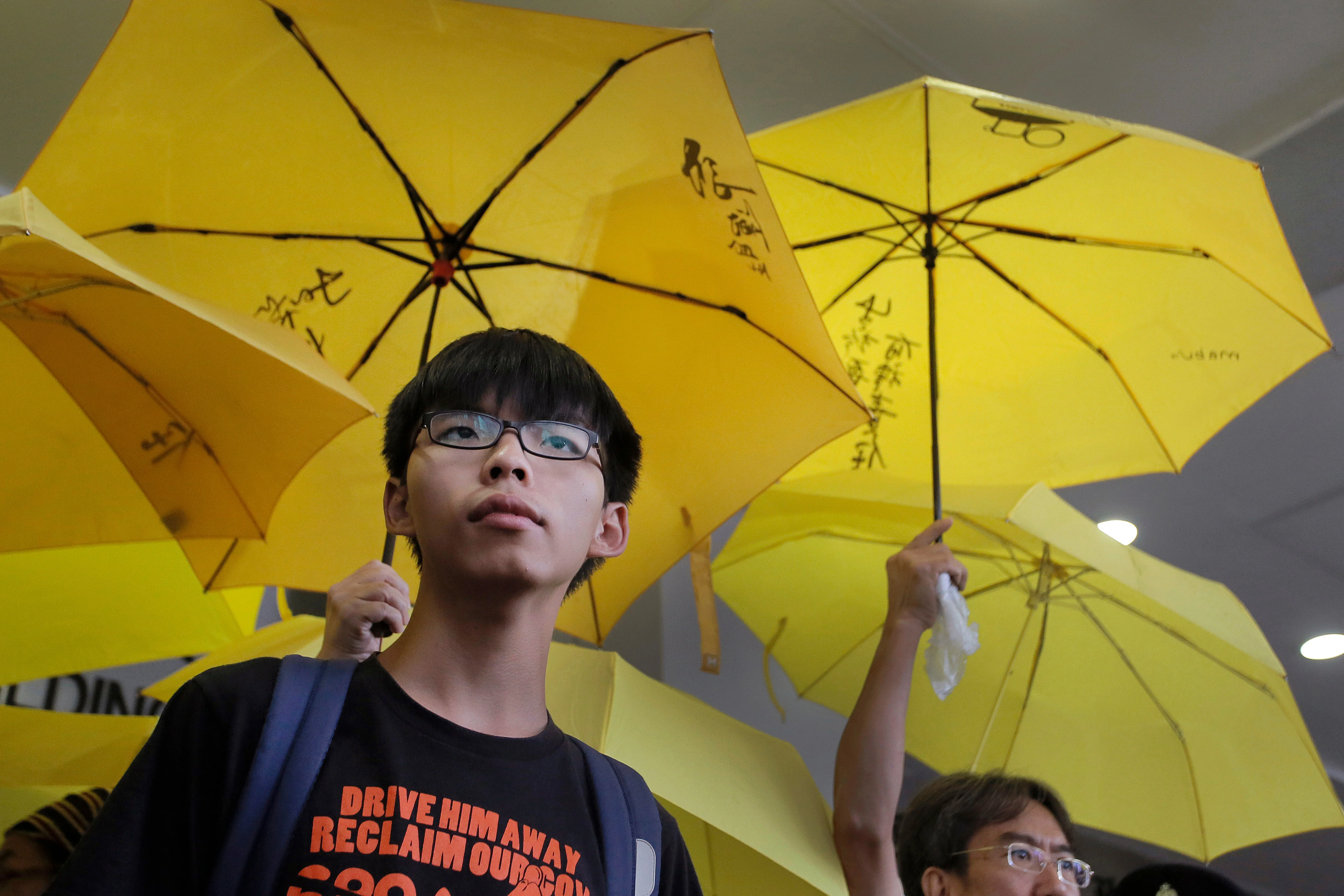
I remember watching Joshua Wong in the autumn of 2014, back when the air in Admiralty smelled like sweat, cheap raincoats, and wet concrete. He was seventeen. He looked less like a revolutionary and more like a high schooler who had lost his way to a math tutoring session. His limbs were all sharp angles, his voice cracking slightly when the megaphone feedback screeched across the highway.
Yet when he spoke, hundreds of thousands of people stopped scrolling on their phones and listened.
Back then, Beijing wanted to introduce "patriotic education" into Hong Kong’s public schools. To outsiders, it sounded benign. Every country teaches civics, right? To people living in the city, it felt like someone slowly swapping out the family photo album with pictures of strangers. Joshua, barely fifteen when he founded the student group Scholarism, didn't write a white paper. He didn't lobby diplomats. He organized a hunger strike and brought 120,000 parents, students, and grandparents onto the streets until the government blinked and shelved the curriculum.
Two years later, he was at the center of the Umbrella Movement. For seventy-nine days, ordinary office workers and teenagers camped on asphalt highways, armed with nothing more than plastic wrap for their eyes and umbrellas to deflect pepper spray.
Think about the sheer audacity of that moment. A teenager with zero institutional power, no money, and no army had forced one of the most powerful political machines on earth to pause and negotiate with reality.
To understand how we got from an umbrella on a highway to a steel cage in a courtroom, imagine a chess game where one player suddenly decides the rules are optional. For decades, Hong Kong operated under a delicate promise known as "One Country, Two Systems." It was supposed to guarantee the city’s free press, independent courts, and way of life until at least 2047. Think of it like a glass dome protecting a rare garden from a winter storm outside. For years, the dome held. People argued fiercely inside it, protested loudly, voted, and went home for dim sum.
Then, in 2020, Beijing didn't just crack the glass. They dismantled the dome entirely and replaced it with a ceiling of solid iron.
The Crime of Counting Ballots
Here is the detail that makes the Hong Kong 47 trial so terrifying, even if you live ten thousand miles away from the South China Sea.
What was the actual crime? Did Joshua Wong and his co-defendants storm a military base? Did they stockpile weapons? Did they burn down government buildings?
No. They held a primary election.
In July 2020, just days after the National Security Law took effect, pro-democracy organizers set up makeshift polling stations across the city—inside noodle shops, neighborhood laundromats, and cramped community offices. The goal was straightforward: narrow down the field of opposition candidates so they wouldn't split the vote in the upcoming Legislative Council election. If they won a majority in the legislature, they planned to use a power explicitly written into Hong Kong’s own mini-constitution—the Basic Law—to veto the government’s budget, force the Chief Executive to resign, and demand universal suffrage.
Let that sink in. Using a constitutional mechanism to win an election and block a budget was reframed by prosecutors as a plot to "subvert state power."
Picture a hypothetical resident—let’s call her Mei—standing in line outside a cramped storefront in Mong Kok on that sweltering July afternoon. She is thirty-two, an accountant who normally avoids politics, sweating through her blouse as the line snakes around the block. Over 610,000 people showed up that weekend. Nobody paid them. Nobody forced them. They stood in the heat because they believed their voices still counted for something. Mei slipped her paper ballot into the box, smiled at the young volunteers behind the folding table, and went home feeling a rare, fragile surge of hope.
Four years later, the volunteers who ran those tables were sitting behind glass walls in court, listening to judges appointed directly by the government tell them that their hope was a criminal conspiracy.
Inside the Echo Chamber of Stone
Prison changes the texture of time. On the outside, four years and eight months is the gap between two Olympic games, the length of an undergraduate degree, the time it takes a toddler to learn how to read. On the inside, behind the thick concrete walls of Stanley Prison or Lai Chi Kok Reception Centre, time doesn't flow. It pools.
Joshua Wong hasn't breathed free air since late 2020. Before this latest sentence was even handed down, he had already been cycled through the courts on separate charges—unauthorized assembly, violating a mask ban, attending a vigil for the 1989 Tiananmen Square crackdown. Every time his release date crept closer, another indictment materialized out of the filing cabinets of the Department of Justice, resetting the clock.
I have spoken to people who have walked out of those grey-walled visiting rooms after twenty minutes behind thick acrylic glass, shouting through static-laced receivers just to ask if their friend has enough warm socks for winter. You don't see firebrands anymore. You see men and women whose skin has turned the pale, translucent shade of office paper from years without direct sunlight. You see thirty-year-olds with receding hairlines and reading glasses, trying to cram law degrees and theology textbooks into fourteen-hour stretches of solitary confinement.
When Joshua pleaded guilty to the subversion charge, he didn't get the customary one-third sentence reduction that Hong Kong courts usually grant to defendants who save the state the time and expense of a trial. Why? Because the three-judge panel—handpicked by the Chief Executive, with no jury in sight—decided he was an "active participant" who remained unrepentant.
In the new lexicon of Hong Kong justice, remorse is the only currency that buys mercy. To walk free, you must publicly disavow your former self. You must look into the cameras and agree that the dream you marched for was a delusion.
Joshua refused to bend that far. And so the clock reset again.
Why a Courtroom in Kowloon Matters to You
It is easy, sitting in a quiet coffee shop in London, New York, or Sydney, to treat Hong Kong as a sad, distant inevitability. You read the headline, shake your head at the audacity of authoritarianism, and swipe to the next story about interest rates or celebrity breakups.
That detachment is a luxury none of us can actually afford.
History rarely announces when a shift in the global wind becomes permanent. Look back at the 1930s, or the early days of the Cold War, and you will see that free societies almost always treat the erosion of freedom elsewhere as a local anomaly—until the day the same tactics show up at their own doorstep. Hong Kong was never just a regional financial hub with a pretty skyline. It was the canary in the coal mine for whether open, rules-based societies can survive direct pressure from modern authoritarian statecraft.
For decades, the prevailing wisdom in Western capitals was simple: trade with autocracies, integrate them into global markets, and prosperity will naturally blossom into democracy. Hong Kong was supposed to be the living proof of that theory. Instead, it became the place where the theory died.
What Beijing pioneered in Hong Kong wasn't a crude military coup with tanks rolling down main street. It was something far more sophisticated and chilling. They used the veneer of the law to strangle the spirit of the law. They kept the wigs, the robes, the English legal terminology, and the polished mahogany benches of the British common law system, while hollowing out every protection that made those courts trustworthy in the first place.
It is a blueprint. Digital surveillance paired with retroactive criminalization. Economic pressure paired with the weaponization of the judiciary. When a city of seven million people can have its entire political opposition erased overnight without a single shot fired, other strongmen around the world take furious notes.
The Ghost in the Ballot Box
Walk through the streets of Central or Causeway Bay today, and on the surface, everything looks dazzling. The luxury boutiques still gleam. The trams still clatter down Des Voeux Road. Bankers still clink glasses in rooftop bars overlooking Victoria Harbour.
If you didn't know what to look for, you might think the city had simply moved on.
Look closer, though, and you notice what is missing. You notice the empty spaces on bookstore shelves where political histories used to sit. You notice the silence at Victoria Park every June 4th, where tens of thousands of candles once turned the night into a sea of gold, now patrolled by armored police vans and plainclothes officers checking ID cards. You notice the hollow expressions on the faces of parents packing suitcases at Hong Kong International Airport, saying goodbye to elderly mothers and fathers because they refuse to raise their children in a city where asking the wrong question in history class can land a teacher in jail.
Over 200,000 Hong Kongers have left the city since 2020. The ones who stayed—and the 45 activists now scattered across maximum-security prisons—carry a quiet, heavy knowledge that most of us will never have to test within ourselves.
We all like to think we know what we would do if our freedoms were put on the block. We imagine ourselves standing bravely on the barricades, speaking truth to power, refusing to sign the confession. The truth is much messier and infinitely more frightening. Courage isn't a cinematic speech delivered to swelling orchestral music. Courage is waking up in a windowless cell knowing you won't see your mother’s face without glass between you until 2029, and still refusing to tell the lie they want you to tell.
Joshua Wong will be thirty-two years old when he finally walks out of the prison gates—assuming no new charges are pulled from the drawer the morning of his release. He entered the public stage as a boy who couldn't even legally buy a beer, driven by the naive, breathtaking conviction that if you explain what is right clearly enough, the powerful will have to listen.
He will emerge into a city that has been scrubbed clean of his name, his movement, and almost everyone who stood beside him.
Yet somewhere inside a high-rise apartment overlooking the harbor tonight, a kid is sitting at a desk, staring at a history textbook with whole chapters quietly removed, wondering why the adults around the dinner table always lower their voices when they talk about the past—and feeling that first, unmistakable itch to ask why.