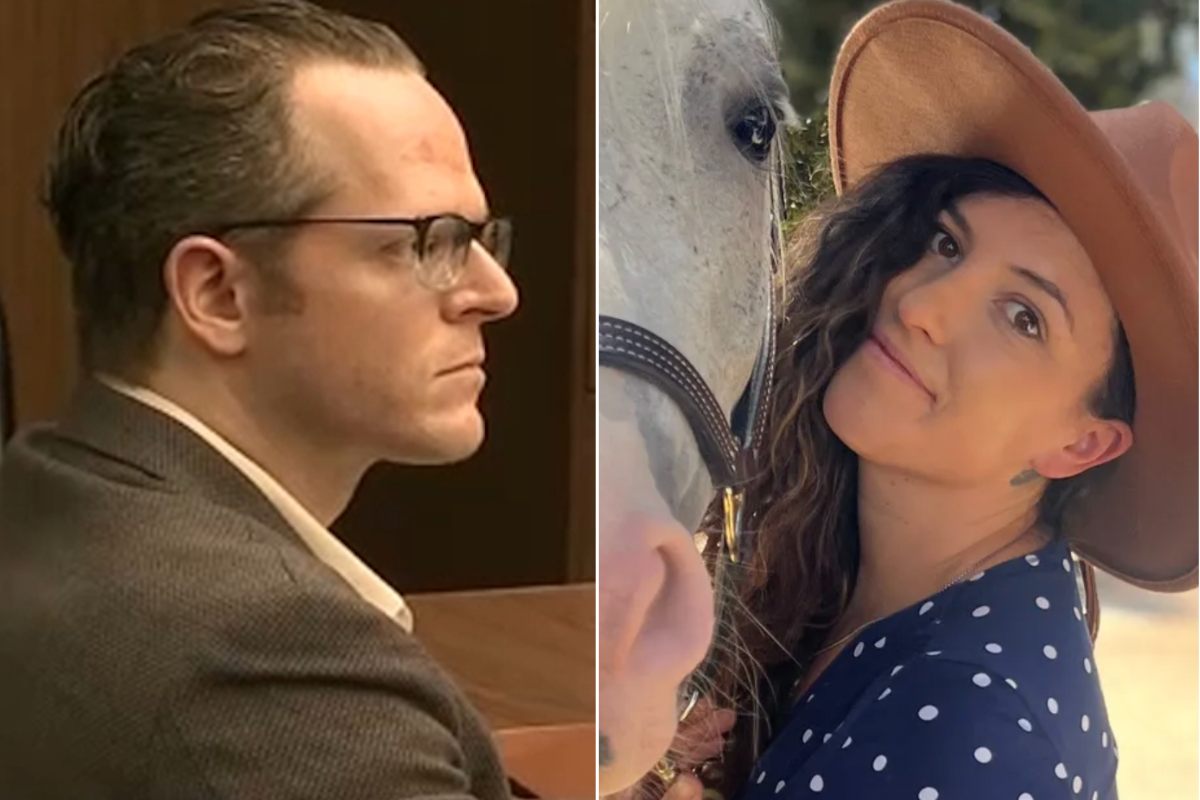
The alarm went off at 4:30 a.m., but it was not the sound of a smartphone waking a Hollywood creative for an early call time on set. It was the sound of splitting wood.
In the pre-dawn darkness of a home in Sunland, Los Angeles, Allie Shehorn awoke to the violent splintering of her front door. She ran. She locked herself behind a second door, then a bathroom door, chasing the desperate illusion of a barrier. It did not work.
A Hollywood makeup artist spends her life manipulating illusion. She uses silicone, paint, and fake blood to construct nightmares for the screen, working on massive productions like Mean Girls and Rebel Moon. But the blood that began pooling on her bathroom floor on May 23, 2024, was real. The man wielding the knife was not a movie monster. He was Nick Pasqual, an actor she had once loved and trusted.
The Performance of Safety
To the public consuming Hollywood trivia, Pasqual was an answer to a background question. He was an actor with a bit part on How I Met Your Mother, a face passing through the background of big-budget films. But in the quiet, terrifying ecosystem of domestic abuse, he was a escalating threat.
Five days before the attack, law enforcement had arrested Pasqual for domestic violence. He posted a $50,000 bond and walked out of a jail cell. Shehorn did everything the legal system instructs a victim to do. She went to a courthouse. She filled out the paperwork. She obtained a restraining order.
We treat restraining orders like shields. We speak about them in legal columns as if the ink on the paper possesses a physical forcefield. It does not. A restraining order is a piece of paper that documents a fear; it relies entirely on the abuser's willingness to respect the boundaries of the law. For an individual intent on destruction, that paper is nothing more than fuel.
Consider what happened the moment Pasqual cleared bail. He didn't stay away. He didn't seek help. He went hunting.
Twenty Times
The human mind struggles to quantify violence. When a news report states that a victim was stabbed "more than 20 times," the brain glides over the number, treating it as a clinical statistic.
To understand the reality, you have to look at the geometry of the human body. Twenty strikes mean the blade found her neck. It found her chest. It pierced her back, her abdomen, her arms, and her wrists as she raised her hands in a futile effort to protect her face. It was a rhythmic, sustained effort to erase a human life.
When Pasqual finally stopped and fled into the night, heading south toward the Mexican border, he left Shehorn dying in the dark.
A friend found her. In those chaotic, blood-slicked moments before the paramedics arrived, the advice was basic, primal, and horrific: Keep your hand on your throat to stop the bleeding.
Shehorn spent fourteen hours on an operating table. Surgeons stitched together a mosaic of severed tissue, repairing the damage done by a man who had decided her life was his property to destroy. She survived the intensive care unit. She survived the physical trauma. But survival is a long, expensive, and deeply exhausting process.
The Verdict and the Cost
Two years after the blood dried on the Sunland bathroom floor, Allie Shehorn stood in the San Fernando Courthouse. The scars on her neck and arms were fully visible to the jury.
On Tuesday, a judge sentenced Nick Pasqual, now 36, to 32 years to life in prison. A jury had previously found him guilty of a terrifying litany of charges: attempted murder, forcible rape stemming from an incident a month before the stabbing, first-degree burglary, and injuring a partner.
"When I was lying on the floor in a pool of my own blood, I remembered wondering if this was how my life was going to end," Shehorn told the court during her victim impact statement. She looked directly at the man she used to know. "You, who I had once trusted, decided my life was something that you could take away."
Pasqual spoke too. He expressed regret, mentioning a focus on sobriety, recovery, and an upcoming appellate process. His defense team has already announced plans to appeal the sentence.
But the real problem lies elsewhere, far beyond the courtroom walls or the prison cell where Pasqual will spend the next three decades.
The Invisible Stakes
Every time a story like this hits the headlines, the media focuses on the celebrity connection. They lead with the sitcom titles, the Hollywood credits, the proximity to glamour. They frame the tragedy as a bizarre anomaly in the hills of Los Angeles.
This framing masks a systemic nightmare. Domestic violence does not care about IMDB credits. It thrives in the silence of suburban homes just as easily as it does in Hollywood bungalows. The system failed to protect Allie Shehorn when he walked out on bail, leaving her to defend herself with a piece of paper against a man with a knife.
The sentence handed down this week offers a definitive end to a criminal trial. It ensures Pasqual can no longer inflict physical harm on the world outside. But for Shehorn, the trial's end does not wipe away the permanent injuries, the emotional wreckage, or the mounting medical bills left in the wake of twenty blows.
As the courthouse cleared and the cameras turned off, the image that remained was not that of a background actor heading to a cell. It was the image of a survivor standing in the light, her scars bearing witness to the immense, terrifying distance between a piece of paper and true protection.