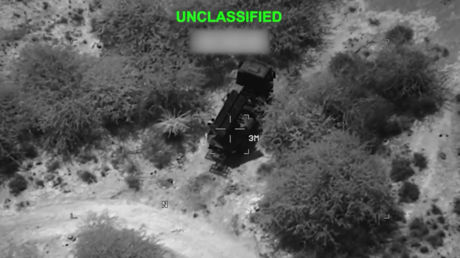
The headlines are spinning a tired narrative. They focus on whether military strikes in the Strait of Hormuz are effective or ineffective. This misses the point entirely. The establishment wants you to believe that the variable is the tactical precision of a missile or the frequency of sorties. They are dead wrong.
The assumption that kinetic force can solve an asymmetric maritime denial problem is a relic of twentieth-century thinking. It is lazy. It is comfortable. It is also why we are watching billions of dollars in hardware fail to move the needle on regional behavior.
The Strategic Bankruptcy of Kinetic Signaling
When commanders complain about strikes losing effectiveness, they are admitting that the signaling mechanism is broken. You do not fix a broken signal by turning the volume up. If you throw a rock at a hornet’s nest, you do not wonder why the hornets are angrier; you wonder why you decided that throwing rocks was a sound administrative policy in the first place.
The current strategy relies on the hope that if we hit enough targets, the adversary will decide the cost outweighs the benefit. This ignores the reality of how these state and non-state actors operate. They do not calculate costs like a publicly traded firm in a boardroom. They view these strikes as validation of their own narrative. Every bomb dropped is a recruiting video. Every target destroyed is a martyrdom event. We are not deterring them; we are subsidizing their influence.
The Asymmetry Trap
To understand why this is failing, you have to look at the math. A missile costs millions. The drone or small boat it targets costs a fraction of a rounding error in a federal budget. This is a fiscal mismatch that guarantees failure over any meaningful timeline.
Imagine a scenario where a business tries to stop a competitor by buying their products and burning them in the street. You might hurt their inventory for a day, but you are effectively creating a market for them while bankrupting yourself. That is exactly what is happening in the Strait. We are engaging in an attrition war where the opponent has an infinite appetite for loss and we have a finite tolerance for political and financial strain.
The Illusion of Control
The maritime environment around Hormuz is too vast and too complex to be "policed" by air power. Analysts who talk about protecting shipping lanes through strikes are ignoring the geography. You cannot patrol a bottleneck with precision munitions when the adversary is hiding in the shadows of commercial traffic, small craft, and complex littoral geography.
If you want to influence the flow of energy and goods through the Strait, you stop pretending that you can control the waters. You start focusing on the actual levers of power.
- Supply Chain Resiliency: If you are worried about the Strait, build infrastructure that renders the Strait optional. Diversification of pipelines and alternative transit nodes is the only move that actually matters.
- Economic Insulation: Stop relying on the illusion that global energy markets remain stable because of a few destroyers sitting in a hot, crowded canal. The market is already pricing in the volatility. Own it.
- Information Dominance: Stop fighting the kinetic battle and start winning the information one. The adversary uses the chaos to project power. Take that stage away from them by making their provocations irrelevant to the global bottom line.
The Cost of Professional Delusion
I have sat in rooms where people obsessed over "rules of engagement" as if changing a few words on a page would somehow change the physics of an asymmetric engagement. It is professional malpractice. When you prioritize the aesthetics of action over the effectiveness of the outcome, you are not a strategist. You are an actor in a play, reading lines written by people who have not looked at a real-world risk assessment in years.
There is a massive downside to this approach. Admitting that strikes are ineffective requires admitting that the last decade of policy was a expensive exercise in futility. That is why they keep doing it. They would rather burn another billion in ordnance than face the reality that their primary instrument of policy is obsolete.
Stop asking if the strikes are working. They are not. They never were. They are a performative gesture designed to satisfy a domestic political audience, not to secure a waterway. The sooner we treat them as such, the sooner we can stop wasting time on theater and start making decisions that reflect the actual, brutal geometry of the region.
We are currently holding a hammer and complaining that the sea refuses to be nailed down. Put the hammer away. It is humiliating for everyone involved.