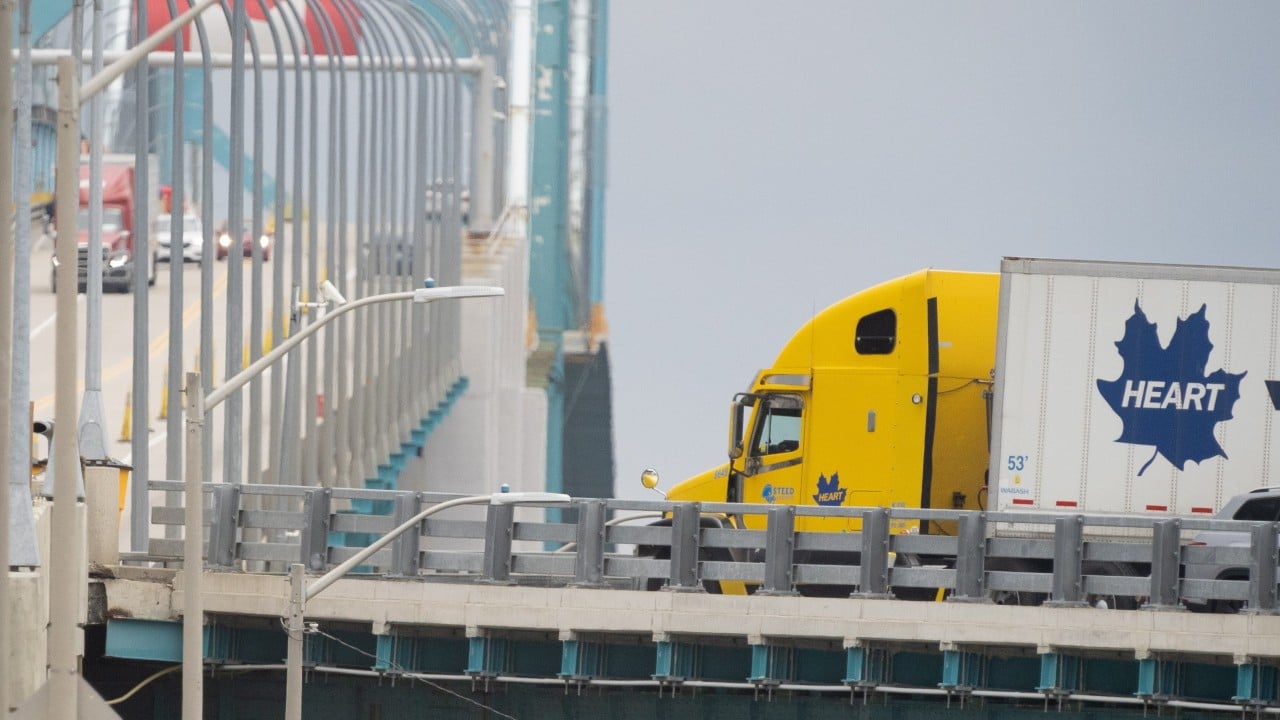
Everybody in the financial media is losing their minds over protectionist posturing and trade war rhetoric. The lazy consensus says that slapping duties on vehicles crossing the northern border will instantly break supply chains, cripple assembly plants, and spark a retaliatory spiral that destroys manufacturing on both sides of the 49th parallel.
They have it completely backward.
I have watched executives panic over political threats for two decades, missing the operational reality right in front of them. The conventional narrative treats automotive assembly as a fragile piece of glass. In truth, it is a heavily armored tank. Tariffs do not destroy industries; they force capital reallocation. And if you look past the noise of a trade dispute, the proposed 50 percent duties on cars and trucks are not a death sentence for the sector. They are a massive structural subsidy for domestic production capacity that corporate boards secretly wish they had the political cover to build anyway.
Let us dismantle the panic.
The Myth of the Integrated Border
For thirty years, industry analysts have preached the gospel of the integrated supply chain. The standard talking point claims that a single engine block crosses the border seven times before a vehicle rolls off a dealer lot, making any trade barrier an act of economic self-harm.
That argument smells nice in a textbook, but it ignores how modern logistics actually operate under pressure. Supply chains are not fragile crystal structures; they are elastic bands. When you stretch them, they snap back or reconfigure.
Let us define terms. A tariff is not a magic tax that vaporizes capital. It is a toll on inefficiency. When a border tax hits a threshold that makes cross-border shipping uneconomical, bean counters do not simply absorb the loss and march toward bankruptcy. They localize. They onshore. They build stamping plants and powertrain factories where the final product is sold.
I have seen companies blow millions on complex cross-border logistics strategies designed to save pennies on component sourcing, only to watch those savings evaporate the moment fuel prices spike or port congestion hits. A steep tariff acts as a crude, blunt instrument, yes. But it is an instrument that forces a long-overdue architectural shift.
The Political Theater of Trade Rows
Politicians love high numbers. Fifty percent sounds terrifying. It sounds like an embargo. It sounds like an economic blockade designed to starve dealerships of inventory.
It is leverage. Nothing more, nothing less.
Trade negotiations are high-stakes poker played with live ammunition. When a politician threatens punitive duties, they are not executing a permanent tax code overhaul on Tuesday afternoon. They are forcing a renegotiation of broader framework agreements. The media treats every threat as a done deal, falling into the trap of reacting to the shadow instead of the hand holding the stick.
When you look at the actual mechanics of North American automotive pacts, the rules of origin are already designed to incentivize regional manufacturing. The existing trade agreements require high regional value content to avoid penalties. A sudden escalation to extreme tariffs simply accelerates a trend that was already happening under the hood: the retreat from globalized, hyper-extended supply networks toward regional fortresses.
Who Actually Pays the Price
The lazy consensus insists that consumers will bear the entirety of any border tax through astronomical vehicle prices.
Reality is messier. In a competitive market, you cannot simply slap a 50 percent markup on a pickup truck and expect volume to hold steady. Margins compress. Supplier contracts get renegotiated down the chain. Margins across the entire manufacturing tier absorb the shock until production moves closer to the end market.
Yes, vehicle prices might tick upward in the short term for specific import-heavy models. But that friction is the exact mechanism that forces assembly operations to relocate into jurisdictions where the tax does not apply. Within eighteen months of a sustained tariff threat, boardrooms stop whining about the border and start breaking ground on new facilities in the American Midwest or Southern corridor.
The companies that survive and thrive are the ones that stop treating trade policy as weather and start treating it as terrain.
The Counter-Intuitive Playbook
If you are running a tier-one supplier or an original equipment manufacturer right now, stop lobbying for exemptions and start restructuring your footprint.
The era of shipping heavy iron thousands of miles across international lines to capture a fractional labor arbitrage is coming to a close. Automation has narrowed the labor cost gap. Geopolitical friction has widened the risk gap.
The smart money is already moving away from cross-border dependency. They are building redundant, localized manufacturing clusters. They are internalizing critical components. They are treating borders not as speed bumps, but as permanent walls.
The trade row is not a crisis. It is an eviction notice from the old way of doing business.
Adapt or get crushed.