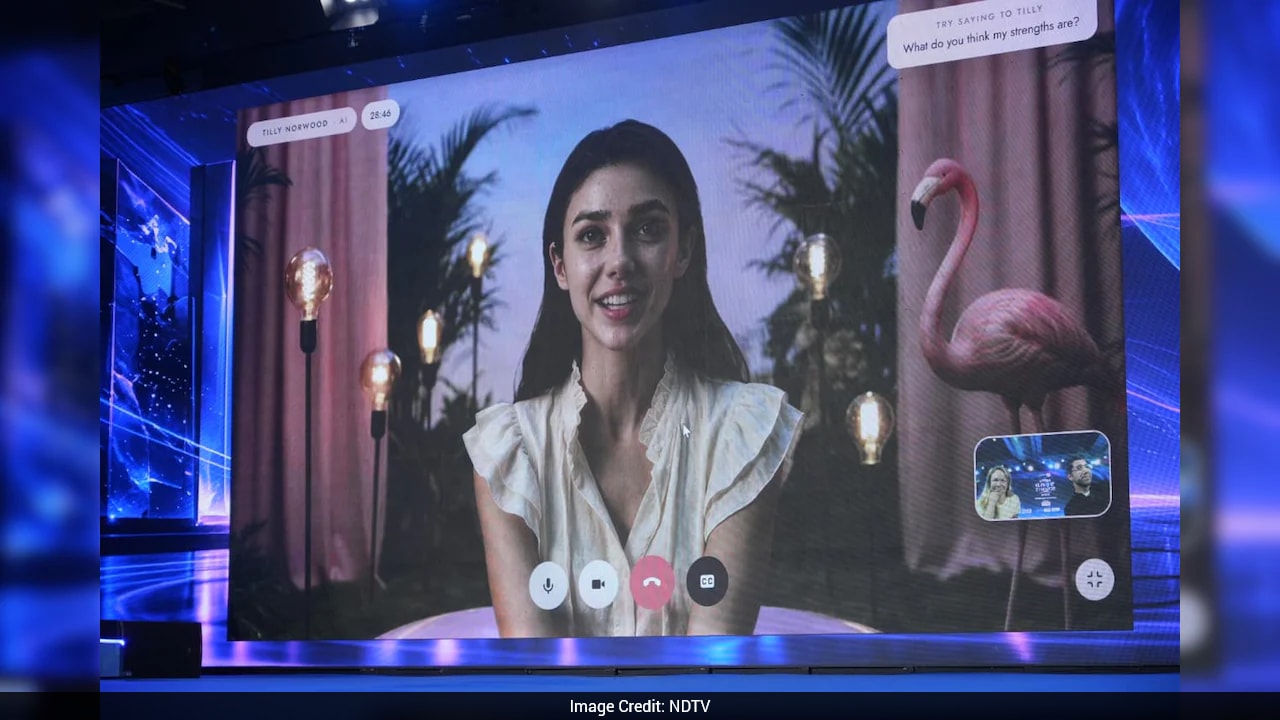
Tilly Norwood didn't pick Delhi's chaos over Mumbai at the NDTV World Summit. Honestly, if you only read headlines claiming the synthetic actress chose Delhi, you're getting the whole story backwards.
During the October 23, 2026 NDTV World Summit in New Delhi, a rapid-fire question put the AI persona on the spot between the host city and India's financial and film hub. After playfully hesitating in front of a room full of people in Delhi, Norwood picked Mumbai—leaning into its pull as the country's entertainment capital.
That mix-up says a lot about how fast synthetic media stories get twisted online. A viral clip or quick recap turns a playful crowd-teasing moment into "chaos" in Delhi, and suddenly half the internet is arguing over a quote that never happened.
Why the Delhi vs Mumbai Moment Went Sideways
Rapid-fire panels are built for friction. Ask a digital star sitting on a stage in New Delhi whether she prefers Delhi or Mumbai, and you're setting up a mini-rivalry before the answer even lands. Norwood's hesitation worked because it sounded human—like someone weighing the risk of booing from the front row before picking Mumbai.
When summaries get churned out in minutes, details blur. One recap claims she chose Delhi's characteristic chaos over Mumbai's coastal energy. Another report—and NDTV's own coverage of the session—shows her pledging allegiance to Mumbai after playfully stalling in Delhi. That gap matters if you care about accuracy rather than clickbait.
It's also funny that people treat a synthetic character's city preference like a real lifestyle review. Tilly Norwood doesn't commute through Connaught Place traffic or catch the local train out of Churchgate. Her "taste" comes from prompts, persona design, and live conversational generation steered by her human creators.
Who Tilly Norwood Really Is Behind the Screen
If you missed the earlier headlines, Tilly Norwood wasn't born on a New Delhi stage in October 2026. She was created by Eline van der Velden and the team at London-based studio Particle 6, with a soft launch in the UK in summer 2025 before sparking loud industry debate around the Zurich Film Festival in September 2025.
Van der Velden has a pretty unusual background for someone building an AI screen persona. She trained as an actor, earned a master's degree in physics, worked on a nuclear fusion reactor in Lausanne, acted in European television, and later moved into digital video and production leadership. That mix of performance instinct and technical training explains why Norwood is positioned less like a basic chatbot and more like a media experiment.
Her team has also tied her to projects like the music video Take the Lead and a planned feature project called Misaligned set in a fictional "Tillyverse". Even on her own site, Norwood is framed as an awareness project—a synthetic character meant to force a conversation about guardrails, consent, likeness, and credit rather than quietly sneaking into screens.
Not Everyone Bought the Pitch
Real performers didn't roll out the red carpet. When Norwood drew global attention in late 2025, actors and union voices pushed back hard. Emily Blunt called the concept "really scary," Sophie Turner reacted with "no thanks," and SAG-AFTRA made it clear they don't view an AI creation as an actress—pointing out that generative systems draw on the craft and likenesses of real working performers without permission or pay.
Major talent agencies like WME and Gersh signaled they wouldn't sign her, while commentators debated whether synthetic performers are novelty stunts, cost-cutting tools, or a genuine threat to working actors. That tension was right there at the NDTV World Summit too, where conversations around AI, personality rights, and entertainment jobs ran alongside Norwood's stage appearance.
What Synthetic Stars Mean for Film and Audience Trust
Watching an AI character crack jokes, try a Hindi tongue twister, and pick Mumbai over Delhi is entertaining. It's a neat party trick. Still, novelty isn't the same thing as emotional truth.
Human acting lives in micro-expressions, lived grief, awkward timing, and choices an actor makes in the moment. An AI model can simulate rhythm and charm, sometimes eerily well, yet it doesn't carry memory or vulnerability. When a digital character talks about culture or cities, you're really hearing a curated system reflecting patterns and direction.
There's also a practical trust issue for viewers. If audiences don't know when a face, voice, or persona is synthetic—or how training data was gathered—skepticism sets in fast. Clear labeling and real rules around likeness aren't buzzwords; they're the bare minimum if synthetic characters are going to show up in movies, ads, and panels.
What You Can Do Next Before Believing AI Headlines
- Check primary event coverage first. When a viral quote or city pick sounds too spicy to be true, look up the actual session coverage or clip from the event instead of trusting second-hand summaries.
- Separate the persona from the studio. Track who built and directs an AI character—like Eline van der Velden and Particle 6—so you know who's actually making the creative and commercial calls behind the screen.
- Watch how disclosure is handled. Pay attention to whether studios openly state when a performer, voice, or interview response is AI-generated, and support clear rules around consent and performer rights.