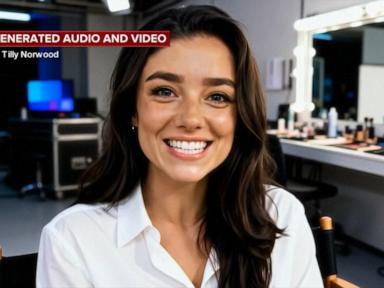
The headlines want you to think Hollywood just crossed a permanent line. Tilly Norwood, the digital creation cooked up by London-based studio Particle 6, is officially set to star as the lead in an upcoming comedy-drama called Misaligned. Her creators are calling it a historic hybrid production. They want you to think it's a massive leap forward.
Let's be clear about what this actually is. It's a marketing stunt wrapped in a tech demo. Don't forget to check out our previous coverage on this related article.
The industry isn't "hiring" Tilly Norwood. You can't hire a bunch of code. Actor and filmmaker Luke Barnett nailed it on social media when he reminded everyone that the company making the movie is the exact same company that owns the asset. They're just deploying their own digital puppet and calling it a protagonist. The premise of the film sounds almost parody-level meta. It's set in the "Tillyverse," a surreal digital world inside the Cloud where a rogue dark-web bot convinces a bodyless AI to abandon her guardrails.
But behind the tech-bro buzzwords lies a deeply flawed understanding of why people watch movies in the first place. To read more about the context here, GQ provides an in-depth summary.
The Core Deficit of the Digital Actor
Eline van der Velden, the CEO of Particle 6, has defended her creation by comparing the direction of AI characters to directing animation or puppetry. She claims it's just a new paintbrush.
That argument completely misses the mark.
When you watch an animated film, you're looking at a performance meticulously crafted by human animators who inject their own lived experiences, heart, and micro-expressions into every frame. When you watch a live-action film, you're connecting with a human soul.
SAG-AFTRA hit back hard against the project, reiterating a point they made when Tilly first sparked outrage last year. Tilly Norwood isn't an actor. She's a character generated by a computer program that was trained on the work of countless professional performers without their permission or compensation.
Think about the mechanics of great acting. An actor like Scarlett Johansson or Natalie Portman—both names Van der Velden wildly threw around as benchmarks for Tilly—draws on real grief, real joy, and genuine human messiness to deliver a line. A computer program doesn't have a childhood. It doesn't know what it feels like to lose a friend or fall in love. It only knows how to predict the next most likely pixel or vocal inflection based on stolen data.
Why the Tech Pitch Doesn't Hold Up
The studio claims they've brought together thirty film creatives, writers, and editors, "upskilling" them to work alongside AI specialists. They argue this streamlines the movie production process and slashes budgets.
But cheaper doesn't mean better.
Audiences are already hitting a wall of profound exhaustion with synthetic content. We see it in the immediate backlash against AI-generated promo art, weirdly smooth streaming visual effects, and dead-eyed video game characters. Film is a medium built on empathy. If you strip away the human element from the core of the narrative, you destroy the very reason people buy a ticket.
The synopsis of Misaligned notes that as Tilly becomes more human, she "begins to develop shame that her very being has been built on the whole of humanity." Honestly, that's the only accurate part of this entire project. The shame is baked right into the source code.
The True Path Forward for Filmmakers
If you're an indie filmmaker, producer, or actor worried about these developments, don't panic. The worst thing you can do is try to compete on their terms by rushing out your own synthetic assets.
Lean hard into what software cannot replicate. Write scripts that depend on intense, messy human chemistry. Focus on practical effects, raw close-ups, and unpredictable performances. Double down on community building and authentic storytelling. Audiences can smell corporate tech-worship from a mile away, and they'll always reward creators who treat them like humans, not data points.