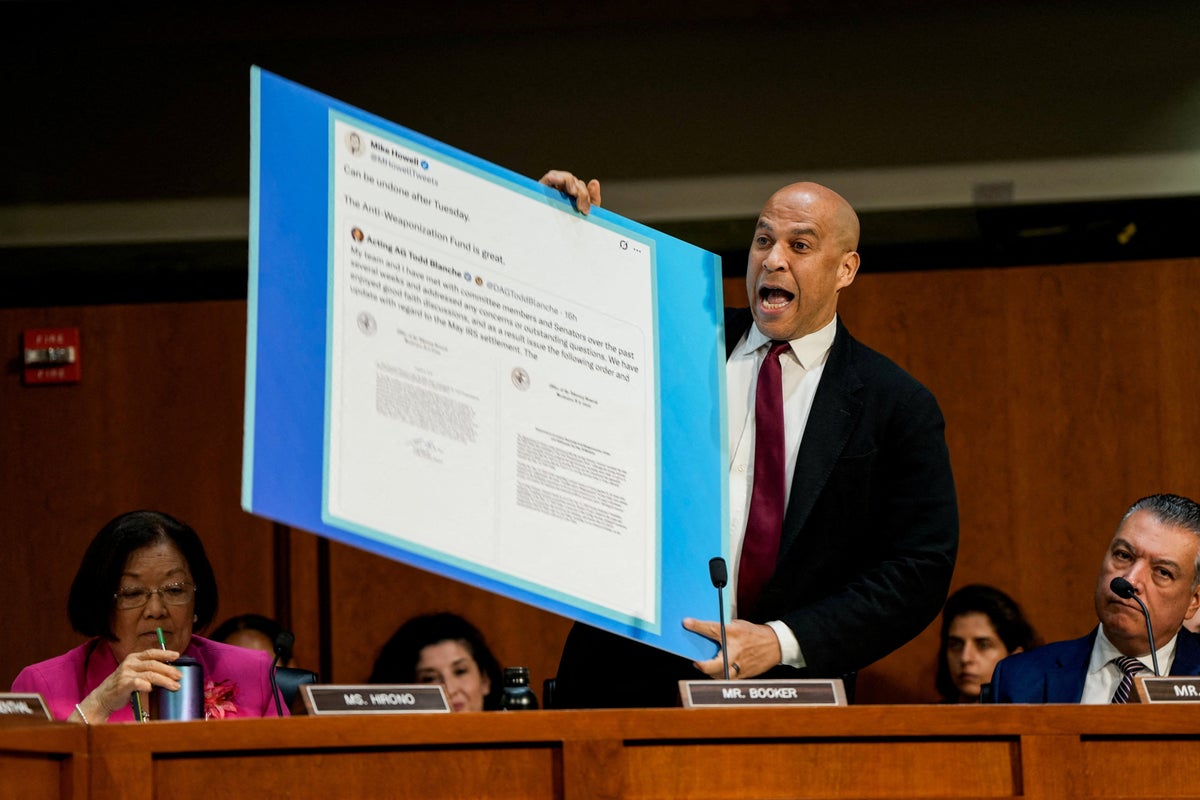
The debate over Todd Blanche sitting as the nation's top law enforcement officer isn't about standard legal qualifications. Everyone agrees he knows the law. The real question is whether a former personal defense attorney can ever truly separate himself from the man who hired him. During high-stakes confirmation hearings before the Senate Judiciary Committee, Blanche slipped up in a way that spoke volumes, telling lawmakers right to their faces, "I'm his lawyer" before awkwardly scrambling to correct the tense to past-tense.
For critics watching the Department of Justice transform over the past year, that slip wasn't a linguistic accident. It was a diagnostic truth.
Senators on both sides of the aisle spent months wrestling with what a Blanche-led Justice Department actually looks like. While committee Republicans ultimately advanced his nomination on a 12-10 party-line vote following a fierce standoff over a controversial IRS legal settlement fund, the underlying tension remained completely unresolved. You cannot easily pretend that a short-term acting attorney general who spent years defending Donald Trump in federal courtrooms has suddenly morphed into an independent guardian of public trust.
The Cost of Partisan Loyalty at the Justice Department
When a defense lawyer steps straight from representing the executive into running the agency tasked with investigating federal crimes, things change fast. Under Blanche's tenure as acting head, the department has seen an exodus of career personnel. Morale has cratered. Critics point to a series of aggressive policy maneuvers and targeted investigations directed at political opponents as proof that institutional independence has taken a backseat to personal allegiance.
The friction reached a boiling point over a multi-billion-dollar government settlement involving Trump's personal tax records. Skeptical Republican senators like John Cornyn and Thom Tillis dug their heels in, refusing to back Blanche's permanent promotion until he offered explicit written guarantees to scrap a controversial payout fund designed to compensate allies. Blanche eventually relented, issuing written concessions just hours before the committee vote.
Yet, seasoned lawmakers remain deeply uneasy. Concessions written on paper don't erase months of institutional pressure. Critics argue that the fundamental architecture of the Justice Department has already been bent to serve presidential grievances rather than neutral statutory execution.
What This Means for Institutional Independence
The historical firewall between the White House and the Justice Department exists for a reason. Watergate taught the country what happens when the nation's chief prosecutor answers primarily to the individual sitting in the Oval Office instead of the Constitution. When top aides reportedly instruct regional prosecutors to view the president as their "chief client," the traditional boundaries blur past the point of recognition.
Blanche's defenders argue that he brings necessary stability and a mandate to clean house after years of perceived administrative overreach. They point to falling violent crime rates and an overhaul of enforcement priorities as victories for the current administration. But supporters and detractors are fundamentally looking at two different realities. One side sees efficiency and reform; the other sees the systematic erosion of neutral oversight.
As the nomination moves toward the full Senate, the math is tight and the stakes are massive. Defections from moderate Republicans like Susan Collins, who announced she will vote against confirmation due to concerns over department independence, highlight the political peril. Whether Blanche secures the votes or not, the core dilemma isn't going away. Once an attorney general treats the executive as their primary client, earning back public trust becomes an uphill battle that no Senate floor vote can easily fix.