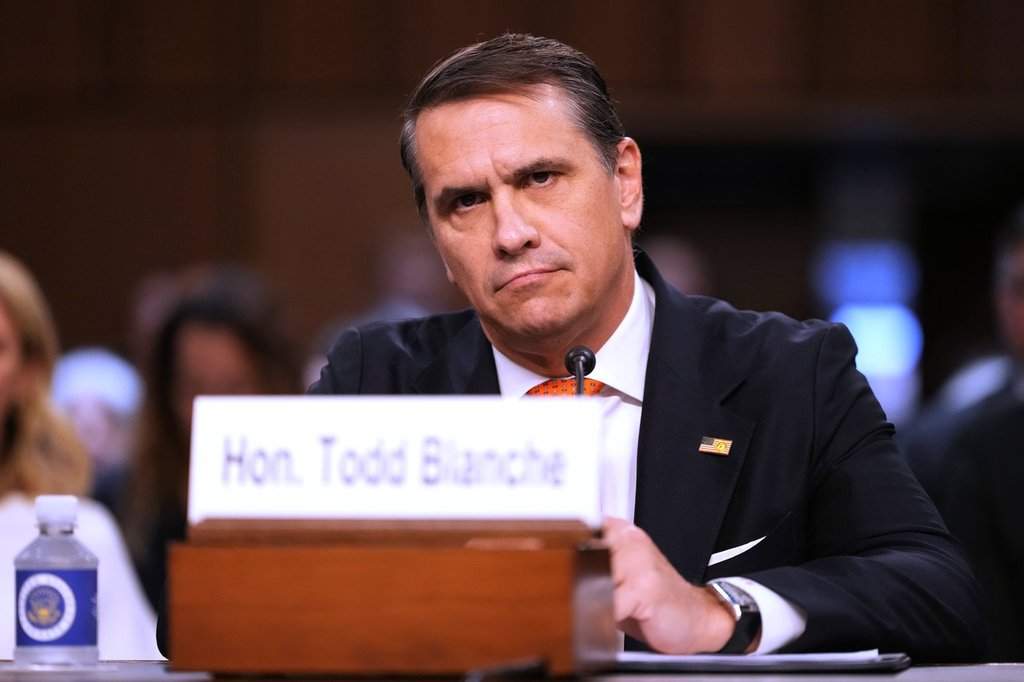
Politics moves fast. Sometimes, survival requires eating your own words. Acting United States Attorney General Todd Blanche just learned this the hard way.
For weeks, Blanche insisted that the proposed 1.8 billion dollar anti-weaponization fund was completely dead. He told the Senate Judiciary Committee it was a moot point. He swore under oath that the Department of Justice would never move forward with it.
Yet, words didn't satisfy key Senate holdouts. They wanted ink on paper. They wanted a formal, binding order that erased the controversial payout mechanism once and for all. Late on a Sunday night, Blanche finally signed that order.
The math became simple. Without that signature, his confirmation vote was dead in the water. With it, the path to the attorney general seat finally opened up.
The Anatomy of a Controversial Settlement
How did Washington get here? It started with a high-stakes legal battle. Donald Trump filed a massive lawsuit against the Internal Revenue Service over leaked tax records.
The Justice Department reached a settlement in May that resolved the litigation. Tucked inside that agreement was a plan to establish a multi-billion-dollar fund. Proponents argued it would compensate people targeted by federal overreach. Critics immediately labeled it a slush fund.
The backlash crossed party lines. Lawmakers from both sides of the aisle raised alarms. They pointed out that the money could theoretically compensate individuals convicted for their involvement in the January 6 Capitol riot.
Pressure mounted instantly. Senators started blocking legislative items. The political cost spiked overnight.
Why Verbal Promises Stopped Working
Blanche walked into a buzzsaw during his confirmation hearings. Senators John Cornyn of Texas and Thom Tillis of North Carolina dug their heels in.
They didn't care about verbal assurances. They looked at conflicting signals coming from the White House. While Blanche claimed the fund was gone, Trump publicly suggested the idea was still alive. Trump even argued that victims of government abuse deserved payback.
That public contradiction spooked lawmakers. Legal experts pointed out an uncomfortable truth. If an agreement isn't formally amended, a future administration or clever legal counsel could attempt to enforce the original contract.
Cornyn and Tillis made their condition clear. No written cancellation means no vote. Blanche had to choose between defending a defunct white paper agreement or securing his career-defining promotion.
He chose the paperwork.
Inside the Formal Order
The signed document leaves zero ambiguity. The Justice Department released details to the public to prove the reversal is absolute.
The text outlines specific facts:
- No administrative members ever took office.
- Zero dollars transferred hands.
- No claims process was ever built.
- Absolutely no payouts occurred.
The order states plainly that the fund never truly existed outside the initial settlement concept. Blanche also tightened the language surrounding tax protections. The updated terms make sure that audit safeguards apply strictly to retroactive matters, leaving future tax filings fully subject to IRS oversight.
What This Means for the Vote
The Senate Judiciary Committee faces a very different landscape now. The standoff is over. Cornyn's office signaled satisfaction with the compromise, clearing a vital hurdle for the Republican majority.
Opposition remains fierce among Democrats, but party-line math often dictates committee outcomes. Blanche gave the Senate conservatives what they demanded.
The nomination moves forward. The $1.8 billion fund is officially history.
Actions speak louder than testimony. Blanche found out that in modern Washington, ink on paper is the only currency that counts.
Watch the report on Blanche's announcement
This video provides additional context regarding Todd Blanche addressing the House and confirming the termination of the funding proposal.
http://googleusercontent.com/youtube_content/1