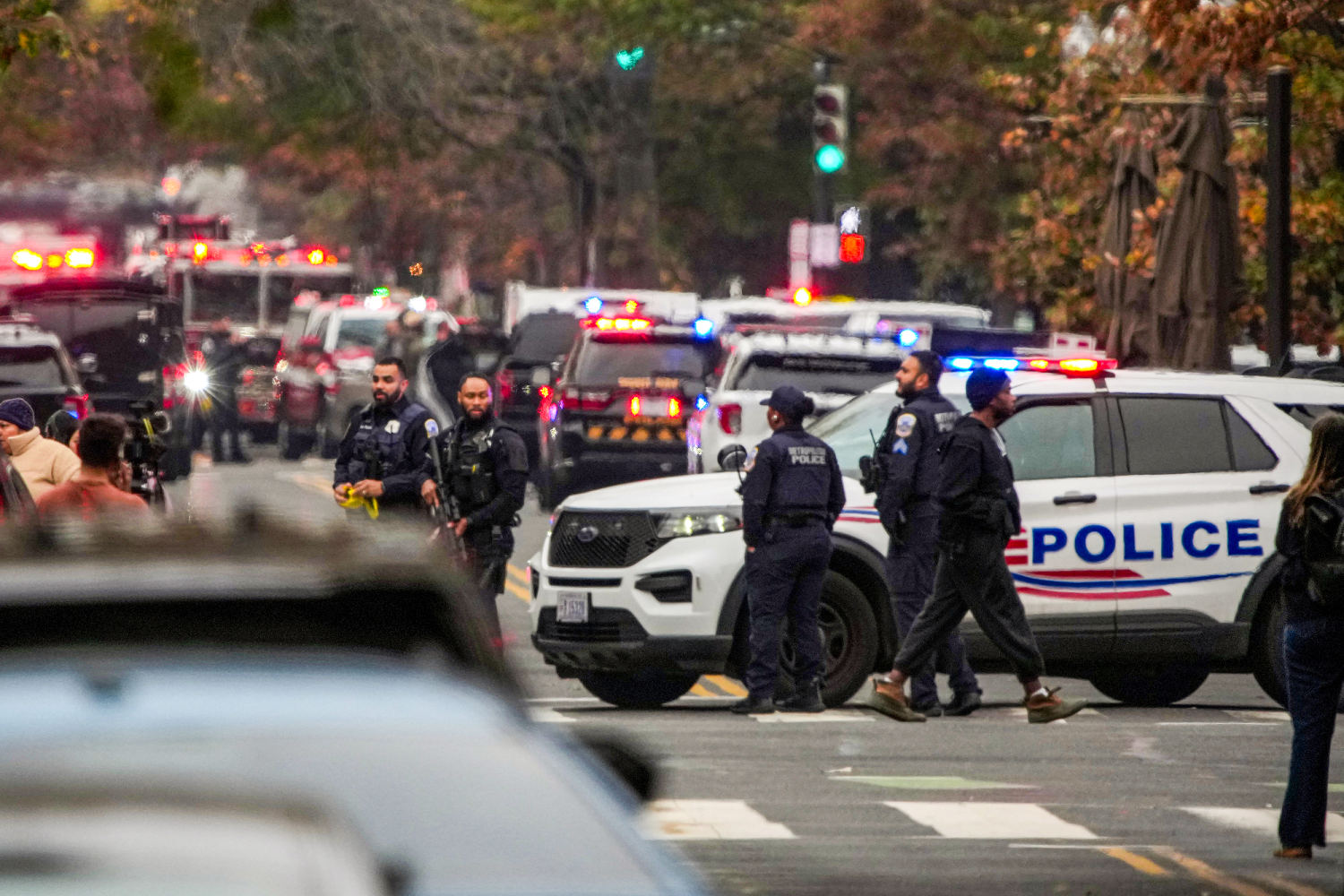
Media coverage of gun violence often relies on a predictable formula that reduces real human tragedy to an ideological gotcha. When news broke regarding a shooting at a Washington, D.C. gym where one of the victims was identified as a gun control activist, coverage immediately zeroed in on the perceived irony of the situation.
This framing reflects a widespread tendency in modern journalism to prioritize viral conflict over substantive analysis. By highlighting the victim's political advocacy in the headline, outlets implicitly invite audiences to view a violent crime through a partisan lens—either as grim validation of the victim's warnings or as a cynical critique of their policy positions. Both reactions miss the reality of how public policy, urban safety, and individual vulnerability actually intersect. Meanwhile, you can find other developments here: Ballistic Risk and Crowd Proximity Failure During Papal Motorcade Transits in Peru.
The Myth of Individual Immunity
A common misconception embedded in debates over personal safety and firearm regulation is the idea that advocacy—or personal preparation—grants immunity from random violence. In discussions surrounding high-profile incidents, commentators from opposing camps frequently argue past one another using flawed premises.
- The "Policy Shield" Fallacy: Critics of gun control often suggest that if strict local firearm laws fail to prevent a shooting in a jurisdiction like Washington, D.C., those laws are entirely ineffective. Criminologists and public health researchers, including analysts at the RAND Corporation, note that municipal firearm regulations operate within a broader regional context; firearms frequently cross state lines from jurisdictions with looser regulations, complicating local enforcement.
- The "Heroic Deterrence" Fallacy: Conversely, advocates of expanded concealed carry frequently argue that armed bystanders could have stopped the attack. While defensive gun uses do occur, data analyzed by institutions such as the Harvard Injury Control Research Center indicates that active shooter situations in chaotic, close-quarters environments like gyms present severe tactical challenges, including the risk of crossfire and misidentification by responding law enforcement.
Focusing on a victim's political identity obscures these structural realities. An activist working on legislative reform is operating at a macro level, attempting to influence long-term statistical outcomes, not claiming personal invulnerability in daily life. To see the full picture, check out the recent report by The Guardian.
Why Algorithmic Journalism Distorts Public Policy
Modern digital newsrooms operate under intense pressure to capture attention within seconds. Editors know that juxtaposition—placing a victim's advocacy directly alongside the violence they campaigned against—drives clicks, shares, and heated comment sections.
According to media researchers at the Pew Research Center, emotionally charged and conflict-driven framing consistently outperforms nuanced policy reporting in social media engagement. However, this editorial shortcut carries significant consequences for public understanding:
- False Equivalence in Debate: Framing a tragedy around a victim's beliefs equates policy advocacy with personal hypocrisy, shifting scrutiny away from the perpetrator's actions and motives.
- Erosion of Empirical Context: Readers are drawn into debates over personal irony rather than examining verifiable data on local crime trends, mental health interventions, or illegal firearm trafficking.
- Compassion Fatigue: Turning victims into political symbols desensitizes the public to the human cost of violence, reinforcing partisan tribalism instead of encouraging productive civic dialogue.
Moving Beyond the Headline
Understanding gun violence in American cities requires looking past biographical coincidences and examining the mechanics of how these incidents occur. Researchers studying urban gun violence emphasize several overlapping factors that rarely make it into breaking news alerts:
- Interstate Trafficking Pipelines: Federal trace data from the Bureau of Alcohol, Tobacco, Firearms and Explosives (ATF) consistently shows that a substantial percentage of firearms recovered in crimes in strict-regulation jurisdictions originate from out-of-state purchases.
- Targeted vs. Random Violence: Many public shootings are not purely random acts, but the culmination of interpersonal disputes, domestic conflicts, or acute behavioral crises that intersect with easy access to lethal weapons.
- Environmental Security: Private venues like fitness centers face unique challenges in balancing open public access with physical security, regardless of the surrounding municipality's legal framework.
Evaluating these variables requires sustained attention and rigorous reporting, neither of which fits neatly into a provocative headline.
A Better Standard for Coverage
Responsible journalism and informed public discourse demand separating a victim's civic engagement from the circumstances of their victimization. Whether a person advocates for stricter firearm laws, champions Second Amendment rights, or remains entirely uninvolved in politics has no bearing on their right to safety in a public space.
True analytical rigor means resisting the urge to turn tragedy into an ideological scoreboard. When evaluating breaking news on violent crime, readers should look past the sensational framing and ask harder questions about root causes, enforcement mechanisms, and systemic solutions.