The traditional transatlantic defense framework operates on a structural asymmetry that has reached its economic and strategic breaking point. At the NATO summit kickoff in Ankara, the conflict between American strategic expectations and European security execution moved from a debate over budgetary metrics to a fundamental dispute over operational utility. The underlying friction is not merely political theater; it is a structural divergence in how maritime security, regional deterrence, and industrial defense capacity are valued and funded.
To analyze this fracture, the alliance must be viewed not as a political collective, but as a transactional defense mechanism bound by a complex cost function. When the United States assesses its return on security investment, it evaluates the alliance against three primary strategic variables: regional burden-sharing, alignment on external theaters, and territorial defense sovereignty. Current friction points reveal a widening gap across all three pillars.
The Maritime Security Bottleneck and External Alignment
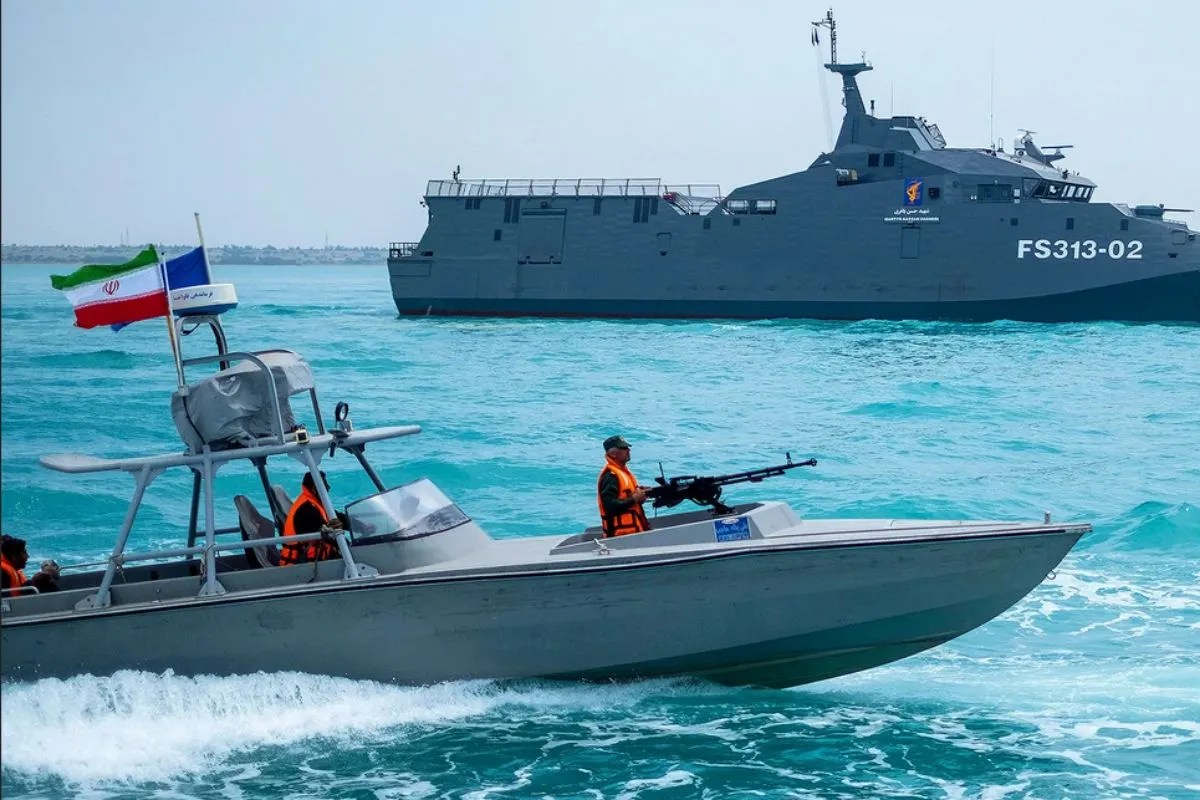
The operational breakdown of the alliance is clearest in maritime choke points, specifically the Strait of Hormuz. Following the closure of the strait by Tehran after localized military engagements, a stark divergence in strategic priorities emerged.
The Western European refusal to deploy naval assets or provide operational support to secure the Strait of Hormuz exposes a critical vulnerability in the alliance's transactional logic. The asymmetry is highlighted by energy reliance data:
- The United States: Holds substantial domestic energy reserves, making it structurally insulated from direct supply shocks originating in the Persian Gulf.
- Western Europe: Remains structurally dependent on crude oil and liquefied natural gas (LNG) transiting the Gulf states.
Despite this asymmetric risk, the financial and operational burden of keeping these shipping lanes open has fallen heavily on U.S. Central Command assets. This mismatch creates a classic free-rider dilemma. The European policy of strategic decoupling—benefiting from maritime security protocols funded by Washington while refusing to commit tactical units to out-of-area operations—undermines the U.S. expectation of mutual assistance. This dynamic explains why diplomatic relationships, such as the bilateral link between Washington and Rome, have frayed over specific operational refusals.
The Geopolitical Real Estate Calculation: The Arctic and Greenland
The strategic value of NATO territory is being recalculated through a framework of resource access and denial. The status of Greenland illustrates this shift. As Arctic ice recedes, opening up new northern sea routes and exposing deep-water mineral reserves, the island has transformed into a critical front for near-peer competition.
The current administrative arrangement, where Denmark retains sovereignty over Greenland but underinvests in its regional defense infrastructure, creates a security vacuum. U.S. intelligence tracking reveals an increased presence of Chinese and Russian surveillance vessels and scientific research hulls operating in the waters surrounding Greenland.
From a strict defense optimization perspective, a territory of that size, lacking independent radar networks, deep-water naval bases, and rapid-response air wings, requires significant external capital to secure. The U.S. military occupies and funds the infrastructure at Pituffik Space Base (formerly Thule Air Base), tracking ballistic missile threats over the Arctic pole. When Denmark fails to match this commitment with corresponding defense outlays, the territory transitions from a strategic asset into a subsidized liability for American forces. This calculation drives the argument that administrative and defense control should align with the nation providing the actual security guarantee.
The European Defense Industrial Lag
In response to sustained pressure, NATO leadership reported an 11% increase in core European and Canadian defense spending for 2026, reaching an estimated $634 billion compared to $571 billion in 2025. While presented as progress, an economic analysis reveals structural deficiencies in this capital deployment:
- Diminishing Marginal Growth: The 11% increase marks a significant deceleration from the 19% growth rate recorded between 2024 and 2025. The spending curve is flattening before European forces have achieved structural self-sufficiency.
- Procurement Inefficiencies: European defense spending remains highly fragmented across national supply chains, leading to redundant research and development cycles and a lack of ammunition interoperability.
- The Scale Mismatch: The total European allocation of $634 billion is still dwarfed by the unified U.S. defense budget. Furthermore, it fails to match the scale of adversaries like Russia, which has transitioned to a total war economy, allocating nearly half of its national budget to military production.
This capital lag has direct operational consequences. If Europe cannot manufacture artillery shells, air defense interceptors, and unmanned systems at a pace that matches near-peer threats, its defense architecture remains a "paper tiger." The alliance requires an industrial overhaul to turn idle production facilities into high-capacity manufacturing centers.
The Realignment of Bilateral Alliances
As multilateral trust erodes, U.S. strategic planning is shifting toward bilateral arrangements with high-utility partners. The growing relationship between Washington and Ankara demonstrates this realpolitik approach.
Turkey occupies a vital geographic pivot controlling access to the Black Sea via the Bosporus and Dardanelles straits. Unlike Western European nations that hesitant to deploy hard power, Turkey maintains a massive standing military and a highly active defense industry. By positioning itself as a more reliable partner, Ankara secures advanced technology transfers, including potential reintegration into the F-35 fighter jet program. This bilateral transaction shows how Washington intends to reward active strategic compliance while sidelining allies that rely on legacy treaties rather than current capability.
The structural reality is clear. The U.S. security umbrella over Europe was built on the assumption of a stable, predictable continent that served as a staging ground against a singular threat. Demographic shifts, changing migration patterns, and fractured domestic energy policies have fundamentally altered Europe's internal stability and strategic focus over the last twenty years. If European nations do not rapidly scale up their industrial defense output and align with broader maritime security operations, the U.S. will continue to reallocate its forward-deployed forces out of the European theater, shifting capital to regions where strategic returns are directly matched by ally capability.