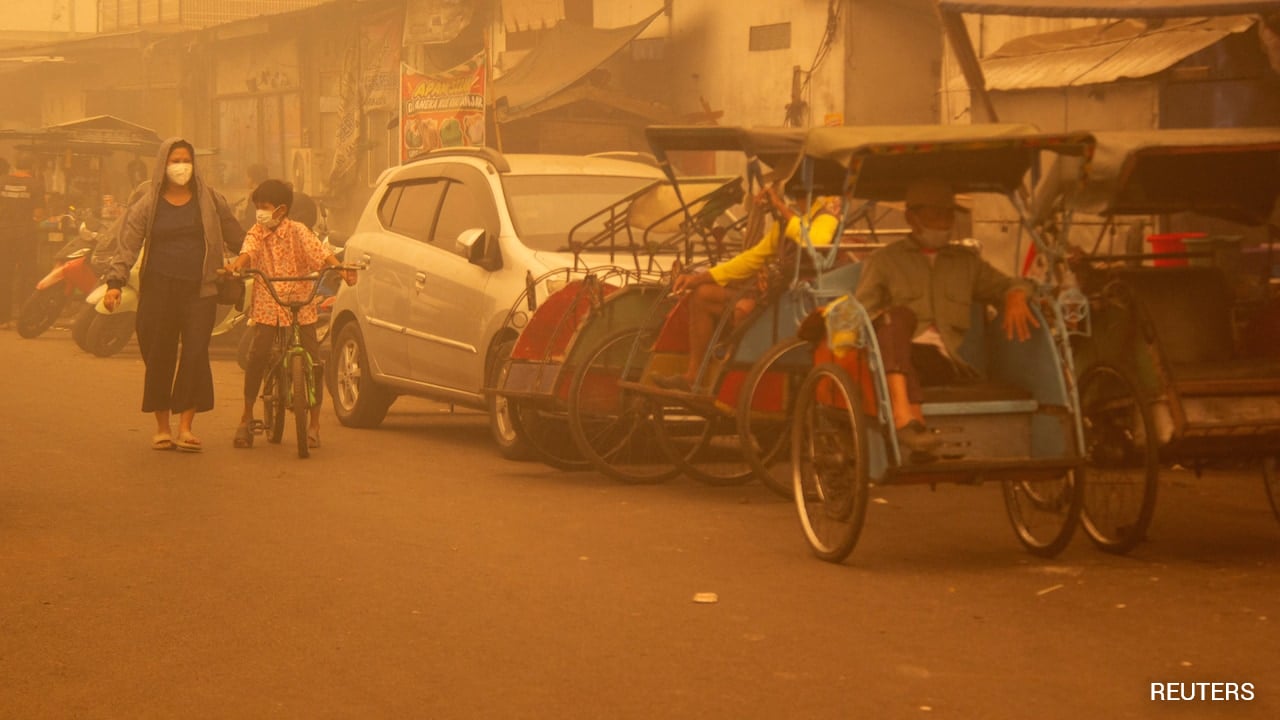
Headline figures like a 600% surge in oxygen tank and air purifier sales during a Southeast Asian haze crisis compress complex supply-chain, clinical, and behavioral dynamics into a single click-friendly metric. When wildfire smoke from drained Indonesian peatlands blankets neighboring countries—exacerbated by dry seasonal patterns and climate drivers such as El Niño—retailers and medical suppliers experience sharp demand shocks. Yet treating a percentage spike as a straightforward market trend obscures critical distinctions between acute medical necessity, defensive household spending, physical equipment limits, and broader macroeconomic costs.
To understand what actually happens when transboundary smoke hits Southeast Asia, analysts need a structured breakdown rather than a surface summary of rising sales. Four mechanisms govern this phenomenon:
- Demand bifurcation separates urgent clinical respiratory equipment from discretionary indoor air filtration.
- Technical duty cycles constrain how much continuous relief different devices can deliver under sustained smoke exposure.
- Externalized cost transmission shifts damages from land-clearing and fire-prone peatland management onto public health systems, tourism, and household budgets.
- Intervention friction determines whether regulatory actions, weather shifts, or supply-chain scaling resolve the bottleneck first.
Demand Bifurcation Between Clinical Oxygen and Air Purifiers
Standard headline coverage groups oxygen tanks and air purifiers together because both sit under the umbrella of "clean air" responses during severe haze. Economically and clinically, they serve fundamentally different functions.
An air purifier acts as a localized indoor filtration barrier. It draws ambient indoor air through mechanical or composite filters—typically targeting fine particulate matter ($PM_{2.5}$) and combustion aerosols—to lower indoor pollutant concentrations relative to outdoor air. Purchase decisions here reflect risk aversion, household budget elasticity, and real-time Air Quality Index (AQI) or Pollutant Standards Index (PSI) alerts. Retail surges can move rapidly when readings cross unhealthy thresholds; for example, Singapore retailer Gain City reported air purifier demand rising to nine times early-season August levels following a sharp pickup in October 2026.
Oxygen tanks and concentrators, by contrast, address physiological hypoxemia and respiratory distress rather than ambient particulate filtration alone. Patients with chronic pulmonary conditions, older adults, or individuals experiencing acute breathing difficulty rely on supplemental oxygen when smoke aggravates airway inflammation or reduces effective oxygen transfer. Demand for these units is far less discretionary and much more constrained by clinical prescription pathways, medical supply inventory, and caregiver readiness.
A known fact from regional reporting is that manufacturers and medical distributors face acute operational strain during peak haze episodes, working against tight turnaround times as demand spikes. What remains an educated hypothesis—due to limited public SKU-level disclosure across retail chains—is how much of a headline percentage jump comes from panic stockpiling of consumer purifiers versus genuine clinical replenishment of medical oxygen hardware. Percentage growth figures also depend heavily on the baseline: a modest off-peak sales base in August naturally produces steep percentage multiples when a major smoke plume arrives in October.
Duty Cycles, Filter Saturation, and Operational Bottlenecks
Buying a device does not equal uninterrupted protection. Every piece of air or oxygen equipment operates within physical duty cycles and consumable maintenance limits that shape real-world effectiveness during multi-week haze events.
Operational constraints across hardware categories break down along clear engineering lines:
- Runtime and refill limits: Portable oxygen tanks provide a finite supply—typically around three hours of continuous use—making them ill-suited for round-the-clock home management without frequent swapping or refilling. Oxygen concentrators can operate continuously for roughly 24 hours at a stretch by separating oxygen from ambient room air, provided power supply and thermal limits are respected.
- Particulate loading and filter lifespan: High aerosol concentrations accelerate filter loading. In heavy smoke conditions, purifier and concentrator intake filters capture dense loads of soot and organic particulates much faster than under normal urban conditions. Neglecting filter replacement degrades airflow, reduces clean air delivery rate (CADR), and strains motors or compressors.
- Envelope leakage: Even a high-capacity purifier cannot maintain clean indoor air if doors, windows, or ventilation ducts allow high-particulate outdoor air to infiltrate continuously. Indoor air quality is a mass-balance race between filtration rate and infiltration rate.
From an operational standpoint, supply bottlenecks rarely appear solely at the factory gate. Warehouse handling, filter stock availability, last-mile delivery delays, and technician servicing capacity—mirroring broader spikes in air-conditioning servicing during hot, hazy spells—often become the binding constraints during acute regional spikes.
The Cost Function of Transboundary Smoke
A narrow retail lens misses who pays for the crisis. Defensive purchases of purifiers, oxygen equipment, and air-conditioning maintenance represent only a fraction of the total economic burden.
When peatlands and dry vegetation burn—frequently worsened by drought conditions tied to El Niño—smoke crosses national borders without respecting fiscal boundaries. In economics, this is a classic negative externality: activities or land-use practices generating smoke impose costs on third parties across the region who have no direct control over ignition or fire suppression.
Direct Household and Healthcare Costs
Households absorb immediate out-of-pocket expenses for purifiers, replacement filters, masks, clinic visits, and lost workdays. Public health systems absorb surge pressure through emergency visits, respiratory admissions, and subsidized haze-clinic schemes. Epidemiological and economic assessments during major Southeast Asian haze episodes consistently link elevated particulate exposure to excess mortality and substantial national costs, such as estimates of $1.9 billion in damages for Malaysia and $2.32 billion for Singapore during the 2026 episode.
Sectoral Spillovers and Policy Friction
Beyond healthcare and household spending, dense haze disrupts outdoor tourism, aviation visibility, school operations, and outdoor events. Governments respond through a mix of domestic firefighting mobilization, cloud seeding or weather modification, cross-border waterbombing assistance, legal investigations, fines against implicated firms, and regional coordination frameworks.
The core cause-and-effect chain runs from peatland dryness and fire ignition to transboundary aerosol transport, followed by spikes in defensive consumer spending and public health strain—while enforcement and diplomatic accountability lag behind the immediate atmospheric shock.
Tactical Evaluation of Household and Organizational Responses
People searching for answers around a haze-driven sales surge usually want to know whether buying equipment actually works, what to prioritize, and how long conditions last. Evaluating responses systematically helps avoid wasted spend.
Step-by-Step Decision Logic for Households and Facilities
- Audit the building envelope first: Close windows and gaps before running purifiers continuously. Filtering leaky rooms wastes filter life and electricity.
- Match equipment to the actual risk: Use properly sized particulate filtration for general indoor air improvement; reserve medical oxygen equipment for individuals with clinical need and medical guidance.
- Plan for consumables and power: Keep spare replacement filters on hand during active haze weeks, and verify backup options if a patient depends on continuous oxygen support.
- Track official air indices and health advisories: Base daily adjustments—such as limiting outdoor exertion or using designated haze clinics—on verified local air quality readings and health ministry guidance rather than social media rumors.
Limitations and Why There Is No Silver Bullet
No consumer device solves a regional airshed problem. Indoor purifiers do not protect commuters, outdoor workers, or pedestrians exposed to high ambient concentrations. Furthermore, purifiers designed for fine particles may have limited effect on certain combustion gases unless equipped with appropriate sorbent media, and undersized units struggle in large or poorly sealed spaces.
Equally important, hardware spikes are temporary weather-linked phenomena rather than permanent structural shifts. Once seasonal rains return—as heavy rainfall in late October 2026 helped curb fires and allowed Singapore's National Environmental Agency to cease haze advisories in early November—emergency retail urgency cools rapidly. Buyers who purchase impulse gear at peak prices without checking room coverage or filter availability often end up with underperforming units once skies clear.
Strategic Play for Market and Risk Leaders
For executives, procurement leads, and policymakers navigating future dry-season haze cycles, the winning play is shifting from reactive peak-week purchasing to pre-season readiness and supply-chain buffering. Retailers and medical distributors should pre-position core filtration units, replacement filters, and concentrator servicing capacity ahead of the August-to-October dry window rather than chasing spot demand mid-crisis, while corporate and institutional operators should pair indoor air-quality monitoring and filtration upgrades with clear outdoor-work protocols triggered by objective air-quality thresholds.
Southeast Asia Haze Crisis Air Purifier Demand
This video directly examines how Indonesian forest fire smoke drives air purifier demand and economic strain in Singapore during the haze crisis.