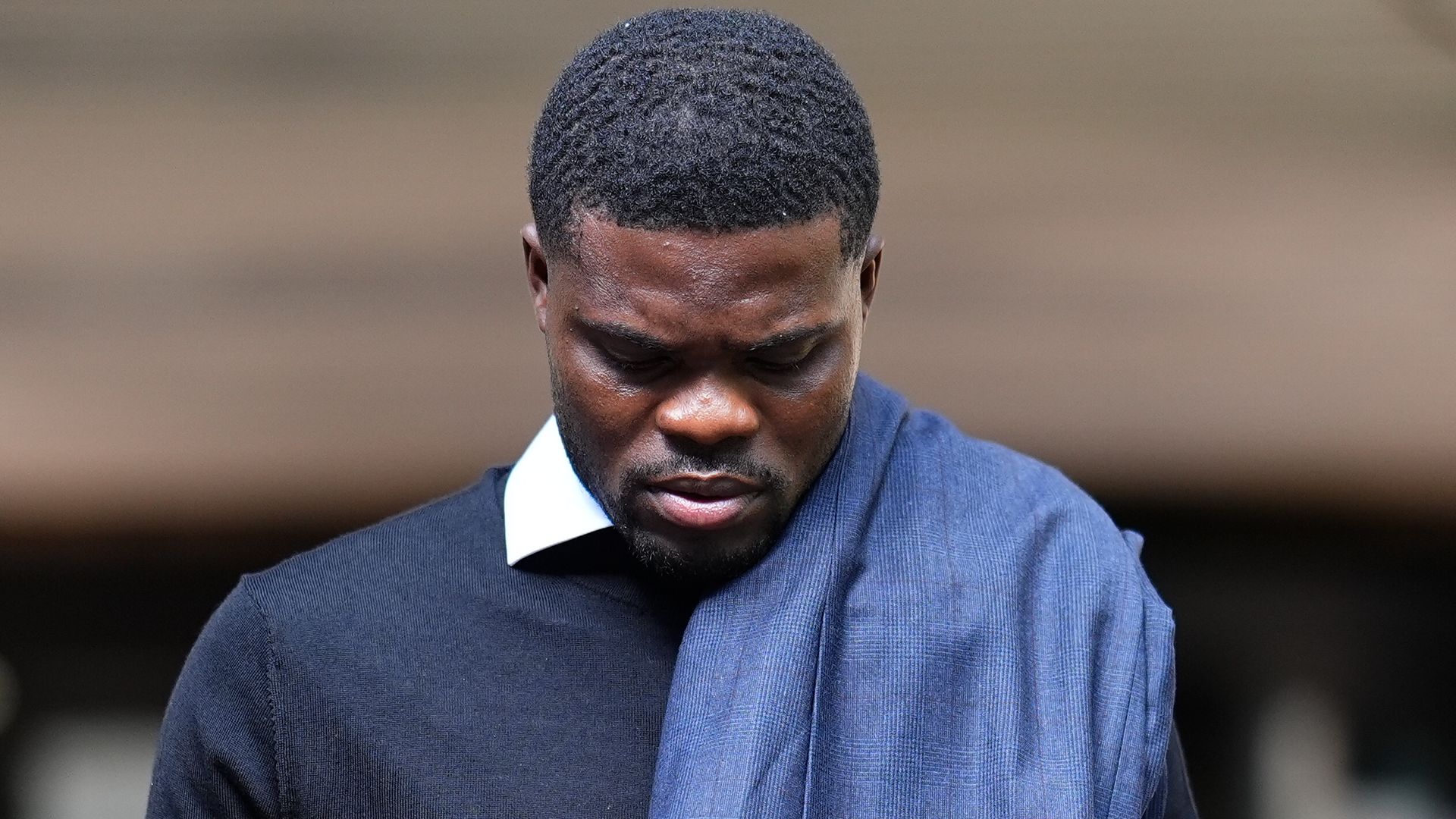
Justice is not a spectator sport. Yet, every time a headline breaks regarding an athlete like the former Arsenal player facing rape allegations, the public treats the courtroom like a stadium. We are obsessed with the scoreboard of "guilty" versus "not guilty," ignoring the fact that the process itself is fundamentally broken for everyone involved. The "lazy consensus" in modern reporting suggests that these trials are either a victory for accountability or a tragedy of false accusations. Both sides are wrong.
The reality is far more uncomfortable. The intersection of massive wealth, celebrity status, and a rigid legal framework creates a vacuum where truth goes to die. We don't have a justice system for the elite; we have a high-stakes negotiation disguised as a moral crusade.
The Myth of the Level Playing Field
The media likes to frame these cases as a David vs. Goliath battle, but they can't even agree on who is who. Is it the powerful multi-millionaire athlete against a lone accuser? Or is it a young man with everything to lose against a legal system designed to extract settlements and reputation points?
The truth is that wealth buys a different version of time. In the legal world, time is the only currency that matters. When a high-profile figure enters a plea of "not guilty," they aren't just contesting a fact; they are launching a multi-year war of attrition.
I have seen how these legal teams operate. It is not about "disproving" a claim. It is about creating enough procedural noise that the signal of the original event becomes impossible to hear. They use private investigators to dissect the social media history of everyone involved. They leak strategic snippets to friendly journalists. By the time a jury sits down, the "facts" have been filtered through so many layers of PR and legal posturing that they are unrecognizable.
Why the Prosecution Always Starts From Behind
The public assumes that because the police bring charges, the case is "strong." That is a fundamental misunderstanding of how the Crown Prosecution Service (CPS) or any similar body operates in high-profile sexual assault cases.
Charging an athlete is a political act as much as a legal one. There is immense pressure to show that "no one is above the law." This often leads to cases being brought forward that are legally thin but socially necessary.
Consider the mechanics of consent in a world of extreme power imbalances. The law requires a binary answer: yes or no. But life, especially the life of a famous athlete, exists in a gray zone of perceived entitlement and social pressure. The legal system is a 19th-century tool trying to solve 21st-century social complexities. It fails because it looks for "smoking guns" in rooms where only shadows exist.
The Cost of the "Not Guilty" Plea
When an ex-Arsenal player or any public figure pleads not guilty to additional charges, the narrative immediately shifts to "defiance."
This isn't defiance. It's a calculated business move.
In the sports world, a "guilty" plea is a death sentence for a career. A "not guilty" plea, followed by a long, drawn-out trial, allows for the possibility of a "not proven" or "acquittal on technicality" result. For a professional athlete, a messy acquittal is still a win because it allows them to maintain a shred of marketability.
- Financial Leverage: A trial costs hundreds of thousands, if not millions. Most accusers do not have the stomach or the bank account for a three-year ordeal.
- Reputational Management: By contesting every charge, the defense forces the media to use the word "alleged" for years. This buys the athlete time to move assets, pivot their career, or simply wait for the public to lose interest.
- The Jury Paradox: We ask twelve random people to ignore the fact that the person in the dock was a local hero. We ask them to ignore the headlines. It is a psychological impossibility.
The Performance of Due Process
We cling to the idea that "due process" is a holy, objective path to the truth. It isn't. It is a performance.
In these cases, the defense isn't just arguing law; they are performing a character study. They need the athlete to look like a victim of his own fame. They need the accuser to look like a seeker of fortune or fame. It is a brutal, dehumanizing theater that leaves both parties scarred, regardless of the verdict.
The "People Also Ask" section of our collective consciousness usually wants to know: "Why do these cases take so long?" or "Why wasn't he suspended immediately?"
The answer is brutal: Because the institutions involved—the clubs, the leagues, the sponsors—care more about liability than morality. They wait for the legal system to do their dirty work so they don't have to take a stand. They hide behind "ongoing investigations" to avoid making a decision that might alienate a fan base or trigger a breach of contract lawsuit.
The Institutional Failure of Football
Let’s talk about the clubs. Whether it’s Arsenal or any other Premier League giant, the institutional response to allegations of sexual violence is a masterclass in cowardice.
They provide the "best legal counsel." They offer "support services." What they don't do is acknowledge that the culture they've built—one of total insulation and god-like status for teenagers with eight-figure bank accounts—is a breeding ground for these issues.
When a player is charged, the club’s primary concern is the asset’s value. If they can play, they play. If the optics get too bad, they are "unavailable for selection" due to "personal reasons." This lack of transparency doesn't protect the player; it breeds a culture of suspicion and toxicity that infects the entire sport.
The False Choice of the Public
The public is conditioned to pick a side. You are either "Team Believe" or "Team Due Process."
This is a false choice designed to keep us from asking the harder questions. We should be asking why the legal system is so ill-equipped to handle cases of sexual violence that don't involve physical struggle. We should be asking why "not guilty" has become a synonym for "innocent" in the eyes of fans, and "guilty" has become a synonym for "career over" before a single piece of evidence is heard.
We are watching a system that was designed for horse thieves being used to adjudicate the most intimate and complex human interactions.
The Inevitability of the Mess
There is no clean version of this story. There is no version where everyone walks away feeling that justice was served.
If the player is acquitted, the accuser is often branded a liar and hounded off social media. If the player is convicted, the fans cry "setup" and "extortion." The middle ground—the place where a crime may have occurred but cannot be proven beyond a reasonable doubt—is a wasteland of broken lives.
We need to stop pretending that a courtroom verdict settles the moral score. A "not guilty" verdict is a legal status, not a moral exoneration. Conversely, an accusation is a starting point for an investigation, not a final judgment.
The industry insider knows the secret: The trial isn't about finding out what happened in that room. The trial is about who has the better story and the deeper pockets to tell it.
Stop looking for heroes or villains in these headlines. Look at the machinery that turns trauma into a multi-year media circus. Look at the clubs that profit until the very moment they have to cut bait. Look at a legal system that treats the search for truth like a game of chess where the pieces are human lives.
The next time you see a headline about a footballer pleading not guilty to rape, don't check the score. Check the price of the tickets to the show. We are all paying for this failure of justice, and the cost is higher than any transfer fee.