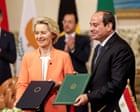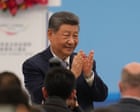
Multilateral economic forums rarely produce binding trade treaties, yet they serve as high-stakes clearinghouses for bilateral power dynamics. During the Asia-Pacific Economic Cooperation (APEC) summit, two distinct geopolitical signals emerged simultaneously: the commencement of direct talks between Chinese President Xi Jinping and Russian President Vladimir Putin, and a statement by U.S. Secretary of State Marco Rubio confirming that President Donald Trump remains serious about engaging North Korean leader Kim Jong-un.
To read these events as isolated diplomatic updates is an analytical failure. They represent competing nodes in a triangular deterrence and alignment system across Northeast Asia. While standard news coverage treats summit sidelines as sequential headlines, a structural analysis reveals a synchronized struggle over leverage, sanction durability, and alliance cohesion.
The Architecture of Parallel Summits
APEC is nominally designed to facilitate free trade and economic integration across the Pacific Rim. In practice, when systemic rivalry intensifies, the forum splits into two parallel operational tracks: the institutional track and the bilateral shadow track.
The institutional track manages supply chain standards, digital trade protocols, and customs harmonization. These discussions proceed incrementally and rarely alter the strategic balance. The bilateral shadow track operates under entirely different mechanics. Leaders use the physical proximity mandated by the APEC calendar to conduct unscheduled or semi-formal signaling without the domestic political costs of hosting a dedicated state visit.
By initiating talks on the margins of APEC, Xi and Putin capitalize on this low-friction environment. Simultaneously, Rubio’s public validation of Trump’s intent toward Pyongyang injects a counter-variable into the exact same news cycle. This is not coincidental timing. In international relations, public signaling during multilateral gatherings functions as a market-clearing mechanism for diplomatic expectations. Each actor states their willingness to transact, forcing counterparties to reprice their strategic risk.
The Sino-Russian Alignment Matrix
When Xi Jinping and Vladimir Putin convene, the primary analytical error is assuming complete strategic convergence. Their relationship is governed by asymmetric interdependence rather than a formal mutual defense treaty. Understanding the mechanics of their dialogue requires breaking their cooperation into three operational pillars.
1. Energy and Resource Arbitrage
Russia possesses vast hydrocarbon and raw material reserves excluded from Western markets by comprehensive sanctions regimes. China possesses the industrial capacity, capital liquidity, and domestic energy demand required to absorb these exports.
- The Mechanism: Russia sells crude oil, pipeline gas, and coal to Chinese state-owned enterprises at discounts relative to global benchmarks.
- The Leverage: Beijing captures the price spread, lowering domestic manufacturing input costs, while Moscow secures hard currency and renminbi reserves to fund state operations. Neither side requires ideological alignment for this transaction to clear; the economic incentives are self-enforcing.
2. Diplomatic Backstopping and Veto Coordination
In multilateral institutions such as the United Nations Security Council, Beijing and Moscow coordinate diplomatic cover to neutralize Western-led resolutions. When Xi and Putin meet at an economic summit like APEC, their visible alignment signals to the Global South that a viable diplomatic counterweight to the G7 exists. This reduces the diplomatic isolation of Moscow while allowing Beijing to position itself as a stabilizing global broker without committing military assets to European theaters.
3. The Friction Points of Asymmetry
A rigorous assessment must account for the structural limits of this partnership. China’s economy is roughly ten times the size of Russia’s. Beijing remains acutely sensitive to secondary sanctions that could sever its access to U.S. and European consumer markets and high-end semiconductor supply chains.
Because of this vulnerability, Chinese financial institutions enforce strict compliance ceilings on Russian transactions. Putin seeks deeper technological transfers and unrestricted financial clearing; Xi must calibrate support to keep Russia stable without triggering catastrophic economic retaliation from Washington and Brussels. Their talks are therefore negotiations over risk tolerance, not declarations of boundless unity.
The Washington-Pyongyang Re-Engagement Variable
Marco Rubio’s assertion that Donald Trump is serious about meeting Kim Jong-un introduces a disruptive variable into the Northeast Asian security architecture. To evaluate the operational reality of this signal, one must separate diplomatic theater from strategic utility.
The Mechanics of Top-Down Personalist Diplomacy
Traditional diplomatic channels rely on working-level negotiators to establish technical parameters—such as verification protocols, enrichment caps, and phased sanctions relief—before heads of state meet. The Trump model inverts this sequence. It centralizes decision-making at the executive level, bypassing bureaucratic bottlenecks to test whether a direct transaction between leaders can break a multi-decade stalemate.
Rubio’s role in articulating this stance is critical. As Secretary of State, his public confirmation institutionalizes what might otherwise be dismissed as off-the-cuff executive rhetoric. It signals to both allies and adversaries that the State Department is actively modeling scenarios for executive-level engagement with North Korea.
Strategic Objectives Behind the Signal
Why signal openness to Kim Jong-un during an APEC summit dominated by Sino-Russian optics? Three strategic objectives drive this maneuver:
- Driving a Wedge in the Moscow-Pyongyang Axis: Russia and North Korea have deepened military and economic ties, trading artillery shells and ballistic missiles for fuel, food, and dual-use technology. By opening a direct channel to Washington, the U.S. offers Kim an alternative diplomatic outlet, raising the price Moscow must pay for Pyongyang’s exclusive alignment.
- Complicating Beijing’s Buffer Strategy: China views North Korea as a vital geographic buffer against U.S. forces stationed on the Korean Peninsula, yet Beijing dislikes Pyongyang’s nuclear provocations because they justify expanded U.S. missile defense deployments in the region. Direct U.S.-North Korea talks marginalize Beijing’s role as the indispensable intermediary, forcing Xi to expend diplomatic capital to stay relevant in peninsular affairs.
- Resetting Deterrence Baselines: Engagement does not equate to concession. Establishing a communication channel allows Washington to gauge Pyongyang’s red lines directly, reducing the probability of miscalculation during periods of heightened missile testing.
The Limits and Failure Modes of Both Tracks
Strategists must avoid treating diplomatic signals as guaranteed outcomes. Both the Xi-Putin talks and a potential Trump-Kim summit face severe structural constraints that limit their transformative potential.
The Verification Bottleneck in North Korea
The central failure mode of any U.S.-North Korea engagement remains the gap between denuclearization and arms control. Pyongyang views its nuclear arsenal as the ultimate guarantee of regime survival, particularly after observing the fate of non-nuclear states in Eastern Europe and the Middle East.
If Washington demands complete, verifiable, and irreversible denuclearization as a precondition for sanctions relief, talks will stall immediately. Conversely, if Washington settles for a nuclear freeze—capping fissile material production and long-range missile testing in exchange for partial sanctions relief—it tacitly accepts North Korea as a de facto nuclear power. That outcome would severely degrade the credibility of the U.S. nuclear umbrella over South Korea and Japan, potentially triggering nuclear proliferation debates in Seoul and Tokyo.
The Multilateral Coordination Trap for Beijing
China faces a structural contradiction at APEC. Its overarching economic goal at the summit is to attract foreign direct investment, stabilize trade flows, and present itself as a champion of open global markets. Yet hosting high-profile bilateral talks with Vladimir Putin directly undermines that narrative among Western capital allocators and Pacific Rim allies.
Beijing cannot simultaneously maximize its economic integration with the West and its strategic alignment with Moscow. Every public display of solidarity with Putin increases the political risk premium for Western corporations operating in China, accelerating supply chain diversification into Southeast Asia and India.
Operational Implications for Regional Stakeholders
When the world’s largest economies engage in simultaneous bilateral signaling, secondary powers in the Asia-Pacific must adjust their risk posture immediately.
- Seoul and Tokyo: South Korea and Japan face the immediate risk of diplomatic marginalization. If Washington pursues direct talks with Pyongyang, Seoul must ensure its security interests are not traded away in a bilateral deal. Tokyo will respond by accelerating its defense spending increases and deepening trilateral intelligence-sharing mechanisms to lock in U.S. institutional commitments regardless of executive-level summits.
- ASEAN Economies: Member states of the Association of Southeast Asian Nations benefit from the friction between major powers, provided it remains below the threshold of kinetic conflict or total trade embargo. As U.S.-China-Russia competition hardens, manufacturing capital continues to flow into Vietnam, Malaysia, and Indonesia as multinational firms execute "China Plus One" supply chain strategies.
- Global Commodity Markets: The Xi-Putin discussions directly affect global energy and agricultural pricing. Continued bilateral settlement of energy trades outside the U.S. dollar system gradually erodes the efficacy of Western financial sanctions, creating a bifurcated commodity market where sanctioned barrels trade at persistent discounts to non-sanctioned benchmarks.
Tactical Execution Framework for Analysts and Policymakers
To track whether these APEC sidelines translate into structural shifts rather than temporary news cycles, monitor three specific leading indicators over the next ninety days:
- Cross-Border Payment Settlement Volumes: Watch for changes in the volume of bilateral trade settled in local currencies between Moscow and Beijing, as well as any enforcement actions taken by the U.S. Treasury against Chinese regional banks. A spike in secondary sanctions indicates that the Xi-Putin talks crossed Washington’s red lines regarding dual-use industrial support.
- Working-Level Diplomatic Movement at Panmunjom or New York: Executive statements mean nothing without bureaucratic follow-through. Track whether U.S. Special Representatives initiate low-level contact through the "New York channel" at North Korea’s UN mission. Absence of working-level contact within sixty days confirms that Rubio’s statement was purely a deterrent signaling maneuver aimed at Moscow and Beijing.
- Joint Military Exercise Calibration: Observe the scale and timing of U.S.-South Korea joint military drills. A unilateral scaling back or postponement of major exercises is the clearest operational signal that Washington is clearing the runway for a direct Trump-Kim summit.
Do not price in a grand bargain on the Korean Peninsula or a formal military alliance between China and Russia. Instead, position for prolonged, managed friction where bilateral summitry is used tactically to extract short-term leverage while underlying structural rivalries remain unresolved.