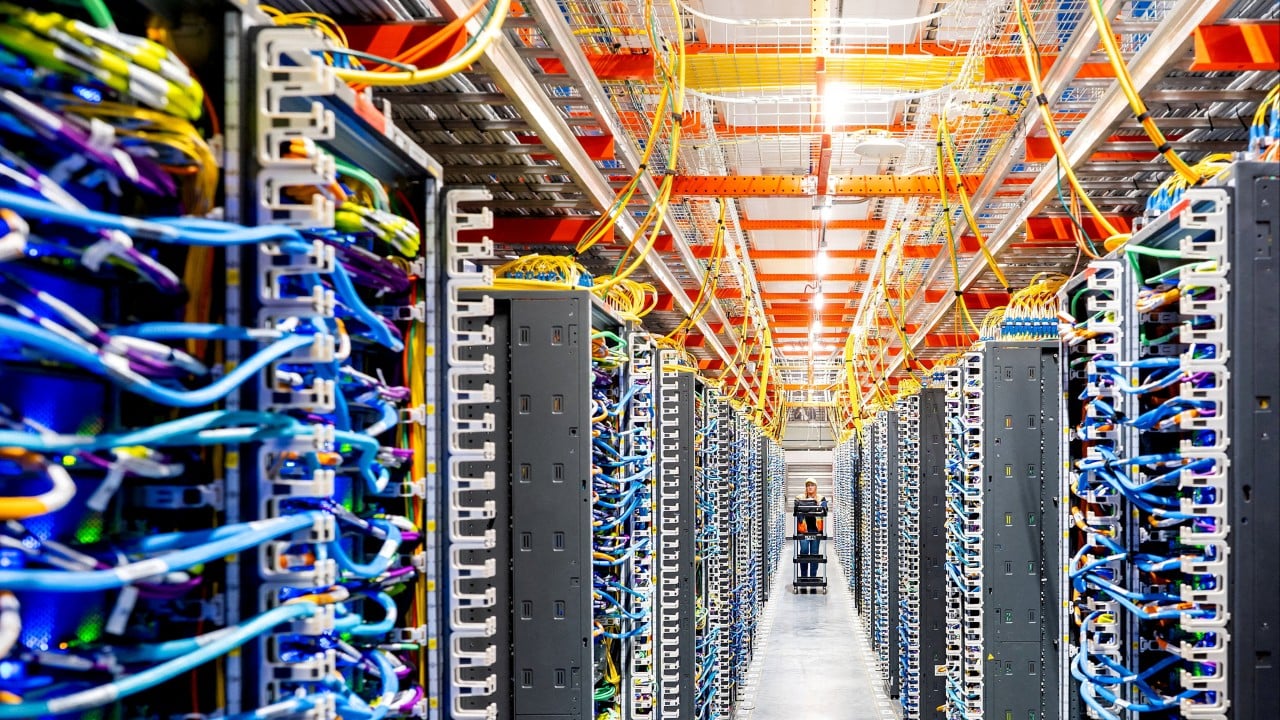
The headlines are predictable. They scream about "gold rushes" and "power grid strain." They paint a picture of Southeast Asian nations—Malaysia, Indonesia, Thailand—heroically battling the tropical humidity to keep GPUs from melting. The narrative is always the same: we need more power, more water, and more efficient air conditioning to survive the AI boom.
It is a fundamentally flawed premise.
The industry is obsessed with the wrong metric. We are pouring billions into keeping silicon cold in a region that is naturally hot, using a cooling philosophy designed for Northern Virginia in 2005. If you are building a data centre in Johor or Jakarta and your primary concern is the "tropical heat," you have already lost. You are fighting physics with a checkbook, and the grid will always win that fight.
The real crisis isn’t the heat. It’s the refusal to rethink the thermal envelope.
The PUE Lie and the Efficiency Trap
Power Usage Effectiveness (PUE) is the industry's favorite vanity metric. It measures the ratio of total facility power to the power delivered to IT equipment. In the tropics, a PUE of 1.4 is considered "good." Operators brag about hitting 1.2 by using massive cooling towers and evaporative systems.
They are lying to themselves.
PUE ignores the Carbon Intensity of the energy being sucked from a coal-heavy grid. It ignores the Water Usage Effectiveness (WUE) in regions where water security is a ticking time bomb. Most importantly, it ignores the fact that modern chips don’t need to be kept at 18°C.
I’ve seen operators in Singapore spend 40% of their OpEx just to keep a room feeling like a refrigerator because "that’s how we’ve always done it." It’s a legacy mindset from the era of spinning hard drives and fragile tape backups. Modern enterprise-grade GPUs and CPUs are rated to operate at internal temperatures that would scald human skin.
We are air-conditioning the machines as if they were fragile office workers. They aren’t.
Stop Fighting the Humidity
The "tropical challenge" is a myth sold by cooling hardware vendors. Yes, Southeast Asia is humid. Yes, it is hot. But humidity is only an enemy if you are using traditional air-based cooling.
If you shift to Direct-to-Chip (DTC) liquid cooling or Full Immersion Cooling, the ambient temperature of the room becomes almost irrelevant. Water and dielectric fluids are orders of magnitude more efficient at carrying heat than air. By moving to liquid, you can let the facility run "hot."
The "Lazy Consensus" says: "We need massive HVAC upgrades to handle H100 clusters in the tropics."
The Reality: "You need to rip out the fans and submerge the racks."
When you submerge a server in a dielectric fluid, the "tropical heat" of 32°C outside is still 50 degrees cooler than the chip’s operating ceiling. You don’t need a massive chiller plant; you need a simple heat exchanger. We are building cathedrals of concrete and fans when we should be building high-tech bathtubs.
The Grid Doesn't Need Saving, It Needs Competition
The common lament is that AI data centres will "break" the national grids of Thailand or Malaysia. This assumes the grid is a static, sacred entity that must be protected.
The most aggressive (and successful) players I’ve worked with don’t want the grid’s protection. They want to bypass it.
The future of Southeast Asian AI isn't "grid-connected"; it's Grid-Independent. We are seeing the rise of the "Sovereign AI Power Plant." If a developer isn't co-locating their data centre with a dedicated solar farm and a massive BESS (Battery Energy Storage System), they are building a liability, not an asset.
The "grid strain" argument is a smoke screen used by slow-moving utilities to justify price hikes. A truly "smart" data centre in the tropics should act as a virtual power plant (VPP), shedding load or pumping stored energy back into the community during peak hours. If your data centre is just a passive consumer of electrons, you aren't an "infrastructure leader"—you're a parasite.
The Myth of the "Singapore Spills"
When Singapore hit the pause button on new data centres a few years ago, the narrative was that the "spillover" to Johor (Malaysia) and Batam (Indonesia) was a desperate grab for land.
It wasn't. It was a Darwinian migration.
Singapore is land-constrained and energy-expensive. The move to Johor isn't a "compromise" because of the heat; it's a strategic play for Energy Density. The next generation of AI training clusters will require 100MW+ per building. You cannot do that in a city-state.
However, the companies moving to Johor are repeating Singapore's mistakes. They are building the same "box in a field" architecture. They are trying to "out-cool" the equator.
Why the Current Strategy Will Fail:
- Water Scarcity: Evaporative cooling in the tropics consumes millions of gallons. Local populations will eventually revolt when their taps run dry so a LLM can process tokens.
- Thermal Recirculation: In dense "data centre parks," the heat rejected by Building A is sucked in by Building B. You end up creating a localized heat island that kills your efficiency.
- Human Talent: You can build a 200MW shed in the jungle, but if your Tier-3 engineers refuse to live three hours away from a major city, your "uptime" is a fantasy.
The "Follow the Sun" Fallacy
People ask: "How can Southeast Asia compete with cold climates like Iceland or Finland for AI?"
The premise of the question is flawed. AI isn't just "training." The real money is in Inference.
Inference—the act of the AI actually answering a user's prompt—must happen near the user. Latency matters. You cannot run the digital economy of 600 million Southeast Asians from a glacier in Reykjavik.
Southeast Asia doesn't need to be "competitive" with the Nordics on cooling costs. It needs to be dominant on localized intelligence. The heat is a tax you pay for being where the people are. If you want to lower that tax, stop buying bigger air conditioners and start redesigning the server motherboard for high-temperature resilience.
[Image comparing air cooling vs liquid cooling thermal conductivity]
Waste Heat is an Asset, Not a Nuisance
In cold climates, data centres boast about heating local swimming pools or greenhouses with their waste heat. In the tropics, we treat heat like trash. We dump it into the atmosphere as fast as possible.
This is a failure of imagination.
Industrial processes in Southeast Asia—food drying, rubber processing, even some desalination efforts—require heat. A data centre is essentially a massive, high-precision electric heater. Why aren't we seeing "Industrial Symbiosis"?
Imagine a data centre cluster in Thailand that provides the base-load thermal energy for a nearby fruit-dehydration plant. You’ve just turned a cooling cost into a secondary revenue stream. Instead, we have "insiders" complaining about the "tropical challenge" while they literally blow money into the wind.
The Radical Shift: High-Temp Computing
The most "disruptive" thing a CTO in this region can do right now is demand hardware that is rated for ASHRAE Class A4 environments. This allows for intake air temperatures up to 45°C (113°F).
If you run your data centre at 40°C, the "tropical heat" outside (32°C) is actually cooling air.
You read that correctly. If your facility is designed to run hot, the natural environment of Malaysia or Indonesia is a heat sink, not a heat source. You can turn off the chillers. You can open the vents.
But the industry won't do it. Why? Because the insurance companies are scared, the facility managers are lazy, and the hardware vendors want to sell you "tropical-grade" cooling kits at a 30% markup.
Stop Asking the Wrong Questions
The media asks: "Can the grid handle the AI gold rush?"
The wrong question.
The right question: "Why are we still building data centres that are dependent on the grid?"
The media asks: "How do we cool servers in the humidity?"
The wrong question.
The right question: "Why are we still using servers that require air cooling?"
Southeast Asia is not a victim of its geography. It is a victim of imported, Western-centric engineering standards that have no business being applied at the equator. The first company to stop "fighting" the heat and start "integrating" it will own the region’s digital future.
The gold rush is real, but the miners are currently trying to dig with wooden spoons and complaining that the ground is too hard. Change the tool.
Build hot. Build liquid. Build independent.
Everything else is just expensive noise.


