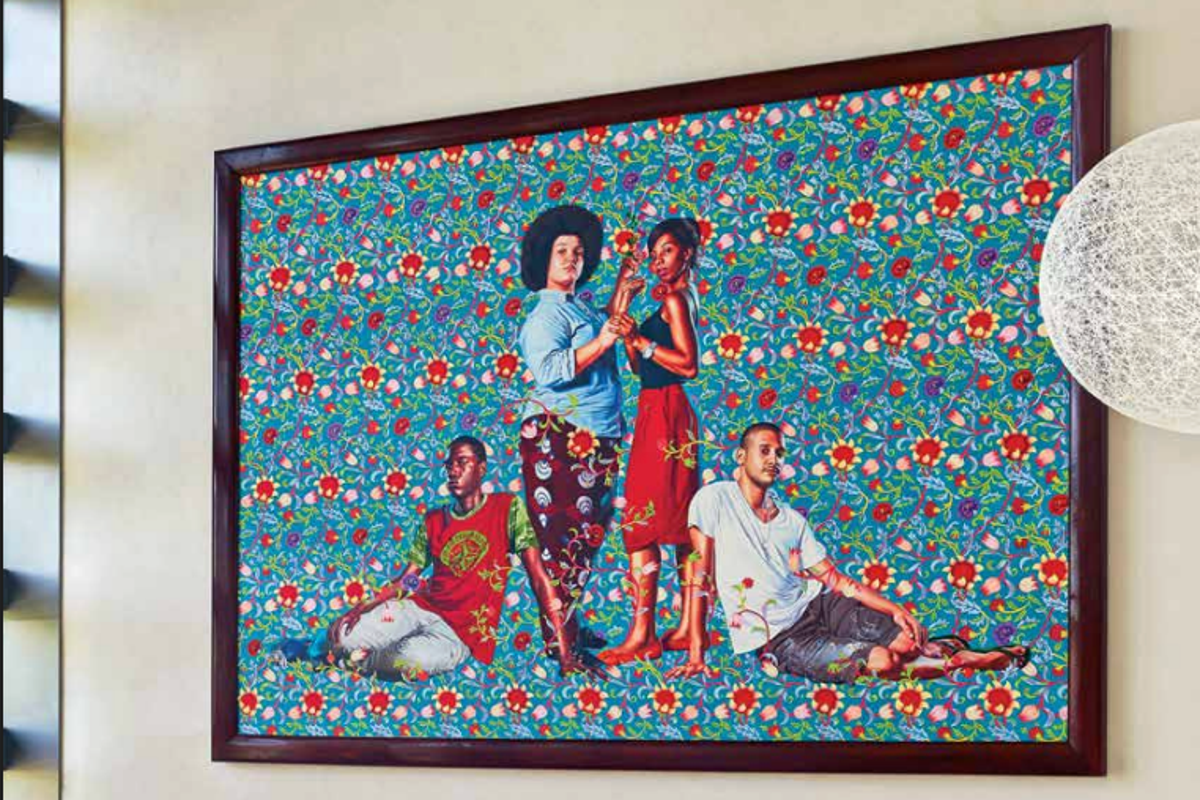
Government bureaucracy rarely moves fast, unless someone spots a piece of modern art they really hate. The Trump administration is currently trying to figure out how to legally offload a painting by Kehinde Wiley, the artist universally recognized for painting Barack Obama’s official presidential portrait.
The artwork in question, titled Young Artists After Siamesas 1960, was pulled straight from the wall of the U.S. Embassy in Santo Domingo, Dominican Republic. Officials didn't just quietly take it down. They filmed the removal, posted it online, and started consulting legal teams to see if they can auction or sell the piece off entirely.
If you are wondering how a routine piece of federal cultural diplomacy turned into a partisan brawl, you have to look at the intersection of modern politics, art, and symbolism.
Inside the Embassy Art Purge
The painting itself isn't entirely new to government inventories. The State Department's Art in Embassies program originally commissioned the piece back in 2013, long before Wiley became a household name for his vibrant portrait of the 44th president. The canvas features four young Dominican artists framed by Wiley's signature, high-contrast botanical background.
To most art historians, it is a standard contemporary piece celebrating local talent. To the current administration, it represents everything they want out of federal spaces.
Erin Scavino, the Trump-appointed head of Art in Embassies, didn't hold back her thoughts on a recent podcast appearance. She labeled the piece "very woke" and "aesthetically terrifying". Shortly after, U.S. Ambassador to the Dominican Republic Leah Campos shared a video documenting the de-installation. She paired the footage with the classic rock track "We're Not Gonna Take It" by Twisted Sister, declaring that the embassy was actively pivoting away from globalist ideologies.
State Department spokespeople have since doubled down on the decision. Rather than focusing purely on the aesthetics of the canvas, officials have pointed toward past controversies surrounding Wiley, including historical statements and unrelated legal accusations which the artist has denied.
Can the Government Actually Sell the Art?
Offloading government-owned art is harder than simply sticking a piece on eBay. Federal inventories are governed by strict property laws.
The State Department is currently deep in talks with legal representatives to determine whether selling Young Artists After Siamesas 1960 is even permissible under federal guidelines. Art acquired through the Art in Embassies program typically remains public property, tied up in federal property management regulations.
If the administration finds a legal loophole to sell the canvas, it will set a fascinating precedent for how incoming political powers handle cultural assets purchased by previous administrations. Usually, diplomatic art rotates quietly behind the scenes. Bringing public spectacle to an embassy paint removal shows a shift in how tangible symbols of culture are weaponized in modern political strategy.
Whether the painting ends up in a private collection, a warehouse, or back in storage, the debate proves that art backed by federal funds is never just about decoration. It's a permanent proxy war over who gets to define American identity abroad.
Check your local federal property auction listings if you are curious about where discarded diplomatic assets eventually land. Otherwise, expect more high-profile art removals as the America First cultural shift continues to sweep through international outposts.


