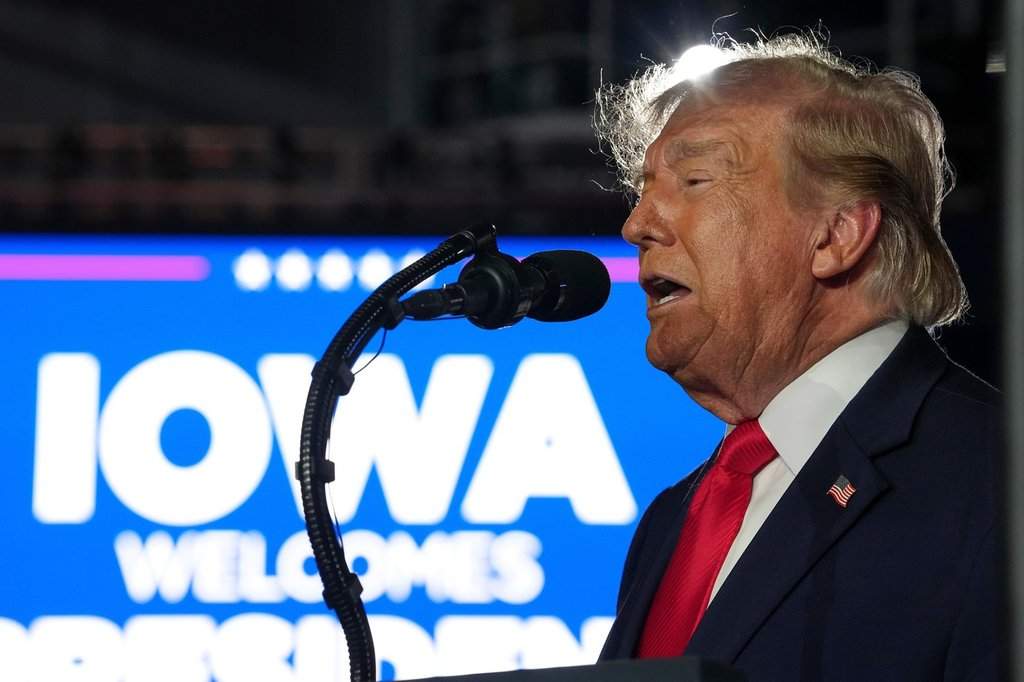
When Donald Trump dropped the news that the United States would wrap up its annual military funding to Israel, political Washington and Jerusalem didn't just blink—they scrambled. For decades, the baseline assumption was simple: the $3.8 billion yearly security package was untouchable. Trump's announcement completely upended that script. But beneath the headlines, the real story isn't about an abrupt check-cancellation. It's about a fundamental shift in how two close allies view transactional security.
Let's look at the actual mechanics behind the noise. Israel receives roughly $3.8 billion annually under a ten-year memorandum, money that primarily funnels right back into American defense contractors for advanced hardware like F-35 fighter jets. When Trump claimed on a live broadcast that the funding would halt by the end of the year and pointed to a mutual understanding with Prime Minister Benjamin Netanyahu, financial analysts in Tel Aviv were caught completely flat-footed. The Israeli Finance Ministry hadn't budgeted for an immediate cliff, and military officials immediately started running emergency numbers to figure out how to patch a sudden 12-billion-shekel hole.
Why the Timing Caught Everyone Off Guard
You have to understand the context of modern political pressure. Trump made it clear he wanted to strip away a major talking point for domestic critics who complain about foreign assistance volumes. By arguing that Israel has matured into an economic powerhouse that doesn't need a handout, he hit a populist note that resonates strongly with voters tired of open-ended foreign commitments.
Yet, translating a media statement into actual policy is notoriously messy. The current ten-year agreement legally runs through September 2028. Pulling the plug years ahead of schedule requires navigating a maze of congressional approvals, existing contracts, and multi-billion-dollar manufacturing orders already in motion. Senior defense analysts point out that even if the political will exists in the White House, the bureaucratic inertia of the Pentagon and Capitol Hill makes an immediate cutoff nearly impossible without triggering massive legal and financial penalties.
Can Israel Absorb the Financial Blow
Most economic watchdogs agree on one fundamental point: Israel is a wealthy, high-tech nation capable of sustaining its own defense in the long run. Defense spending currently hovers around a massive chunk of the national budget, and absorbing a $3.8 billion deficit isn't a walk in the park. It means hard choices. We're talking about potential tax hikes, internal spending cuts, or reallocating resources away from civic infrastructure to keep military readiness at peak levels.
The deeper issue isn't just about cash—it's about industrial integration. Decades of joint funding created a tightly woven web of shared military technology, including missile defense architecture like the Iron Dome. If the direct financial aid turns into a purely commercial arms-sales relationship, the nature of the alliance changes. Israel would buy what it needs with its own funds, but the political leverage Washington traditionally held through aid distribution would shift dramatically.
What Happens When the Smoke Clears
Politicians love grand gestures, but geopolitics moves at the speed of a glacier. Formal discussions for a successor agreement had already started, with proposals floating around to transition the relationship toward joint research, development, and reciprocal economic partnerships rather than straight grants. Trump's declaration throws a grenade into those measured diplomatic talks.
Whether the aid ends this year or phases out closer to the 2028 expiration date, the psychological barrier has already been broken. The era of unquestioned, automatic military checks is facing severe gravity. Both nations are being forced to adapt to a reality where financial self-reliance isn't just an option—it's an inevitable destination.
US to stop $3.8B military aid to Israel by end of 2026: Trump
This video provides direct coverage and context regarding the announcement to end military aid.