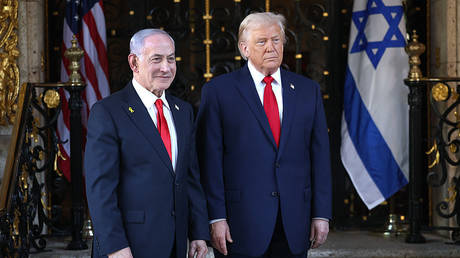
Diplomats rarely make casual phone calls when fighter jets are warming up on the tarmac. When news broke via The Wall Street Journal that Donald Trump decided to "check in" with Israeli Prime Minister Benjamin Netanyahu amid mounting fears of renewed hostilities, Washington insiders immediately started reading between the lines.
It wasn't just a routine catch-up between two longtime political allies. Far from it.
If you've spent any time tracking US-Israel relations over the past decade, you know that the phrase "checking in" is classic diplomatic understatement. In reality, high-level outreach during periods of acute military tension serves a very specific purpose. It's a pressure valve, a temperature check, and sometimes a quiet warning wrapped in friendly rhetoric. Understanding why this conversation matters right now requires looking past the sanitized press readouts and examining the volatile mechanics on the ground across Israel's northern and southern borders.
Why a Routine Check-In Signals Serious Escalation Fears
Standard diplomatic protocol relies on layers of bureaucracy. Normally, national security advisors, ambassadors, and defense secretaries hash out the details long before principals pick up the phone. When Trump bypasses or supplements those channels to speak directly with Netanyahu, it tells you two things immediately. First, intelligence assessments regarding an imminent flare-up are flashing red. Second, traditional diplomatic guardrails aren't holding the line on their own.
Fears of renewed hostilities don't materialize out of thin air. They build up through weeks of stalled negotiations, cross-border skirmishes, and domestic political pressure on both sides of the Atlantic. For Netanyahu, managing a fragile coalition while facing persistent security threats in Gaza, Lebanon, and the broader Iranian axis leaves almost zero room for perceived weakness. Every tactical move carries massive political weight back home in Jerusalem.
Trump operates on a completely different frequency. His foreign policy instincts prioritize rapid deal-making, unpredictability, and avoiding protracted American military entanglements that drain resources without clear victories. When he checks in during a crisis, he's usually trying to figure out whether an ally is about to drag the region into a wider war—and whether that war complicates his own broader strategic goals.
Here is what drives these high-stakes conversations behind closed doors:
- Preventing a multi-front explosion. A localized border clash in the Middle East rarely stays localized for long. One miscalculated strike can trigger retaliatory barrages that pull regional militias and major powers into an uncontrollable spiral.
- Aligning timelines. Political calendars in Washington and Jerusalem almost never match up. What looks like an urgent military necessity to the Israeli cabinet might look like a massive geopolitical headache to the White House.
- Testing leverage. Direct leader-to-leader calls strip away staff talking points. They allow both men to gauge how much flexibility the other actually has before making public commitments they can't walk back.
The History Between Trump and Netanyahu Is Complicated
Most casual observers assume Trump and Netanyahu are always in lockstep. That's a massive misconception. While their public partnership produced historic milestones during Trump's first term—including the recognition of Jerusalem as Israel's capital, the move of the US Embassy, and the signing of the Abraham Accords—their private relationship has seen plenty of friction.
You don't have to dig deep into recent political history to find evidence of this tension. Following the 2020 US presidential election, when Netanyahu quickly congratulated Joe Biden, Trump felt deeply betrayed and didn't hide his frustration in interviews. Later, in the immediate aftermath of the October 7 attacks in 2023, Trump publicly criticized Israeli intelligence failures and Netanyahu's handling of the crisis before the two eventually repaired their rapport ahead of the 2024 election cycle.
I've watched international leaders navigate these kinds of personal dynamics for years, and one rule holds true every single time. Shared public interests never erase personal memory. Both men are transactional pragmatists. Netanyahu knows that American diplomatic cover, weapons shipments, and financial backing remain indispensable for Israel's defense architecture. Trump knows that Netanyahu commands significant influence among key American domestic constituencies, yet he also refuses to be taken for granted or boxed into a corner by any foreign leader.
When they talk during a moment of rising military tension, that shared history sits right there on the line with them. Neither man is naive about how the other operates.
What Renewed Hostilities Would Actually Look Like on the Ground
Talk of "renewed hostilities" often sounds abstract when read in a financial newspaper like The Wall Street Journal. On the ground in Israel and its neighboring territories, there's nothing abstract about it. Modern warfare in the Levant has evolved drastically over the last few years, and a fresh round of fighting wouldn't simply replay past conflicts.
First, consider the sheer exhaustion of military hardware and personnel. Prolonged reserve duty strains the Israeli economy, pulling engineers, doctors, and small business owners away from civilian life for months at a time. Meanwhile, air defense interceptors—like those used in the Iron Dome, David's Sling, and Arrow systems—aren't infinite. Replenishing those stockpiles requires seamless coordination with US defense contractors and Pentagon logistics chains.
Second, regional adversaries have adapted their tactics. Rather than relying solely on massed rocket fire, militant groups backed by Tehran increasingly favor swarm drone attacks, precision-guided munitions, and asymmetric subterranean warfare. These methods are specifically designed to overwhelm conventional air defenses and stretch military intelligence thin across multiple fronts simultaneously.
Third, the diplomatic fallout of a major escalation threatens to freeze broader regional integration efforts. Washington has spent years trying to expand normalization agreements between Israel and key Arab states, particularly Saudi Arabia. Every time full-scale combat erupts, those diplomatic tracks get shoved onto the back burner indefinitely. Arab capitals face intense domestic scrutiny and cannot easily advance formal ties with Jerusalem while televised images of regional conflict dominate local news cycles.
How Washington Uses Informal Outreach as a Diplomatic Tool
Why use the phrase "checking in" instead of announcing an emergency summit or a formal mediation effort? Because ambiguity gives politicians room to maneuver.
If the White House announces a formal crisis intervention and fighting breaks out forty-eight hours later, it looks like a public failure. By framing the outreach as an informal check-in, officials preserve plausible deniability while still delivering tough messages. It lowers the temperature in the press room even as the actual conversation might be blunt, tense, and urgent.
Experienced foreign policy hands recognize this pattern immediately. Look closely at how major geopolitical crises unfold, and you'll notice a predictable sequence of signals before any major policy shift happens:
- Anonymous leaks to major outlets. Someone close to the discussion briefs reporters at publications like The Wall Street Journal to signal to both domestic voters and foreign adversaries that Washington is paying close attention.
- Carefully hedged public statements. Spokespeople emphasize support for Israel's right to self-defense while simultaneously stressing the need for regional stability and the protection of civilians.
- Quiet envoy deployments. While the principals talk on the phone, special envoys fly into Tel Aviv, Beirut, Doha, or Cairo to hammer out the technical details of ceasefire frameworks or de-escalation mechanisms.
This multi-layered approach lets Washington exert pressure without publicly humiliating an ally. Publicly lecturing Netanyahu rarely works; if anything, public criticism from an American president tends to rally his domestic base around him. Private, direct phone calls from someone like Trump carry far more weight because Netanyahu knows Trump isn't afraid to break conventional diplomatic norms if he feels ignored.
The Bigger Picture Nobody Wants to Admit
Here's the uncomfortable truth about Middle East diplomacy that rarely makes it into official briefings. Neither Washington nor Jerusalem holds all the cards anymore.
For decades, the prevailing assumption in American foreign policy circles was that a strong nudge from the Oval Office could reliably halt an Israeli military operation within days. That worked during the 1956 Suez Crisis under Dwight D. Eisenhower. It worked during the 1982 Lebanon War under Ronald Reagan. Today, the strategic reality is much messier.
Israel's security establishment views existential threats through the lens of post-October 7 deterrence. When military planners in Tel Aviv believe that allowing a hostile group to regroup across the border poses an unacceptable threat to border communities, diplomatic pressure from abroad hits a brick wall. Survival instincts override alliance management every single time.
At the same time, Iran and its regional proxies operate on their own ideological and strategic timelines. Tehran benefits from keeping Israel locked in a low-grade war of attrition that bleeds economic resources, deepens internal political divisions, and isolates Jerusalem diplomatically. Even if Trump and Netanyahu reach complete alignment during a phone call, third-party actors on the ground can easily sabotage that understanding with a single cross-border attack.
That's why watching these diplomatic check-ins requires healthy skepticism. A phone call can buy time. It can clarify red lines, coordinate intelligence sharing, and prevent accidental miscommunication between allies. What a phone call cannot do is erase decades of entrenched regional hostility or force non-state militants to lay down their weapons voluntarily.
How to Read the Next Set of Headlines Without Getting Played
If you're following this story closely—whether for geopolitical analysis, market exposure, or personal interest—don't get distracted by the surface-level spin coming out of press offices. Journalists report the framing they're given, which means you have to look at concrete actions rather than warm diplomatic language.
Watch three specific indicators over the coming weeks to tell whether Trump's outreach actually cooled things down or merely delayed the inevitable:
- US naval and air asset movements in the Eastern Mediterranean. Words are cheap, but moving carrier strike groups, fighter squadrons, or THAAD missile defense batteries costs millions of dollars a day. When the Pentagon shifts hardware into the region, intelligence warnings are serious.
- Emergency cabinet meetings in Jerusalem. Pay attention to whether Netanyahu convenes his narrow security cabinet late at night or cancels scheduled domestic travel. Those schedule changes almost always precede major operational decisions.
- Oil prices and defense sector equities. Institutional traders in energy and defense markets pay big money for real-time geopolitical intelligence. Sharp spikes in Brent crude futures or sudden volume surges in major defense contractors usually reflect genuine escalation risk long before official statements catch up.
Keep your eye on those tangible signals instead of the diplomatic euphemisms, and you'll have a much clearer picture of where the Middle East is actually heading than anyone relying on sanitized press summaries alone.