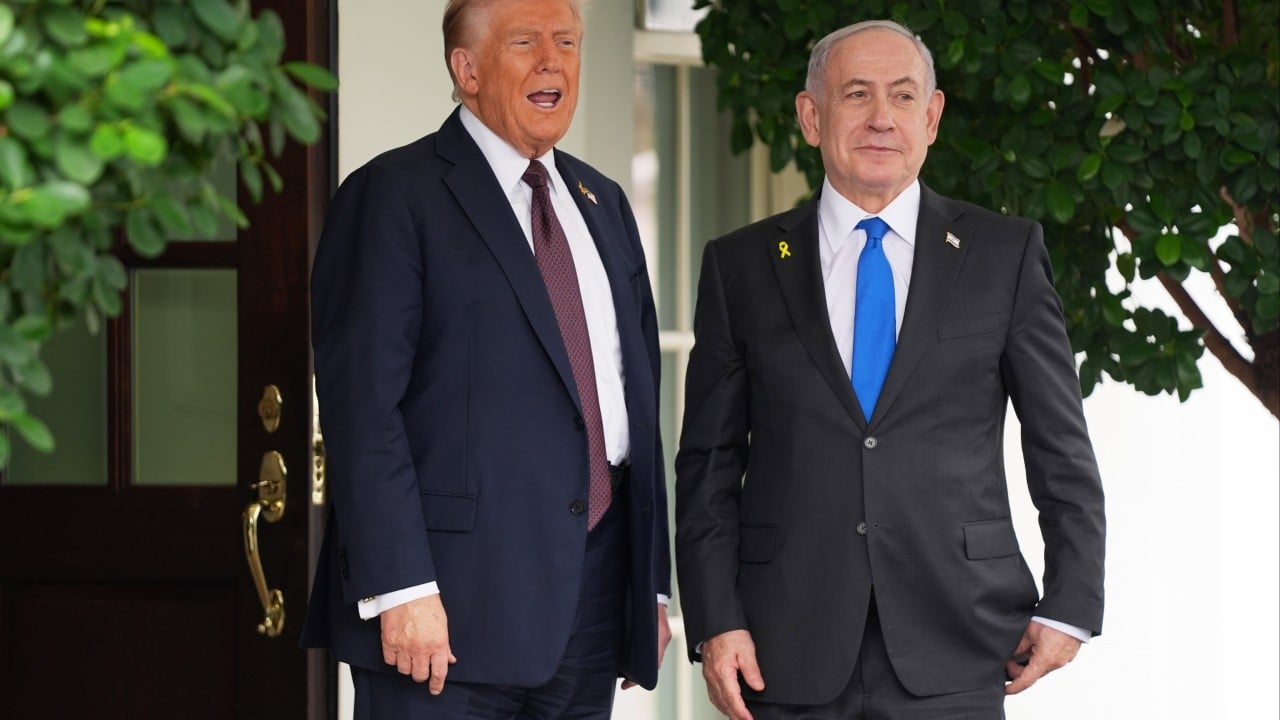
An endorsement from a sitting American president does not win elections in Israel. Often, it does the opposite.
Standard coverage treats Donald Trump’s praise of Benjamin Netanyahu as a "great warrior prime minister" as a thunderbolt that reshapes the race. That is lazy consensus. It assumes voters in Tel Aviv, Haifa, and Jerusalem cast ballots based on a Truth Social post from Washington. They do not.
When foreign leaders back an Israeli prime minister, domestic political mechanics react immediately. Opponents frame the backing as outside interference. Supporters wave it like a trophy. Yet the coalition math inside the Knesset remains cold, unforgiving, and stubbornly local.
The Lazy Consensus Around Foreign Endorsements
Cable panels and wire stories love a clean narrative: powerful leader A boosts embattled leader B right before an election. It is easy to write. It requires zero understanding of proportional representation or coalition arithmetic.
In a winner-take-all system, a high-profile endorsement can sway swing districts. Israel does not use a winner-take-all system. Voters pick parties under a 3.25% electoral threshold, and governing requires assembling a majority bloc in a 120-seat parliament. A foreign president cannot hand Netanyahu ultra-Orthodox seats, secular centrist partners, or Arab party votes.
I have watched campaign strategists on both sides of the Atlantic pour millions of dollars and hours of messaging into "the Trump factor" or "the Washington factor." Time and again, the people who actually count ballots in Israel look past the applause lines. They ask simpler, harsher questions: Who keeps my family safe? Who bears responsibility for security failures? Who can actually govern without dragging the country into another constitutional fight?
Calling Netanyahu a "great warrior prime minister" plays well to a domestic American audience looking for strength abroad. Inside Israel, voters have lived through years of war, economic strain, and deep internal fractures since October 7, 2023. Labels handed down from abroad rarely settle a score that voters feel in their daily lives.
You Are Asking the Wrong Question
Most coverage asks: Will Trump’s endorsement save Netanyahu?
That is the wrong question. The right question is: What is Trump actually trying to protect when he endorses Netanyahu?
To understand foreign endorsements in high-stakes elections, you have to separate electoral leverage from narrative insulation.
- Electoral leverage is the ability to move enough votes to cross a winning threshold. In Israeli parliamentary politics, outside endorsements rarely clear that bar on their own.
- Narrative insulation is the ability to justify past decisions, rally a loyal base, and project certainty when events on the ground get messy.
When two leaders are tied together by shared military and diplomatic choices—especially involving regional escalation with Iran or postwar arrangements in Gaza—one leader backing the other is often about defending their own record. Praising an ally as a "warrior" validates the strategy both men championed. If the ally falters, the shared narrative takes a hit.
Even when alliances look tight on camera, friction sits right underneath. Disagreements over postwar governance, regional diplomacy, and domestic political survival never disappear just because two leaders trade compliments. Alliance politics is transactional, not sentimental.
What People Also Ask (And Why the Premise Often Misses)
Does a U.S. president’s endorsement usually boost a candidate in Israel?
Not reliably. Sometimes it energizes hardline supporters; other times it gives rivals an opening to argue that sovereignty and domestic priorities belong strictly in Israeli hands. Historical patterns show that foreign backing is a double-edged sword, not a magic wand.
Does calling a leader a "warrior" help during wartime?
Only if voters equate toughness with competence. After prolonged conflict and security shocks, voters often split sharply between admiring a leader’s combative posture and blaming them for strategic blind spots or long-term exhaustion.
Why do commentators still treat endorsements like decisive turning points?
Because drama sells. A quote from a famous leader is easier to headline than a breakdown of threshold math, party lists, and coalition horse-trading.
A Thought Experiment in Political Optics
Imagine a scenario where a U.S. president endorses a rival Israeli opposition figure instead of Netanyahu, calling that challenger a "pragmatic reformer."
Watch what happens next. Netanyahu’s camp would immediately cast the endorsement as foreign meddling designed to topple a sovereign government. Meanwhile, the challenger would have to spend half their press appearances insisting they answer to Israeli voters, not Washington. A supposed boost could turn into an anchor overnight.
The same dynamic works in reverse. External praise can fire up the base, yet it also invites scrutiny from skeptical voters who resent being told how to vote.
The Heavy Hitters and the Real Rules of the Game
Political scientists and veteran Middle East observers—figures like Dennis Ross, Martin Indyk, and Shibley Telhami—have long pointed out a basic truth about U.S.–Israel relations: alignment in Washington does not automatically translate into political control in Jerusalem. U.S. administrations can shape diplomatic maneuvering, weapons transfers, and regional leverage, yet domestic coalitions still decide who holds the prime minister's office.
That distinction matters. Confusing diplomatic warmth with domestic vote share is one of the oldest mistakes in foreign reporting.
To be fair to the contrarian view, there are real downsides to downplaying a U.S. endorsement. A strong public backing signal can:
- Boost fundraising, morale, and media attention for the favored candidate’s core base.
- Signal continued U.S. diplomatic and military backing during a crisis.
- Shape how undecided voters perceive international standing in a tight race.
Ignoring those effects completely would be just as careless as pretending they decide the entire election. Nuance lives in the gap between amplifying a message and manufacturing a majority.
What Actually Works When Reading Election Coverage
If you want to cut through the noise the next time a foreign leader drops a dramatic endorsement before an election, use a stricter filter:
- Follow the seats, not the slogans. Look at party thresholds, bloc arithmetic, and potential coalition partners rather than viral phrases like "warrior" or "total endorsement".
- Track the domestic backlash. Watch how rival campaigns frame the endorsement within 24 hours. Often, the opponent’s reaction reveals more about voter sentiment than the endorsement itself.
- Separate leaders from institutions. A close bond between two politicians does not guarantee friction-free policy across governments, security agencies, or future administrations.
- Ask who benefits at home. Check whether the endorsement is aimed primarily at foreign voters, domestic party loyalists, or international rivals.
Stop mistaking applause from abroad for a mandate at home.