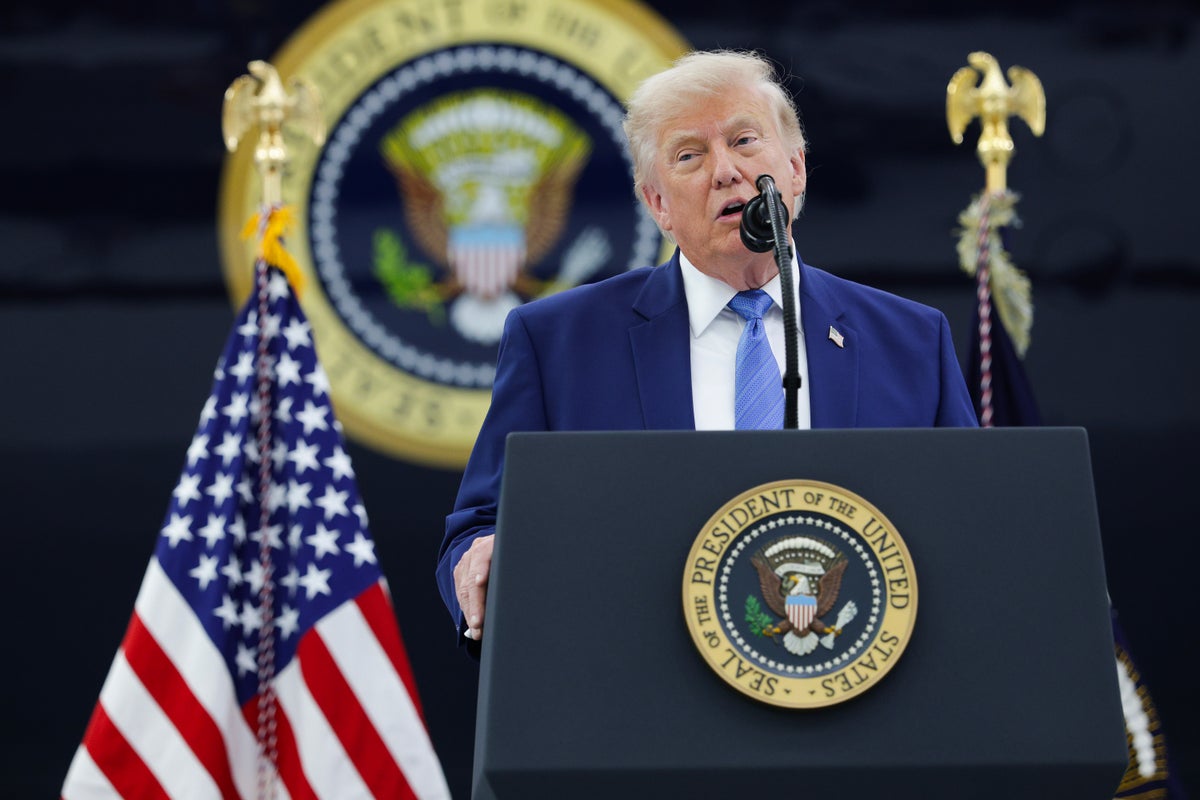
Donald Trump has a new favorite number, and it is driving political pundits into a frenzy. During recent rallies and social media blasts, the frequency of his references to "22" has skyrocketed. Mainstream commentators claim nobody knows what it means, treating it like some indecipherable riddle wrapped in a mystery.
They are overthinking it.
When you strip away the typical cable news hyperbole, the real motivation behind this sudden numerical fixation becomes clear. It isn't a random tic, and it isn't an accidental slip of the tongue. It is a calculated branding exercise aimed directly at the structural boundaries of American political power.
Decoding the Code
The speculation online ranges from the absurd to the overly academic. Conspiracy theorists try to link it to calendar dates or hidden tallies, while anxious political analysts immediately point to the text of the Constitution. Specifically, they point to the 22nd Amendment, which states that no person shall be elected to the office of the President more than twice.
Trump is a master of floating trial balloons. By constantly dropping the number into his speeches, he signals to his base while testing the waters on how the public reacts to the concept of extended power. It is a classic sales technique: introduce a controversial idea softly, repeat it until the shock value wears off, and then make it a core part of the narrative.
His supporters see the number as a defiant badge of honor. To them, it represents a challenge to an institutional rule established back in 1951 to curb the multi-term dominance of Franklin D. Roosevelt. For Trump's opponents, the fixation triggers immediate alarm bells regarding institutional norms.
The strategy works because it forces everyone to play on his rhetorical turf. While critics waste time trying to analyze whether he is joking or serious, the conversation stays centered on his longevity and relevance.
The Reality of Term Limits
Despite the public obsession with the rhetoric, the practical legal landscape remains unyielding. Overturning a constitutional amendment requires an overwhelming level of political consensus that simply does not exist in today's polarized environment.
To officially alter or repeal the 22nd Amendment, a proposal must win a two-thirds majority vote in both the House of Representatives and the Senate, followed by ratification from 38 states. Given the current narrow margins of political control, a direct legislative repeal is mathematically dead on arrival.
Legitimate constitutional scholars have long debated alternative, highly unusual scenarios. Some argue that while a twice-elected president cannot run for a third term, the text does not explicitly prevent them from serving in a non-elected capacity. For instance, a former president could theoretically be chosen as Speaker of the House or appointed to a position within the line of presidential succession.
These ideas make for fascinating law review articles, but they rarely survive the chaos of real-world politics. The practical friction of executing such a maneuver would trigger immediate, paralyzing legal challenges.
How to Read the Political Noise
Understanding this dynamic requires looking past the daily outrage cycle. When a major political figure fixates on a specific talking point, stop looking for a secret meaning and start looking at the immediate tactical benefit.
- Ignore the conspiracy theories: The number isn't a secret code for a covert operation or a hidden date. It is a public branding mechanism.
- Track the legal realities: Focus on actual legislative filings and court actions rather than rally rhetoric. The structural guardrails of the Constitution require massive, transparent institutional shifts to move, not just speeches.
- Watch the base reaction: The true measure of this strategy's success is how effectively it solidifies voter loyalty and drives campaign fundraising.
The media obsession with decoding the number simply gives the rhetoric more power. By treating a basic messaging tactic as an unsolvable mystery, commentators inadvertently amplify the exact narrative of defiance and disruption that the campaign wants to project. The smartest move is to ignore the numerical bait and focus entirely on actual policy decisions and measurable political actions.