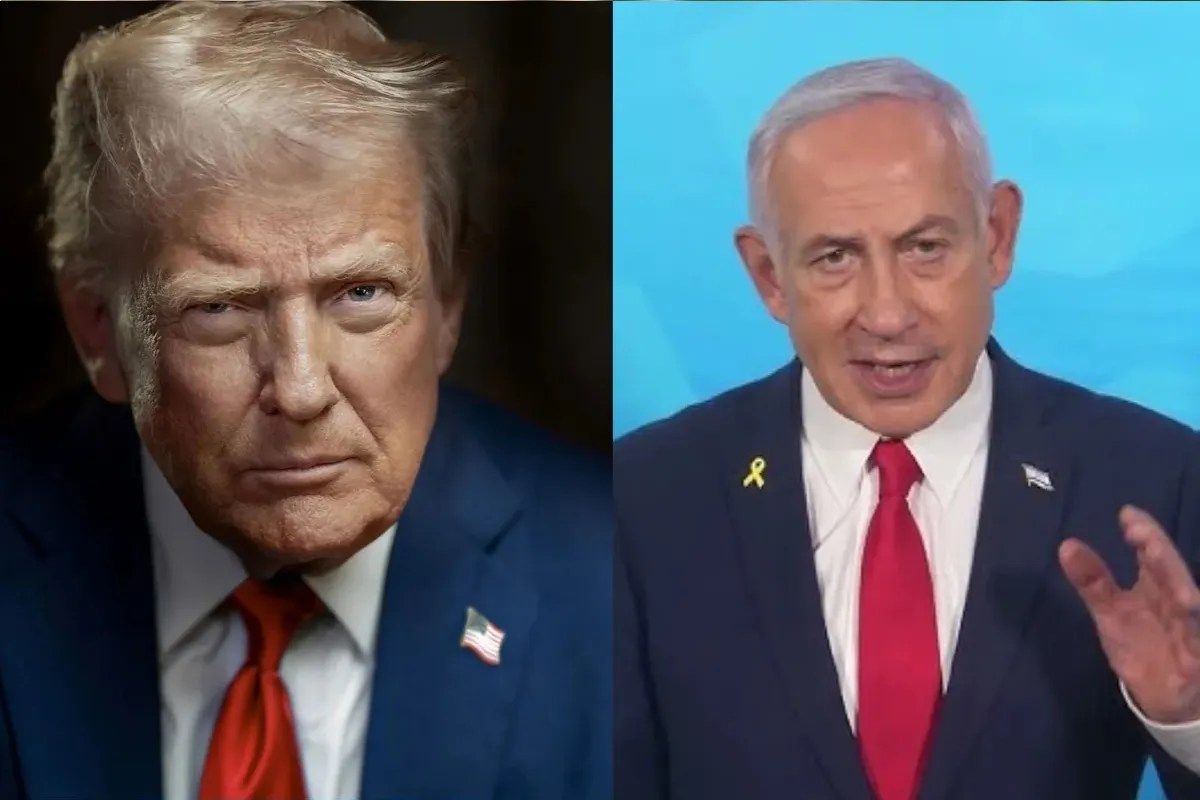
The illusion of an unbreakable geopolitical marriage between the United States and Israel just shattered. For decades, the political consensus suggested that Washington and Jerusalem move in lockstep, especially during times of conflict. But a public clash between US President Donald Trump and Israeli Prime Minister Benjamin Netanyahu has exposed a deep, ideological rift that can no longer be swept under the rug.
It started when Donald Trump confidently boasted about his absolute leverage over Israeli decision-making, claiming that Netanyahu would basically do whatever the US administration demanded. Netanyahu didn't take the bait silently. Instead, he fired back with a stinging reminder of Israel's national autonomy, stating that Israel is a sovereign nation making its own independent choices.
This isn't just standard political theater. It's a fundamental disagreement on regional survival, wartime strategy, and who actually calls the shots in the Middle East.
The Friction Over the New Iran Deal
The core of this fallout centers on Washington's frantic diplomatic moves with Tehran. The US and Iran have been engaging in high-stakes negotiations in Switzerland to hammer out a ceasefire framework. The proposed deal requires Iran to give up its stockpile of highly enriched uranium and reopen the strategic Strait of Hormuz. In return, the US would lift its economic blockade on Iranian ports and ease crippling sanctions.
Trump wants to wrap up the conflict and claim a massive diplomatic victory. Netanyahu, however, sees the emerging framework as a dangerous compromise that leaves Israel vulnerable.
Opposition leader Yair Lapid pointed out that the current government's ability to influence Washington has hit an all-time low, especially after Trump openly bragged about pulling Netanyahu's strings. To save face domestically and protect Israel's strategic red lines, Netanyahu had to draw a hard line in the sand. He explicitly rejected the narrative that either leader controls the other, asserting that both are heads of independent, proud nations.
Independent Sovereignty vs. Superpower Pressure
Netanyahu chose the JNS International Policy Summit in Jerusalem to deliver his sharpest counterpunch. He noted that while critics in America claim Trump blindly follows Israel's wishes, critics inside Israel claim the exact opposite.
"Well, neither is true. We stand for our interests. I stand for the interests of Israel, and for its security," Netanyahu stated.
This public pushback follows reports of intense, profanity-laced phone calls where Trump reportedly lambasted Netanyahu over continued Israeli airstrikes in Beirut. The US administration demanded a halt to military actions against Hezbollah to preserve the fragile peace talks with Iran.
But Israel did the opposite. Netanyahu ordered strikes on targets in Lebanon to send a clear message to both Washington and Tehran: Israel's military doctrine is no longer reactive, and it certainly won't be dictated by a foreign superpower.
Far-right members of Netanyahu's coalition, like National Security Minister Itamar Ben Gvir, doubled down on this defiance. Ben Gvir publicly stated that Trump's agreements don't bind Israel because the country isn't a vassal state or a US protectorate.
A Massive Shift in Israel's Security Doctrine
For years, conventional wisdom dictated that Israel could not strike deep within Iranian territory without explicit US backing or coordination. Netanyahu claims his administration completely flipped that old paradigm on its head. By deploying pilots directly into Iranian airspace to hit regime targets, missile sites, and nuclear infrastructure, Israel established a new precedent of preemptive warfare.
Netanyahu insists that these aggressive military operations effectively neutralized an existential threat, preventing Tehran from finalizing a nuclear weapon. He maintains that Israeli policy toward a nuclear Iran remains completely unchanged, regardless of whatever diplomatic agreements Trump signs.
Meanwhile, Israeli Defense Minister Israel Katz confirmed that troops will remain indefinitely in Lebanon and the Gaza Strip to maintain permanent buffer zones. This directly contradicts the broader peace plan brokered by Washington, which relies on an eventual IDF withdrawal contingent upon regional disarmament.
What This Means for the US-Israel Alliance
The romanticized idea of a seamless partnership between Trump and Netanyahu is officially over. They may share common enemies, but their political timelines and priorities are completely misaligned. Trump is focused on global economic stabilization and ending costly conflicts. Netanyahu is fighting for his political survival ahead of upcoming elections while attempting to fundamentally reshape the security map of the Middle East.
If you are tracking geopolitical risk, look closely at how Israel handles its buffer zones over the next sixty days. Watch the implementation of any US-Iran framework in Switzerland. If Israel continues unilateral strikes in Lebanon or refuses to coordinate its defense strategy with the White House, expect the diplomatic chill between Trump and Netanyahu to morph into an open, systemic breakdown of intelligence and military cooperation. Monitor the official statements from the Israeli Prime Minister's Office and the White House press briefings to see if either side blinks first.