The Outrage Machine Missed the Entire Point
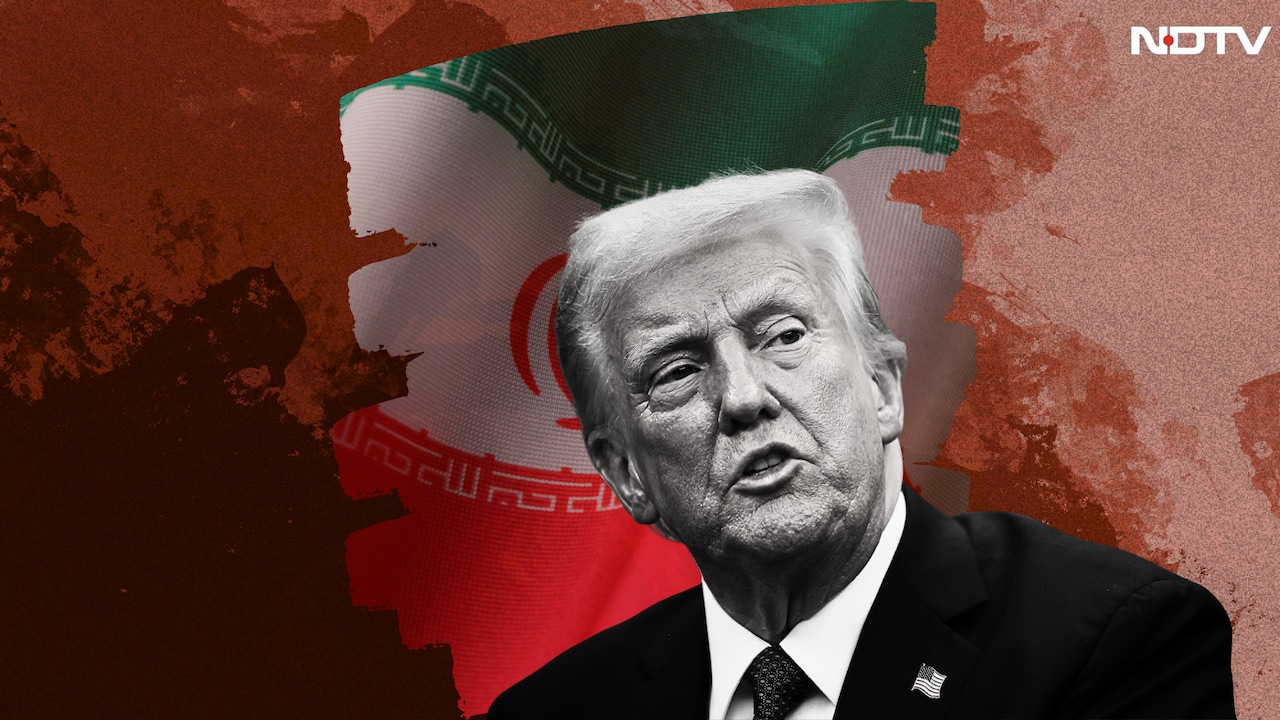
Donald Trump tells a crowd that if Iran succeeds in assassinating him, he has left strict instructions to blow the country off the map.
The media immediately spins into a familiar frenzy. Outrage anchors hyperventilate about illegal orders, rogue foreign policy, and reckless rhetoric threatening global stability. Commentators scramble to explain why threatening total destruction violates international norms and diplomatic etiquette.
They are reacting to the theatre while ignoring the mechanics.
The standard media narrative assumes that public statements by political leaders exist solely to project immediate domestic intent or reflect unstable temperaments. That assumption is fundamentally flawed. When a high-profile target facing active threat intelligence publicly announces an uncapped retaliatory mandate, they are not staging a meltdown. They are executing a textbook application of strategic ambiguity and existential deterrence.
Media consensus views these remarks as a wild departure from standard operational procedure. In reality, they represent the oldest rule in national security: if you want to prevent a strike, you make the cost of that strike completely unpayable.
Why Media Critics Misread Brinkmanship
The mainstream reaction hinges on a lazy premise: that diplomatic signaling must always be polite, measured, and predictable.
I spent years watching defense analysts and political strategist teams dissect crisis communications. The biggest mistake amateur observers make is assuming that deterrence operates on standard etiquette. It does not. Deterrence operates on perceived risk.
When a state actor like Iran evaluates a covert action, their military intelligence leadership runs a cold risk-reward calculation. They weigh three core variables:
- Attribution certainty: Can the target prove who pulled the trigger?
- Proportionality expectations: Will the target respond with targeted sanctions, a surgical strike, or open warfare?
- Decapitation math: Does eliminating a key figure paralyze the target state long enough to prevent an effective counteroffensive?
The standard diplomatic playbook lowers the perceived risk on all three fronts. It promises "measured responses," "coalition building," and "multilateral pressure." To a hostile regime, those phrases signal bureaucratic hesitation. They signal delay. They signal that the price of an assassination will be bogged down in committee meetings and United Nations resolutions.
By explicitly threatening disproportionate destruction, Trump disrupts that equation. He removes the safety net of a "proportional" response. He signals that the fallout will not be a diplomatic spat—it will be total devastation.
Whether the operational mechanism exists to execute such an instruction post-assassination is irrelevant. The deterrent value lies entirely in the target’s inability to guarantee that the threat is a bluff.
The Strategic Value of Strategic Ambiguity
Diplomatic purists love predictability. Military strategists love uncertainty.
In standard defense doctrine, MAD (Mutually Assured Destruction) kept the Cold War cold because neither side could guarantee their own survival after a first strike. But modern asymmetric warfare has diluted that concept. State sponsors of proxy groups operate in a gray zone, hiding behind plausible deniability to execute high-value targets without triggering a conventional war.
How do you deter a regime that excels at gray-zone operations? You remove the guardrails.
"A deterrent is only as effective as the adversary's fear of your unpredictability. If your enemy knows exactly where your boundaries are, they will park their operations one inch outside them."
When a leader establishes a strict, pre-delegated, catastrophic response, they strip the adversary of their gray-zone advantage.
Dismantling the Three Myths of Political Retaliation
- Myth 1: Pre-authorized orders are legally impossible.
Critics claim a former president or political candidate cannot legally "leave instructions" for military action. This fundamentally confuses operational authority with strategic signaling. The audience for this statement is not the Joint Chiefs of Staff; it is the intelligence apparatus in Tehran. The objective is not to draft a legal order, but to insert maximum doubt into the enemy's risk assessment. - Myth 2: Extreme threats provoke aggressive behavior.
History repeatedly shows the opposite. Regimes like Iran's Islamic Revolutionary Guard Corps (IRGC) exploit perceived weakness and procedural hesitation. They calculate precise escalatory steps based on predictable responses. Unpredictability induces paralysis, not aggression. - Myth 3: Measured diplomacy is always safer.
Measured diplomacy without a believable threat of extreme force invites creeping escalation. When adversaries believe your response will remain trapped within institutional bounds, the threshold for targeting your leaders drops dramatically.
The Downside Nobody Talks About
A contrarian take that ignores real risk is just cheap contrarianism. There is a serious failure point to this approach, and it deserves plain honesty.
The danger of extreme deterrence lies in the trap of escalation commitment.
If an assassination attempt occurs—even one executed by an rogue faction, a third-party actor, or an unaligned fanatic—the political expectation for catastrophic retaliation becomes absolute. By raising the stakes to maximum severity, you remove your own operational flexibility. You leave no room for de-escalation, targeted intelligence responses, or diplomatic leverage.
You tie your own hands to a sledgehammer when a scalpel might be required.
If the threat fails to deter, you are forced to choose between executing a world-altering military campaign or revealing that your highest-stakes warning was a hollow bluff. Neither outcome is clean. Both carry immense geopolitical costs.
The Real Question You Should Be Asking
The media wants you to ask: "Is it acceptable for a politician to say this?"
That is the wrong question. It is a surface-level query designed for daytime talk shows and partisan outrage.
The real question is: "Does hyper-escalatory posture effectively protect political targets in an era of unchecked proxy warfare?"
If you look at the mechanics of state-sponsored operations over the last thirty years, polite warnings and financial sanctions have consistently failed to stop targeted operations. They are treated as line-item business expenses by autocratic regimes.
When an adversary operates outside international law, applying international law standards to your defense strategy ensures your own disadvantage. Trump’s public statement is not a policy failure; it is an aggressive recalibration of risk designed to force the adversary back into a corner where the math no longer makes sense.
Stop analyzing the statement like an ethics essay. Start analyzing it like a game-theory move on a volatile board.
If you are facing an adversary calculating the cost of your death, the only rational move is to make the cost higher than they can ever afford to pay.