The ultimatum hit Truth Social with the subtlety of a sledgehammer. President Donald Trump has made it clear that if a ceasefire isn't reached "shortly," the United States will move from targeted military strikes to the total destruction of Iran’s energy infrastructure. We aren't just talking about a few radar stations or missile silos anymore. He’s explicitly naming electric generating plants, oil wells, and the crown jewel of their export economy, Kharg Island.
It's a massive shift in stakes. For weeks, the conflict has simmered with high-altitude exchanges and tactical hits, but this is a threat to turn the lights off for 85 million people. If you think this is just typical campaign-style bluster, you haven't been watching how fast the 2026 Iran War has moved.
The Strategy of Total Darkness
Trump’s logic is blunt. He wants the Strait of Hormuz open, and he wants it now. By threatening the energy grid, he’s targeting the one thing the Iranian regime needs to maintain internal order: the ability to keep the city of Tehran functioning.
The list of targets mentioned is terrifyingly specific.
- Electric Generating Plants: Striking these doesn't just stop the factories; it kills the water pumps and the hospitals.
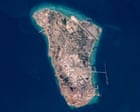
- Kharg Island: This is the terminal that handles roughly 90% of Iran’s oil exports. If Kharg goes, Iran’s economy doesn't just recession—it vanishes.
- Desalination Plants: This is the "wild card" threat. Trump mentioned these as a possibility, and it’s a move that would create a humanitarian catastrophe almost instantly.
Most people don't realize how fragile a modern power grid actually is. You don't need to carpet-bomb a country to ruin it. You just need to hit the transformers and the switching stations. Those parts aren't easily replaced, especially under a total blockade.
Why the "Shortly" Deadline Matters
Trump loves a deadline. It creates leverage where there was none. By saying "shortly," he’s keeping the Iranian negotiators—and the intermediaries in Pakistan and Turkey—on a hair-trigger.
But there’s a massive gap between what the White House says and what Tehran reports. Trump claims "great progress" is being made in talks. Meanwhile, Iranian foreign ministry spokesperson Esmail Baghaei is calling the U.S. 15-point proposal "unrealistic and irrational."
I’ve seen this play before. It’s the "Maximum Pressure" campaign on steroids. The goal is to make the cost of continuing the war so high that the regime's inner circle decides that survival is better than defiance. But it’s a dangerous game. When you back a regional power into a corner and threaten their literal water supply, they don't always surrender. Sometimes they lash out.
The Blowback Nobody Is Ready For
If the U.S. follows through and "obliterates" the Iranian grid, don't think for a second the response will stay within Iran’s borders. Tehran has already warned that if their energy sites are hit, they’ll go after the infrastructure of every U.S. ally in the Gulf.
Imagine a scenario where the desalination plants in Dubai or Abu Dhabi are taken offline by Iranian drone swarms. You’d have millions of people in the UAE without drinking water within 48 hours. That’s why Saudi Arabia and Qatar are reportedly terrified of this escalation. They’re caught between a White House that wants a "total victory" and a neighbor that has the power to wreck the global oil market.
What’s Really at Risk
- Global Oil Prices: We’re already seeing a record monthly rise. A strike on Kharg Island could push Brent crude well past $150 a barrel.
- Regional Stability: If the U.S. actually tries to "take the oil" by putting boots on Kharg Island, we're looking at a ground war that could last years, not weeks.
- International Law: Critics, including Amnesty International, are already screaming that hitting power plants is a war crime. The Trump administration doesn't seem to care, but the diplomatic fallout with Europe would be permanent.
The 15-Point Proposal
The real meat of the current tension is the 15-point proposal delivered via Pakistan. While the details are mostly classified, leaked reports suggest it demands the total dismantling of Iran’s drone program and "joint control" of the Strait of Hormuz.
Trump’s mention of "regime change" in the same breath as "negotiations" makes the whole thing feel like a trap to the Iranians. They remember what happened in Libya. They see what happened in Venezuela. From their perspective, giving up their energy security is the first step toward a total collapse.
What You Should Do Now
This isn't just a headline for the history books; it has immediate consequences for your wallet and security.
Watch the oil markets tomorrow morning. If there’s even a hint that the five-day "pause" Trump mentioned is falling apart, prices will spike again. If you’re a business owner or an investor, you need to hedge against energy volatility immediately.
Don't wait for the "obliteration" to happen. The threat itself has already changed the math for the global economy. Pay attention to the Strait of Hormuz shipping data. If the tankers don't start moving in the next 72 hours, the likelihood of those power plants being hit goes from "political talk" to "military reality."
Stay informed on the movements of the U.S. Navy’s 5th Fleet. Their positioning over the next three days will tell you more about the future of the Middle East than any Truth Social post ever could.