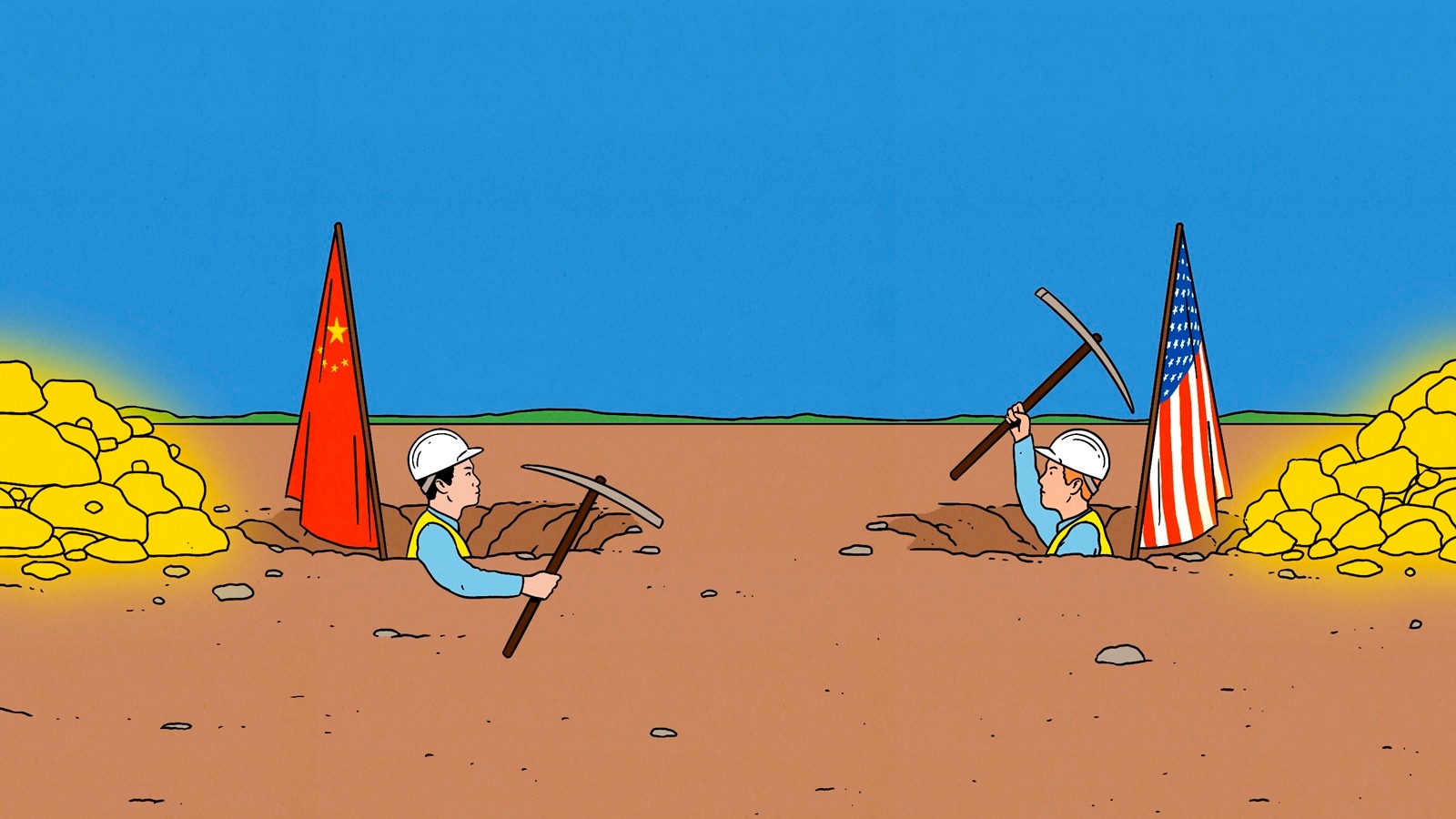
For decades, the United States watched as China quietly built a wall around the worlds rare earth minerals. It wasn't a physical wall, but a supply chain monopoly so tight it could stall American fighter jets and silence smartphone production with a single export memo. By the time 2024 rolled around, the U.S. was still importing 80% of its rare earth elements.
Donald Trump isn't interested in slow-walking a solution anymore. He's found a financial battering ram to break that wall: the Export-Import Bank of the United States (EXIM). While most people think of EXIM as a sleepy agency that helps Boeing sell planes, it’s now the central engine for a massive $12 billion initiative called Project Vault.
This isn't just about digging holes in the ground. It’s a aggressive play to build a Strategic Critical Minerals Reserve that mirrors the Strategic Petroleum Reserve. If you want to understand why the administration is betting billions on a bank most people can’t define, you have to look at the math of national security.
The Ten Billion Dollar Loan That Changes Everything
In February 2026, the EXIM Board of Directors approved a $10 billion direct loan for Project Vault. This is a staggering amount of capital for a single initiative. When you add in another $2 billion from private investors, you get a $12 billion war chest dedicated to one goal: making sure American manufacturers never run out of the "vitamins" of modern technology.
Rare earths like neodymium and praseodymium aren't actually that rare, but they’re a nightmare to process. China controls 90% of that processing. When Beijing restricted exports in 2025 during a heated trade dispute, the shockwaves hit everything from GE Vernova’s wind turbines to Boeings assembly lines.
Project Vault acts as a buffer. By using EXIM to provide long-term, 15-year financing, the government is creating a "buyer of last resort." This stabilizes prices for domestic miners who usually get crushed by China’s habit of flooding the market to kill off competition. It’s a safety net that says, "Go ahead and build the mine; we’ll make sure the price doesn't bottom out."
Moving Beyond California and Into the Global Mine
Most people only know about Mountain Pass in California, the crown jewel of MP Materials. It’s a vital site, and the Department of Defense has already dumped hundreds of millions into it, even taking a 15% equity stake. But a single mine in the Mojave Desert isn't enough to secure a superpower.
The administration is using EXIM to scout the globe for what I call "friendly ore." Here’s where the money is flowing right now:
- Greenland: EXIM issued a $120 million letter of interest for the Tanbreez mine. It’s one of the largest deposits on earth and sits in a territory Trump famously expressed interest in acquiring.
- Australia: A massive $8.5 billion agreement was inked with Canberra. EXIM is backing this with over $2 billion in letters of intent to support Australian-run processing projects.
- Ukraine: In April 2025, a deal was signed to create a Reconstruction Investment Fund. The trade-off is simple: American protection and reconstruction aid in exchange for access to Ukraine’s lithium and rare earth deposits.
This strategy acknowledges a hard truth. We can't mine everything at home. Environmental regulations and labor costs make it tough. By using EXIM to fund overseas projects in allied nations, the U.S. effectively "outsources" the dirtiest parts of the job while keeping the end product out of Chinese hands.
Why the Export Import Bank is the Perfect Tool
You might wonder why we aren't just using the Pentagon’s budget. The Department of War—recently renamed from the Department of Defense—certainly has the cash. But EXIM is an "independent" agency that functions like a bank. It can issue loans, guarantees, and insurance that a standard government department can't.
More importantly, it’s designed to return a profit to the taxpayer. Trump has been vocal about this. He expects the government to make money on these loans. By involving private capital partners like Hartree Partners and Traxys, the project stays grounded in market reality. These aren't just handouts; they’re investments in infrastructure that original equipment manufacturers (OEMs) like GM and Boeing are desperate to see succeed.
The New Mineral Protectionism
We’re entering an era of "Pax Silica." This isn't just about trade; it’s about a new kind of protectionism. The administration has already signaled a 50% tariff on processed minerals from "adversarial" sources.
To make this work, the U.S. Geological Survey (USGS) expanded its list of critical minerals to 60 items in late 2025. They added common materials like copper and even metallurgical coal. Why? Because you can’t build a high-tech military or an AI-driven economy without the basics. If China can cut off the copper, it doesn't matter how many high-end magnets you have.
The Immediate Impact on Mining Stocks
If you're looking at the market, the signals are loud. MP Materials and USA Rare Earth saw immediate bumps when Project Vault was announced. But the real winners might be the mid-tier processors who can plug into the EXIM financing ecosystem. The government has established a price floor of $110 per kilogram for certain magnet materials. This effectively guarantees a profit for companies that can meet the "Made in America" or "Processed by Allies" criteria.
What Happens if the Strategy Fails
Critics argue that building a stockpile is just a band-aid. If you have 60 days of supply but it takes 10 years to build a new refinery, you’re still in trouble on day 61. There's also the risk of "gold-plating" the industry—creating a bunch of government-subsidized companies that can't survive without a federal checkbook.
But the alternative is worse. Staying 95% dependent on a geopolitical rival for the components of your missile guidance systems is a recipe for disaster. The "Project Vault" approach is an admission that the free market failed to solve the China problem. Now, the bank is stepping in to do what the market couldn't.
If you’re an investor or a manufacturer, your next move is clear. Audit your supply chain for "China-content" and start looking for partners already clearing the EXIM due diligence process. The era of cheap, easy minerals from the East is over. The era of the strategic reserve has begun.
You should monitor the upcoming ministerial meeting hosted by Secretary of State Marco Rubio. That’s where the formal "consortium" of allied nations will likely lay out the rules for who gets access to the Vault and who gets left in the cold.