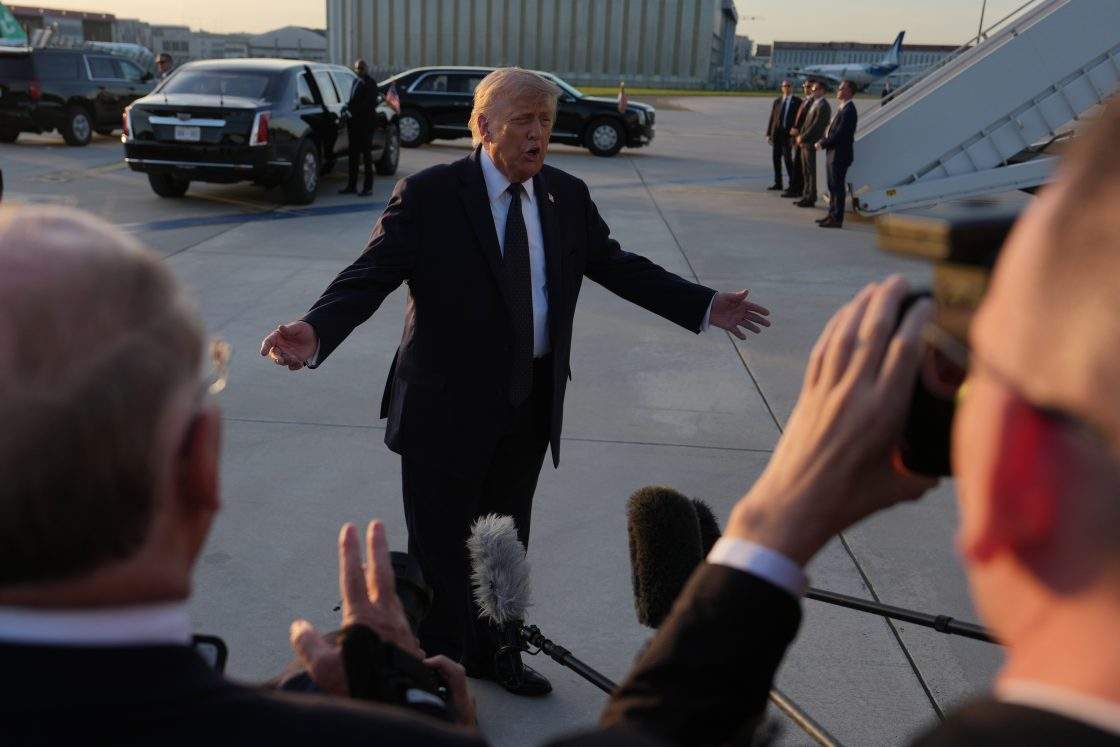
The media is panicking right on cue. Donald Trump stands at the G7 summit, looks into the cameras, and declares he would prefer to see the Canada-United States-Mexico Agreement terminated. Instantly, the chattering classes in Ottawa and Mexico City break out in a cold sweat. They point to the $1.3 trillion in trilateral trade. They point to integrated supply chains. They beg for the scheduled July 1, 2026 review to be a rubber-stamp extension for another 16 years.
They are missing the entire point.
The frantic defense of CUSMA—or USMCA, depending on which side of the border you cash your checks—is built on a lazy consensus. The establishment treats free trade agreements like sacred scripture. If a deal exists, it must be preserved at all costs. But Trump's threat to walk away is not just erratic posturing. It is a recognition of a reality that corporate boardrooms refuse to admit: CUSMA is already dead. It is a legacy framework trying to govern an fractured world, and keeping it on life support is doing more harm than good.
The Myth of the Shield
The baseline defense of CUSMA is that it protects America's neighbors from Washington’s protectionist impulses. We are told it shields 90 percent of Canadian exports from sweeping tariffs.
This is a fiction. I have watched multi-billion-dollar manufacturing operations move supply lines based on these pieces of paper, only to get hammered anyway. The treaty did not stop the United States from slapping a 50 percent national security tariff on steel. It did not stop the ongoing Section 301 investigations targeting cross-border supply chains.
A trade agreement is only as strong as the executive branch's willingness to honor it. When the U.S. Supreme Court struck down the administration's use of the International Emergency Economic Powers Act (IEEPA) for unilateral tariffs earlier this year, the White House did not back down. It instantly pivoted to Section 122 of the Trade Act of 1974, hitting global imports with a surcharge.
The lesson is blindingly obvious: pieces of paper do not stop structural economic shifts. Believing that a trade pact provides a reliable regulatory environment is a boardroom delusion.
Why the Rules of Origin Are Broken
To understand why CUSMA needs to be taken behind the barn, look at the auto sector. The agreement mandated higher Regional Value Content (RVC) percentages to ensure cars were actually made in North America.
It failed completely. The U.S. trade deficit with both Mexico and Canada has ballooned. Why? Because the rules are stuffed with loopholes, like the "rolling-up" provisions that allow parts with significant offshore components to be counted as 100 percent North American once they undergo basic assembly.
More critically, CUSMA was written for a world that no longer exists. It belongs to an era before the complete decoupling of the West from Chinese industrial capacity. Today, Mexico is acting as a giant washing machine for Chinese capital and components. Beijing routes steel, aluminum, and electric vehicle parts through Mexican ports, tacks on minimal local labor, and rolls them across the Texas border duty-free.
CUSMA is structurally incapable of stopping this transshipment. The agreement operates on a "rules of origin" baseline—if it is put together here, it counts. What Washington is actually moving toward is a "rules of control" baseline. It does not matter where the factory floor is located; if the capital, the IP, or the supply chain traces back to a geopolitical rival, it gets locked out. CUSMA actively blocks the deployment of that new paradigm.
The Cost of Staying in the Deal
Let us run a thought experiment. Imagine a scenario where Canada and Mexico get exactly what they want on July 1: a clean, 16-year extension of CUSMA as-is. What happens?
Uncertainty wins anyway. The agreement enters a state of permanent friction because the underlying economic realities are fundamentally misaligned. Corporate investment in Mexico is already dropping significantly year-over-year. Canada is bleeding full-time jobs because businesses know that a presidential signature does not equal compliance.
Blowing past the July 1 renewal deadline and entering a cycle of annual rolling reviews is not a disaster. It is a truth mechanism. It forces all three nations to acknowledge that continental trade is no longer a set-and-forget arrangement. It becomes a permanent, high-stakes negotiation that reflects real-time leverage.
The downside to this contrarian approach is obvious: it creates a brutal, volatile environment for logistics planning. It forces companies to price in tariff risks as a permanent cost of doing business rather than a temporary political anomaly. But pretending the old order can be preserved is far more dangerous than planning for its demise.
Stop Asking if the Deal Will Survive
Every pundit is asking the wrong question: "Will Trump actually terminate CUSMA?"
The brutal reality is that termination or non-renewal changes very little on the ground. If the deadline passes without unanimous renewal, the agreement does not vanish; it stays in place for a 10-year sunset period. The sky will not fall on July 2.
The real question you should be asking is: "How do we operate in a world where trade is bilateral, transactional, and entirely decoupled from multilateral treaties?"
If you are a business leader waiting for Ambassador Mark Wiseman or any other diplomat to tell you that "it's all going to be OK," you are setting your capital on fire. Trade ministers can write all the letters they want. They can host all the bilateral summits they want. But the era of continental free trade is over.
The smart money is already abandoning the idea of an integrated North American bloc under CUSMA. They are preparing for a fragmented landscape dominated by targeted enforcement, direct executive interventions, and localized manufacturing. Trump wants to kill the deal because he knows it is a relic. The sooner the rest of the market accepts that reality, the sooner we can build supply chains designed for the next two decades instead of the last two.