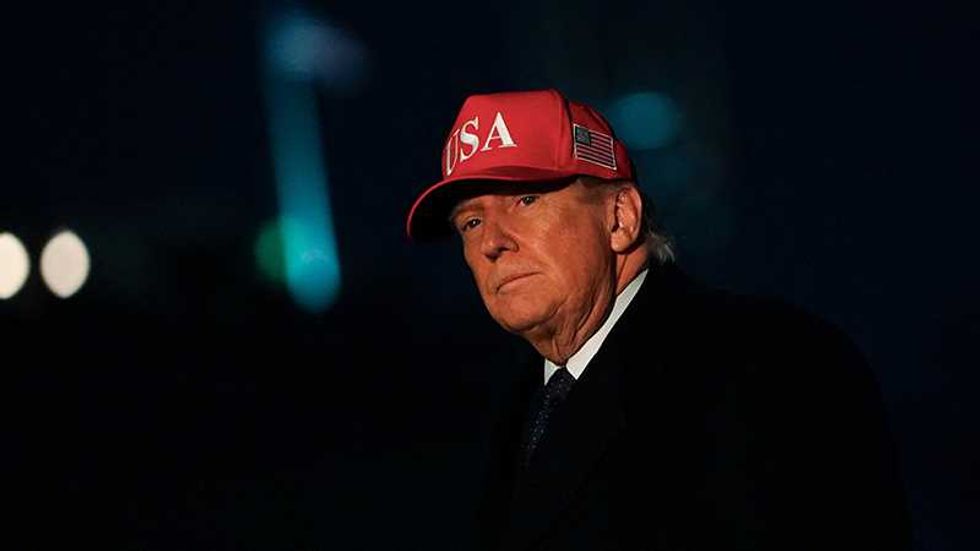
Donald Trump isn't just fighting political rivals anymore; he's fighting the clock. At 79, the man who built a brand on high-energy rallies and aggressive counter-punching is hitting a wall that even his most loyal White House insiders are starting to acknowledge. It's a "political injury" that doesn't stem from a specific policy failure or a legislative defeat, but from the simple, grinding reality of age and the mental fatigue that comes with the most stressful job on earth.
You've likely noticed the shift. The speeches are getting longer but less coherent. The "weaving" narrative he uses to explain away his tangents is starting to feel less like a rhetorical strategy and more like a defensive shield. Inside the West Wing, the mood has shifted from chaotic productivity to a quiet, nervous management of the President's public image.
The Cracks in the High Energy Brand
For years, Trump mocked "Sleepy Joe" for his stumbles and verbal gaffes. Now, that same lens is being turned on him, and the picture isn't pretty. Insiders suggest that the President is increasingly isolated, relying on a shrinking circle of advisors who are more interested in protecting him from the truth than prepping him for the podium.
The injury here is credibility. When you base your entire persona on being the strongest, smartest, and most capable person in the room, any sign of frailty becomes a massive liability. It's not just about tripping on a ramp; it's about the missed cues in meetings and the growing reliance on teleprompters for even the simplest remarks.
What the Insiders are Seeing
Behind closed doors, the "insider" talk isn't about policy—it's about stamina. Sources close to the administration describe a schedule that has become increasingly "light." Morning briefings are pushed back, and the "executive time" that characterized his first term has expanded significantly.
- Decreased Focus: Reports of the President losing his train of thought during classified briefings.
- Irritability: A shorter fuse with staff who try to keep him on track or correct factual errors in real-time.
- Dependency: A heavy reliance on JD Vance and Stephen Miller to carry the weight of policy execution while the President focuses on the optics.
The Midterm Shadow and the Vance Factor
The timing couldn't be worse. With the 2026 midterms looming, the Republican party is facing a crisis of confidence. If the face of the party looks like it's fading, the down-ballot candidates suffer.
Democrats are already salivating at the prospect of an anti-corruption and "fitness for office" campaign. They aren't just attacking his policies; they're attacking his ability to lead. This puts the GOP in a bind. Do they double down on Trump, or do they start looking toward JD Vance as the "de facto" leader of the MAGA movement?
Vance has been playing a delicate game. He’s the loyal soldier in public, but his increased visibility on the world stage—often filling in for a "busy" President—tells a different story. He’s the insurance policy, and everyone in Washington knows it.
The Cost of Sanewashing
Media critics and some disillusioned staffers have pointed to "sanewashing"—the practice of taking the President’s most incoherent rants and editing them into something that sounds like a standard policy position. But you can only polish a stone so much.
The public is starting to see the unedited clips. The moments where he stares blankly or repeats the same three sentences for five minutes. This isn't a "gaffe" anymore; it's a pattern. When the base starts to notice that the "tough guy" is struggling to finish a sentence, the political injury becomes permanent.
The Strategy of Distraction
To counter the narrative of decline, the White House has leaned into high-stakes rhetoric. The recent threats regarding Iran and the dramatic language about "civilization dying" are classic Trump. If people are talking about World War III, they aren't talking about whether the President forgot the name of his Secretary of State.
But this is a dangerous game. Escalation for the sake of distraction can lead to real-world consequences that no amount of "weaving" can fix. The international community is already on edge, with allies wondering if they're dealing with a strategic genius or a man losing his grip on reality.
Managing the Decline
The current White House strategy seems to be "contain and deflect."
- Limit Live Interviews: Stick to friendly outlets where the questions are pre-approved and the editing is favorable.
- Shorten Public Appearances: Keep the rallies under an hour to maintain the appearance of high energy.
- Surround Him with "Hype Men": Ensure every public outing is filled with sycophants who will cheer no matter what is said.
This might work for a few months, but it's not a sustainable way to run a country. The cracks are widening, and the people closest to the President are the ones most afraid of what happens when the dam finally breaks.
Watch the Numbers Not the Noise
If you want to know how bad this "injury" really is, don't look at the Truth Social posts. Look at the internal polling from the RNC. Look at the fundraising numbers for moderate Republicans who are starting to distance themselves from the White House.
The injury isn't a secret anymore. It’s a reality that’s shaping the 2026 election cycle and the future of the American presidency. Whether Trump can "ignore" it doesn't matter; the voters certainly won't.
Pay attention to the frequency of his unscripted interactions over the next ninety days. If he disappears further into the "executive time" bubble, you'll know the insiders were right all along. The man who never admits defeat is finally facing an opponent he can't out-litigate or out-tweet: time.