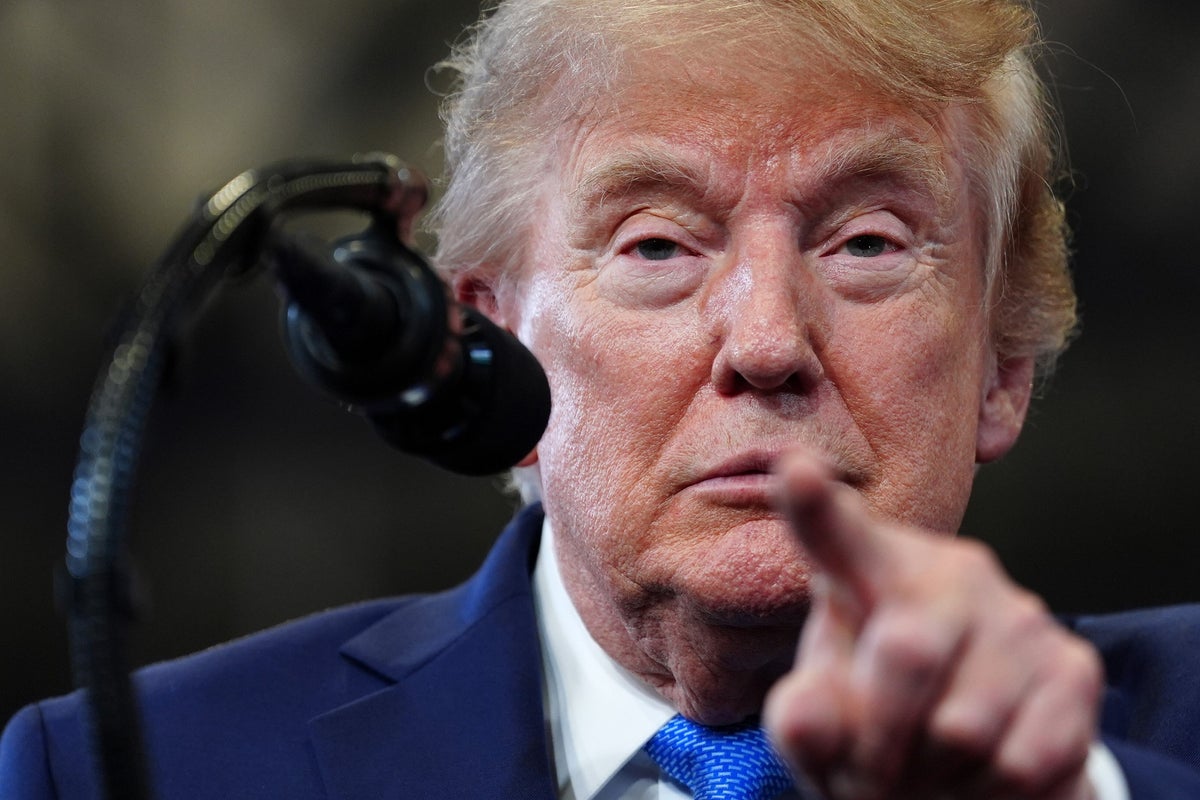
You’re looking at a government that doesn't just manage the economy—it owns a significant chunk of it. Donald Trump’s second administration has effectively turned the executive branch into a corporate boardroom. According to a report by Public Citizen, the president has appointed 57 officials with net worths exceeding $100 million. To put that in perspective, that’s four times as many ultra-rich appointees as his three predecessors combined.
We aren't talking about wealthy lawyers or career bureaucrats with comfortable nest eggs. We’re talking about people who operate at the scale of nine or ten figures.
The Wealth Gap in the Oval Office
Trump has never been shy about his affinity for extreme wealth. He treats a high net worth like a resume, arguing that if you can run a massive company, you can run a government department. He’s said as much publicly, pointing to their financial success as evidence of “incredible competence”.
But does business acumen translate to public service? That’s the real question.
The numbers are staggering. In this current administration, 17 ambassadors and 40 senior executive officials hold fortunes of at least $100 million. Look at the Cabinet itself: eight of the 23 members fall into this ultra-wealthy category. You have figures like Treasury Secretary Howard Lutnick and Education Secretary Linda McMahon, both of whom have reached billionaire status.
Compare that to the last few administrations. George W. Bush and Joe Biden each had five officials worth $100 million or more in their respective cabinets. Barack Obama had three. The jump from a handful of wealthy individuals to a sea of them isn't just a trend; it's a structural shift in how power is staffed in Washington.
The Conflict of Interest Trap
When you pack a room with billionaires, you’re bound to get friction. Ethical guardrails exist for a reason. Federal law often requires nominees to divest from stockholdings that could create conflicts of interest. It’s a standard move to prevent officials from making policy that directly inflates their own portfolios.
Yet, as we saw with previous cycles, the "divestment" process can be messy. It’s rarely perfect. Then there are the roles that sit outside the traditional federal structure. Take Elon Musk, for instance. His work on government efficiency puts him in a position of immense influence, yet because his role doesn't mirror the traditional Cabinet structure, the transparency requirements aren't always as clear-cut as they are for a standard nominee.
Critics argue that this concentration of wealth leads to misplaced incentives. If your top officials are drawn from the same pool of elites who benefit from specific tax codes or regulatory environments, who are they working for? Is it the middle-class voter who supported the administration’s economic promises, or is it the donor class?
Money and Political Muscle
The link between wealth and political appointment isn't accidental. It’s often transactional. The same Public Citizen report found that 30 of those 57 ultra-rich officials contributed more than $65 million to Trump-affiliated committees during the 2024 election cycle.
You don't need a degree in political science to see the pattern. Political contributions often precede, or coincide with, these high-level postings. We’ve seen this throughout history, but the sheer scale of the money involved in this administration is something else entirely. It’s professionalized the relationship between campaign cash and administrative power.
Why This Matters for You
If you’re a voter, this matters because it changes the government's priorities. When the people drafting the tax code or writing the regulations for major industries are already the primary beneficiaries of those systems, the "little guy" perspective can get lost.
We’ve already seen the impact of this in previous years, like when the 2017 tax law was drafted. An analysis by ProPublica into IRS files showed that a select group of ultra-wealthy individuals walked away with billions in savings thanks to specific loopholes they were in a position to influence.
If you want to track where this is going, look at the upcoming policy changes. Watch the regulatory environment for large-scale investments and artificial intelligence. When you see policy shifts, ask yourself who gains the most margin from the new rules.
To stay informed, don't rely on campaign talking points. Check the official financial disclosure reports for Cabinet nominees. If you really want to see the influence of these appointments, pay attention to the specific regulatory changes coming out of the departments they head. That’s where the real story is written—not in the press releases, but in the fine print of federal policy.