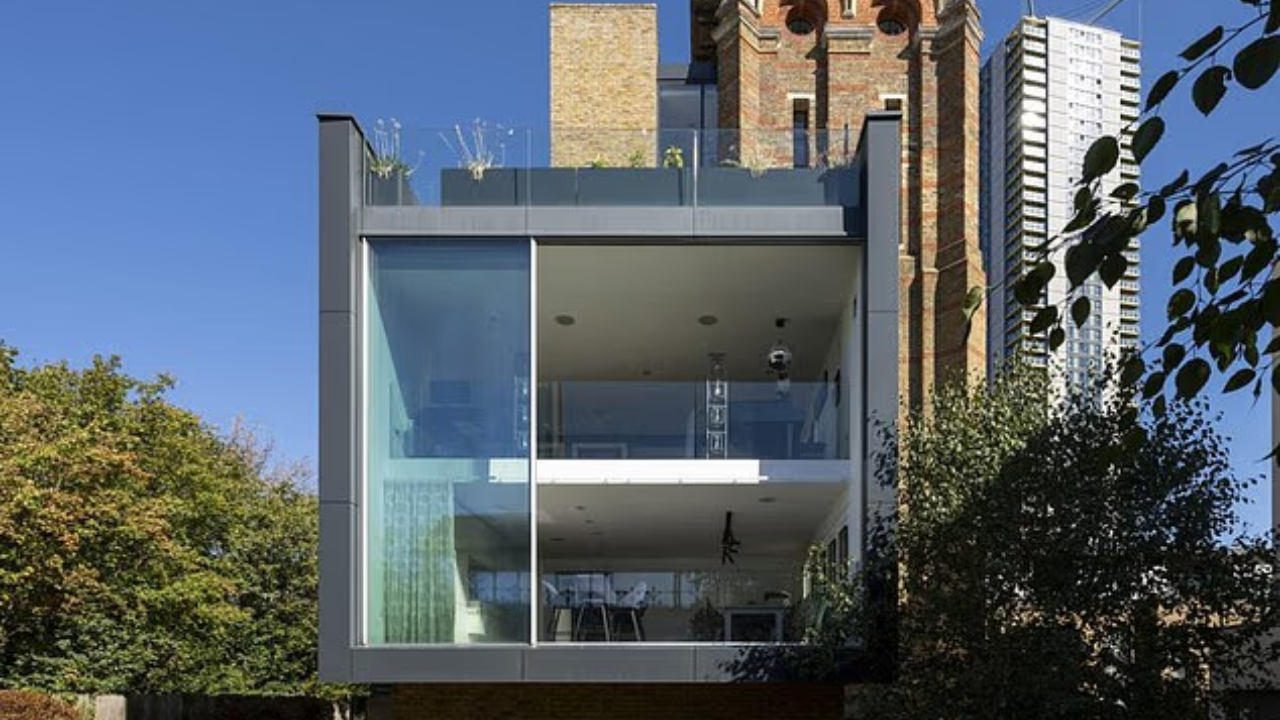
Buy a £380,000 Victorian water tower. Spend a fortune on steel, glass, and grit. List it for £2.75 million. Pocket the spread.
Sounds like a fairy tale. Usually, it is a math problem disguised as romance.
Every time a property portal runs a headline about a couple turning an industrial relic into a multi-million-pound trophy home, thousands of aspiring renovators do the exact same back-of-the-napkin calculation. Purchase price plus estimated build cost minus resale price equals instant equity.
That math is lazy. Worse, it is dangerous.
In property development, the headline asking price is not profit. Gross development value is not cash in the bank. And a £2.37 million gap between what someone paid for a derelict shell and what they hope to get years later rarely accounts for the years of carrying costs, structural surprises, specialist contractors, or the brutally thin buyer pool waiting at the top.
The Lazy Consensus Around Trophy Conversions
The standard story around converted water towers follows a familiar script. A couple spots an unloved brick cylinder or cast-iron tank perched on a hill or tucked behind a village lane. They get planning permission. They insert a spiral staircase, floor-to-ceiling glazing, and a rooftop terrace with 360-degree views. Suddenly, a piece of nineteenth-century municipal infrastructure becomes a design icon worth millions.
Two assumptions sit underneath that script. Both deserve skepticism.
Assumption 1: Scarcity automatically creates liquidity
Yes, Victorian water towers are rare. Scarcity matters in prime real estate, yet scarcity without a deep buyer pool is illiquidity wearing a tuxedo. A standard four-bedroom family home in a strong catchment area has dozens of ready buyers and straightforward mortgage valuations. A vertical cylinder with curved walls, narrow floor plates, and unconventional room layouts appeals to a tiny sliver of the market.
When a property pushes past £2 million or £2.75 million outside central London, buyers at that bracket are rarely impulse shoppers. They scrutinize layout flow, privacy, parking, garden usability, running costs, and resaleability. A tower can thrill you on a sunny Saturday viewing and feel exhausting when you are carrying groceries up three flights of stairs in November rain.
Assumption 2: The spread between purchase price and asking price equals profit
Read the headline again. A property goes back on sale for £2.75 million. Asking price is an ambition, not a cleared check. Even when a trophy conversion achieves a strong sale price, total project cost includes far more than the bricks and mortar you see in photographs.
I have watched ambitious self-builders and small developers blow budgets on non-standard projects where every single element had to be custom-engineered. Curved glazing is not off-the-shelf glass. Bespoke joinery following a circular radius costs multiples of straight carpentry. Structural steel rings, crane hire in tight plots, acoustic insulation, thermal upgrades to solid Victorian masonry, and utility connections on elevated sites eat cash quietly and relentlessly.
Why People Ask the Wrong Questions About Water Tower Conversions
When people see a story like this, their first instinct is to ask the wrong questions.
- "How much does it cost to convert a water tower?"
- "Are water tower conversions a good investment?"
- "How do you get planning permission for a historic tower?"
Each of those questions points attention in the wrong direction.
Asking how much it costs to convert a water tower treats a bespoke structural engineering puzzle like a kitchen refit. Two towers of similar height can have wildly different realities. One might have sound brickwork, straightforward access, and cooperative planners. Another might have spalling masonry, asbestos or lead issues, tree preservation orders, bat habitats, difficult drainage gradients, or heritage objections over altering its industrial silhouette. Cost per square foot is a blunt instrument when every floor plate is small and circulation eats up area.
Asking whether a water tower conversion is a good investment confuses a passion project with a repeatable yield strategy. If your goal is risk-adjusted return on capital, grinding through multi-year planning, construction inflation, and niche resale risk rarely beats cleaner, more predictable property strategies. When a conversion works financially, it usually happens because the owners bought exceptionally well, controlled costs ruthlessly, and added genuine living space rather than just novelty.
Even the planning question misses the real hurdle. Getting initial consent to change use from infrastructure or commercial storage to residential is only step one. Keeping heritage officers, neighbours, and building control aligned when you want modern glass extensions, roof terraces, or thermal insulation on an unlisted or locally listed landmark is where timelines stretch from months into years.
Define the Terms Before You Romanticize the Shell
Before falling in love with a tall silhouette, separate the real mechanics from the magazine spread.
- Gross Development Value (GDV): The estimated market value of the finished property. High GDV looks exciting on a spreadsheet, yet GDV is only real once a buyer completes and funds clear.
- Total Project Cost: Purchase price plus stamp duty, legal and survey fees, architectural and structural engineering fees, planning costs, build costs, finance interest, holding costs, and selling fees. Leave any of these out and your profit margin is fiction.
- Usable Net Internal Area vs. Gross Footprint: A circular or octagonal tower often loses disproportionate space to stairs, landings, thick walls, and curved edges where furniture does not sit flush. Height adds drama, not always practical square footage.
- Carrying Cost: What the building costs you every month while sitting empty or half-built—loan interest, insurance, council tax or business rates, security, and maintenance. Time is expensive when nothing is generating income.
In heritage and industrial conversion work, heavy hitters—chartered surveyors, structural engineers specializing in historic masonry, and seasoned conservation architects—rarely get swept away by aesthetic hype first. Their instincts go straight to load paths, moisture movement, access, and down-valuation risk. A lender valuing a quirky £2.75 million conversion looks for comparable sales evidence. When comparables are scarce, mortgageability tightens, which shrinks the pool of buyers who do not need cash.
Imagine a Scenario Where the Numbers Look Great Until Reality Arrives
Imagine a scenario where a buyer picks up a Victorian brick water tower for £380,000. On paper, it looks like a steal. The views across the countryside are sweeping, the brickwork has character, and comparable luxury homes nearby trade well above £1.5 million.
Now trace what happens over the next thirty months.
First, surveys reveal the upper tank structure needs serious remedial steelwork and weatherproofing before any residential fit-out can start safely. Second, connecting water, power, and foul drainage to an elevated structure takes months of utility coordination and trenching. Third, because standard straight cabinetry and flat-pack fittings waste awkward angles, custom joinery and curved glass push the fit-out budget past initial estimates.
While the build drags on, interest rates and build inflation bite. By the time the home is finished and listed at £2.75 million, the owners are not competing against £1.5 million family houses. They are competing against established country homes with acres of level land, outbuildings, swimming pools, tennis courts, or effortless multi-generational layouts. A buyer with £2.75 million to spend has options. A tower has to offer something extraordinary enough to beat all of them—and still feel livable on a Tuesday morning in January.
The Downsides Nobody Likes to Admit About This Contrarian Play
Taking a contrarian view on trophy conversions does not mean being right all the time. There are real downsides to leaning against the crowd here, too.
The biggest risk is missing genuine upside on a one-of-one asset. When a conversion is executed with restraint, architectural coherence, and authentic character, it can command a price that ordinary houses cannot touch. Ultra-prime buyers sometimes pay up specifically because a home cannot be replicated down the street.
There is also opportunity cost in being overly cautious. If you dismiss every unconventional property because of complexity and resale friction, you can end up fighting over crowded, low-margin standard stock while someone else captures a rare architectural gem.
And finally, lifestyle value is real. Not every property decision is purely a spreadsheet exercise. For people who love architecture, relish hands-on problem-solving, and plan to stay put for a decade rather than flip quickly, living inside a piece of history can be deeply rewarding even if the financial return is merely decent rather than stratospheric.
How to Actually Pull Off an Unconventional Conversion Without Getting Burned
If you still want to play in this arena, skip the magazine fantasy and run a disciplined playbook.
- Stress-test the exit before you buy the shell. Look at sold prices—not asking prices—for unusual or high-value homes in that exact micro-location. Ask who actually buys at the target price point and why they would pick a tower over a conventional luxury home.
- Budget for bespoke friction from day one. Curves, height, heritage rules, and tight sites slow trades down and inflate material costs. Build a realistic contingency that respects custom engineering rather than treating it as a minor tweak.
- Solve livability, not just drama. Dramatic views and double-height spaces photograph well. Everyday comfort comes from sensible kitchen workflow, decent storage, practical bathrooms, natural light where you spend time, sound control, and easy access.
- Check lending and valuation reality early. Speak with a specialist mortgage broker and understand how surveyors view non-standard construction before committing non-refundable cash.
- Buy with enough margin to survive delays. Projects overrun. Permits take longer than promised. Only buy when the numbers still hold up if the timeline stretches by a year and costs rise by 20%.
A £380,000 water tower listed for £2.75 million makes a great headline. Treat it as a case study in ambition and execution, not a blueprint you can copy with a calculator and a dream.