The coffee in the hotel suite had turned to a bitter, lukewarm sludge hours ago. Outside the heavy curtains of the Waldorf Astoria, the city of New York was beginning to stir, oblivious to the fact that two rooms filled with exhausted diplomats had just failed to reach a consensus that the rest of the world was banking on. Twenty-one hours. That is how long the representatives from Washington and Tehran stared at one another across a mahogany divide, trying to bridge a chasm that has widened for four decades. When the doors finally opened and the delegations filed out, they didn't offer a handshake or a joint statement. They offered silence.
That silence is expensive.
While the diplomats head for their respective airports, a truck driver in rural Rajasthan named Mukesh pulls into a petrol pump. He doesn't know about the failed negotiations in Manhattan. He doesn't follow the nuances of the Joint Comprehensive Plan of Action or the specific wording of nuclear enrichment sanctions. But he feels the weight of that 21-hour failure in his marrow. He watches the digits on the fuel dispenser climb with a predatory speed, eating into the slim profit margin he was supposed to take home to his family.
Mukesh is the invisible stakeholder in the room where it didn't happen.
The Geography of a Failed Handshake
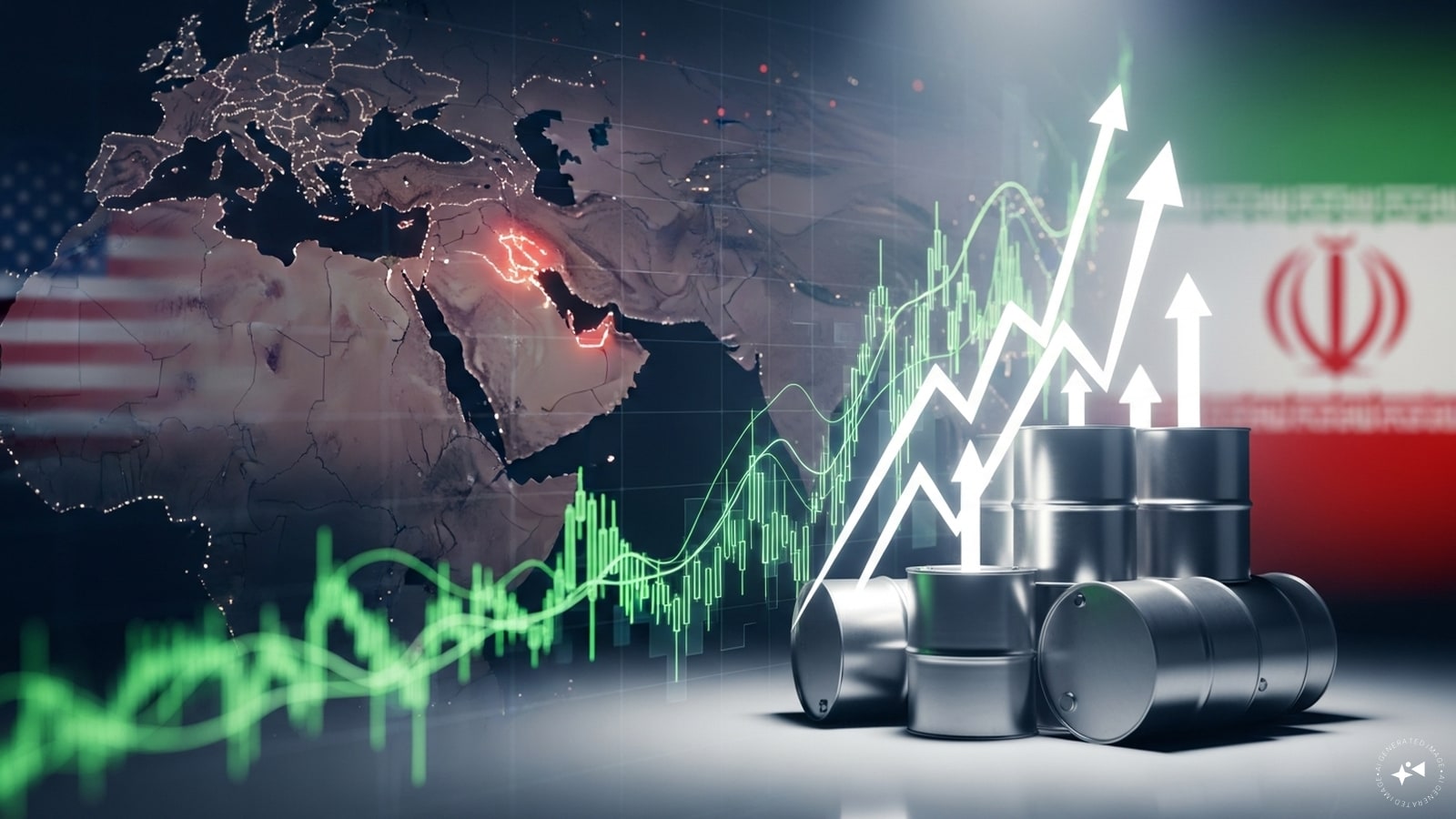
To understand why a room in New York dictates the price of a liter of diesel in Jaipur, you have to look at the global oil map as a series of pressurized valves. For years, Iran has been a valve locked tight by sanctions. The hope leading into these talks was that the valve might finally turn, even just a quarter-inch, allowing millions of barrels of Iranian crude to flood back into a thirsty global market.
Markets hate a vacuum, but they despise uncertainty even more. The moment the news broke that the 21-hour marathon had ended in a stalemate, the "risk premium" surged back into the price of Brent crude. Traders, sitting in air-conditioned offices in London and Singapore, didn't see human faces; they saw a supply-side constraint. They saw a world where the 1.5 million barrels per day Iran could have contributed will remain trapped behind a wall of diplomacy.
When supply is constrained and demand remains a relentless beast, prices rise. It is basic physics applied to human greed and necessity. But for India, the problem is doubled. We aren't just paying for the oil; we are paying for the privilege of buying it in a currency that is losing its grip.
The Rupee and the Weight of the Dollar
The Indian Rupee is currently engaged in a lopsided fight with the US Dollar, and the failed Iran talks just handed the Dollar a brass knuckle.
Consider how this works for a local business owner—let’s call her Anjali—who runs a small electronics assembly unit in Bengaluru. Anjali needs to import components from overseas. Because oil prices are denominated in Dollars, when oil goes up, the global demand for Dollars spikes. This makes the Greenback stronger and the Rupee weaker.
Anjali sits at her desk, refreshing a currency exchange site. She sees the Rupee slip from 83 to 84, then edge toward 85 against the Dollar. To the casual observer, a one-rupee difference seems like a rounding error. To Anjali, it is the difference between hiring two new technicians or letting one go.
She is caught in a pincer movement. On one side, the cost of transporting her goods is rising because of the oil surge. On the other, the cost of the parts themselves is rising because her currency has less "meat" on its bones. This is the "twin deficit" problem stripped of its academic jargon: it is simply the reality of a nation that buys more than it sells, paying for its necessities with a currency that the world currently views as a risky bet.
The Ghost of 1979 and the Fear Factor
The tension in those 21 hours wasn't just about centrifuges or frozen assets. It was about the ghost of the 1970s. The older generation of policymakers remembers the oil shocks that paralyzed the West and sent developing economies into tailspins. They know that the Middle East is a powderkeg where a single spark—or a failed conversation—can ignite a bonfire that burns through the savings of a middle-class family halfway across the globe.
The markets were betting on a "de-escalation." They wanted a reason to believe that the Strait of Hormuz would remain a peaceful transit point for the world's energy. Instead, they got a reminder that the grudge is alive and well.
When talks fail, the "fear trade" takes over. This isn't rational math. It is a collective, primal instinct among investors to move their money into "safe havens." Usually, that means pulling money out of emerging markets like India and dumping it back into US Treasury bonds.
As the capital leaves Indian shores, the Rupee loses its support system. It is like a house where the foundation is being slowly chipped away while the storm outside gets louder. The Reserve Bank of India can intervene, sure. They can dip into their war chest of foreign exchange reserves to prop up the currency, but that is a finite solution to an infinite problem. You cannot fix a diplomatic drought with a garden hose.
The Ripple Effect on the Kitchen Table
If we move from the trading floor to the kitchen floor, the narrative becomes even more grim. Inflation is not an abstract percentage; it is a thief.
When oil prices rise, everything that requires a truck, a ship, or a plane to move becomes more expensive. The tomatoes in the mandi, the milk delivered at dawn, the school bus fees—they are all, in essence, liquid oil. If the 21-hour talks had succeeded, we might have seen a cooling effect. A "peace dividend" that would have allowed the central bank to lower interest rates, making home loans cheaper and giving families a bit more breathing room.
Instead, the failure in New York guarantees that the "higher for longer" mantra will persist. Interest rates will stay stubborn. The dream of a new apartment or a first car drifts just a few inches further out of reach for millions of young professionals.
There is a psychological toll to this as well. When the news cycle is dominated by failed statesmanship and soaring costs, the collective mood of a nation shifts from "growth" to "survival." People stop spending on the extras. They hoard. They worry. And that lack of velocity in the economy is a silent killer of dreams.
The Invisible Stakes of a Cold Room
The tragedy of the 21-hour failure isn't just a missed opportunity for a headline. It is the cumulative loss of potential.
Imagine the 1.5 million barrels of Iranian oil as a giant battery that could have powered global recovery. Instead, that battery remains disconnected. The world continues to run on a flickering grid, waiting for the next round of talks that might never happen.
The diplomats who walked out of the Waldorf Astoria likely went to sleep in comfortable beds, protected by the very states they represent. They will return to their capitals, file their reports, and prepare for the next stalemate. They are insulated from the volatility they create.
But for Mukesh the truck driver, and Anjali the entrepreneur, and the millions of others who wake up to check the price of the day, there is no insulation. They live in the raw wind of global failure.
They are the ones who pay for the 21 hours of "no."
As the sun sets over the Arabian Sea, the lights of Mumbai begin to flicker on, powered by energy that is getting more expensive by the minute. In the quiet of the evening, if you listen closely, you can almost hear the sound of a currency losing its grip, a soft sliding noise against the backdrop of a world that couldn't find a way to say yes. The mahogany table in New York is empty now, but the bill for that emptiness has already been sent.
It is waiting in your mailbox. It is reflected in your fuel gauge. It is the cost of a conversation that ended in a sigh.