The coffee in your mug is currently warmer than the steel hulls passing through the Musandam Peninsula, but it wouldn't exist without them. Neither would the plastic casing of your phone, the fertilizer growing your breakfast, or the fuel keeping the lights on in the room where you sit. We live in a world built on a fragile blue ribbon of water. It is twenty-one miles wide at its narrowest point. This is the Strait of Hormuz. It is the jugular vein of the global economy, and right now, two men in very different suits are staring at a map of it with a shared, cold intensity.
Keir Starmer and Donald Trump do not agree on much. One is a product of the methodical, cautious British legal system; the other is a creature of high-stakes American real estate and television. Yet, behind the heavy doors of recent diplomatic summits, the ideological friction has been replaced by a singular, mechanical focus. They are discussing the logistics of fire. Specifically, how to prevent the world’s most vital waterway from being snapped shut like a book.
The Ghost in the Machine
Consider a hypothetical crane operator in the Port of Fujairah named Hassan. He doesn’t care about the nuances of "integrated deterrence" or "carrier strike group deployment." He cares about the vibration of the controls in his hands. Every day, he watches the behemoths pass—tankers carrying two million barrels of crude oil each. If those ships stop moving, Hassan’s world doesn't just slow down. It breaks.
The Strait of Hormuz handles roughly 21% of the world’s petroleum liquid consumption. If a single mine is dropped into those waters, or if a drone swarm originates from the jagged Iranian coastline, the insurance premiums for those ships don't just rise. They vanish. No insurance means no sailing. No sailing means the "just-in-time" supply chain that delivers your Amazon packages and your heating oil collapses within seventy-two hours.
Starmer and Trump aren't just talking about ships. They are talking about the ghost in the global machine: the fear that the modern world is actually just a series of fragile pipes, and someone has their hand on the valve.
The New Math of War
For decades, the math of protecting the Strait was simple. You parked a massive American aircraft carrier in the vicinity, and the sheer weight of that steel served as a silent "no." But the math changed. The proliferation of low-cost, high-impact technology has democratized destruction. A drone that costs less than a used sedan can now threaten a billion-dollar destroyer.
In their private briefings, the Prime Minister and the President-elect have been presented with a grim reality. Reopening the Strait isn't a matter of if it can be done, but at what cost. To clear the water of sophisticated, "smart" mines requires weeks of painstaking work by specialized vessels. During those weeks, the global markets would experience a seizure.
The military options on the table involve a shift from defensive patrolling to "proactive neutralization." This is the polite, diplomatic way of saying that the U.S. and the UK are prepared to strike the launch sites on land before the drones ever take flight. It is a gamble of escalation. Starmer, the lawyer, weighs the legality of pre-emptive action. Trump, the negotiator, weighs the leverage.
The Invisible Stakes of a Cold Radiator
We often treat "military options" as something that happens on a grainy screen in a command center. We see the green glow of night vision and the silent bloom of an explosion. We forget the heat. We forget the cold.
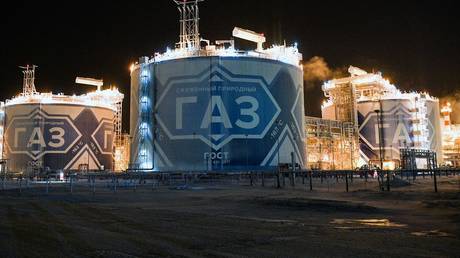
If the Strait closes, the price of Liquefied Natural Gas (LNG) skyrockets. Qatar, one of the world's largest exporters of LNG, sends almost all of its volume through that narrow gap. For a family in a drafty terrace house in Manchester, or a retiree in a suburb in Ohio, the talk between Starmer and Trump is actually about whether they can afford to turn on their heater in February. It is about whether the local supermarket can afford the diesel to bring milk to the shelves.
This is the "human element" that policymakers often strip away to make the decisions easier to stomach. But the stakes are found in the grocery bills and the gas station queues. The conversation isn't about glory. It is about preventing a global heart attack.
The Engineering of Deterrence
Behind the rhetoric, the technical reality is a game of cat and mouse played in the dark. The UK’s Royal Navy, though smaller than in centuries past, remains a world leader in mine countermeasures. Their "Hunt-class" ships are made of glass-reinforced plastic to avoid triggering magnetic mines. They are silent hunters.
The U.S., meanwhile, brings the hammer. Trump’s approach favors "overwhelming presence"—the idea that if you make the threat of retaliation terrifying enough, the enemy won't move. But in the narrow, crowded waters of the Gulf, where civilian dhows mingle with massive tankers and fast-attack missile boats, there is no room for error. A single nervous sailor with a finger on a trigger can start a war that neither London nor Washington truly wants, but both are now preparing to fight.
The collaboration between the two leaders suggests a realization that neither can do this alone. The UK provides the specialized "surgical" tools and the regional diplomatic ties; the U.S. provides the raw, kinetic power.
The Weight of the Decision
Imagine the silence in the room when the maps are rolled up.
Starmer knows that any British involvement in a Middle Eastern conflict is politically radioactive at home. He carries the weight of history—the long shadows of past interventions that didn't go as planned. He needs the Strait open for the sake of the UK economy, but he cannot afford a quagmire.
Trump operates on a different frequency. He views the Strait as a bottleneck that should have been solved years ago. His frustration is with a global system that he believes relies too heavily on American muscle without paying the "membership fee." His talk of military options is often a precursor to a demand for a better deal, but in the Strait of Hormuz, there is no "deal" with a mine.
The two men are looking at the same problem from opposite ends of the telescope. One sees a legal and diplomatic puzzle to be solved with precision; the other sees a physical obstruction to be cleared with force.
The Ripple Effect
The world is currently held together by the assumption of movement. We assume the ship will arrive. We assume the light will turn on. We assume the price of a loaf of bread will be roughly what it was last week.
That assumption is the luxury of peace.
When Starmer and Trump discuss "military options," they are acknowledging that the luxury is expiring. They are preparing for a world where the movement of goods is no longer a given, but a hard-won victory. They are talking about the possibility of sailors—young men and women from Liverpool and Long Island—standing on decks in the blistering heat of the Gulf, staring at the horizon for a signature of smoke.
The Strait of Hormuz is not just a geographical feature. It is a test of will. It is the place where the abstract theories of geopolitics meet the hard, cold reality of survival.
As the sun sets over the Musandam Peninsula tonight, the water looks calm. It reflects the orange glow of the sky, hiding the sensors, the cables, and the steel lurking beneath the surface. Somewhere in a quiet office, a pen moves across a map, drawing a line that could determine the cost of living for billions of people who will never know the names of the ships they depend on.
The blue ribbon is tightening.