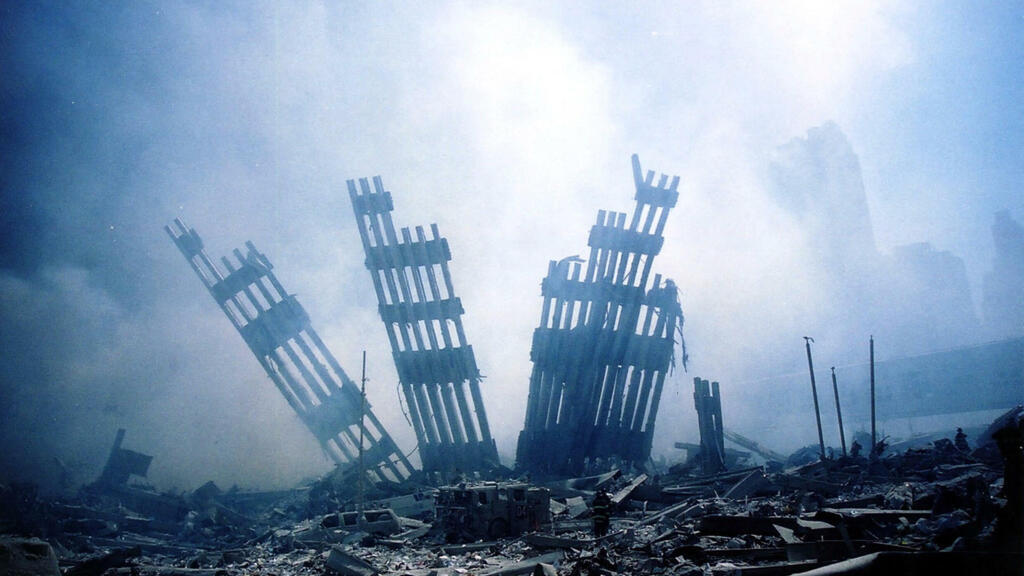
Twenty-five years after the towers fell, the smoke has long cleared from Lower Manhattan, but a quieter particulate remains suspended in the air. It settles over dinner tables in Paterson, inside corner stores in Queens, and across college campuses from Brooklyn to Buffalo.
As New York marks a quarter-century since September 11, 2001, the official narrative focuses on resilience, memorialization, and the architectural rebirth of the skyline. Yet for millions of American Muslims, this milestone is less about closure and more about an ongoing reckoning with a quarter-century of institutionalized suspicion.
The collective trauma of that Tuesday morning transformed an entire demographic from neighbors into suspects almost overnight. That transformation was not merely social; it was codified into law, broadcast into living rooms, and baked into the mechanics of American security.
Understanding how that stigma took root requires looking past the immediate grief of autumn 2001. The backlash was not a spontaneous outburst of public anger that faded with time. It was an organized, state-sanctioned apparatus that reshaped civic life in the United States.
Federal agencies mapped communities, informants infiltrated mosques, and surveillance programs targeted ordinary citizens based entirely on their faith and ethnicity. The message communicated to American Muslims was blunt and unambiguous. Belonging was conditional. Loyalty had to be continuously proven.
When the Patriot Act passed with overwhelming congressional support, it created a legal architecture that treated civil liberties as negotiable during times of crisis. Secret detentions, immigration raids, and the freezing of Muslim charities sent a clear signal. Charitable giving, a pillar of Islamic faith, was suddenly viewed through the lens of terrorist financing. Community leaders found themselves navigating a minefield where normal religious practice could be construed as radicalization.
The public sphere mirrored this policy shift. Media coverage relied heavily on flat, menacing tropes. The composite image of the Muslim American shifted from a diverse group of doctors, cab drivers, students, and engineers to a monolithic foreign threat. Television dramas and news broadcasts reinforced the idea that an entire population bore collective guilt for the actions of a few extremists.
This environment trickled down to the playground and the workplace. Children grew up learning how to answer invasive questions about their religious beliefs from peers and authority figures alike. Job seekers debated whether to Anglicize their names on resumes to avoid algorithmic or human bias.
Decades later, the physical surveillance may have evolved or receded into the background, but the cultural residue persists. The normalization of Islamophobia became a template for other forms of xenophobia and political exclusion. It proved that in moments of acute national anxiety, constitutional protections could easily be set aside for specific communities.
Twenty-five years on, the generation that was born around the turn of the millennium—those who have no personal memory of the attacks—still inherit the psychological toll. They grow up knowing that their community's patriotism is continually subjected to a higher burden of proof than that of their fellow citizens.
Commemorating a tragedy of this magnitude demands honesty. Acknowledging the architectural and emotional rebuilding of New York City is necessary, but it is incomplete without confronting the collateral damage inflicted upon the nation's own social fabric. True remembrance requires facing the ways fear fractured our democracy, leaving wounds that twenty-five years of official rhetoric have failed to heal.


