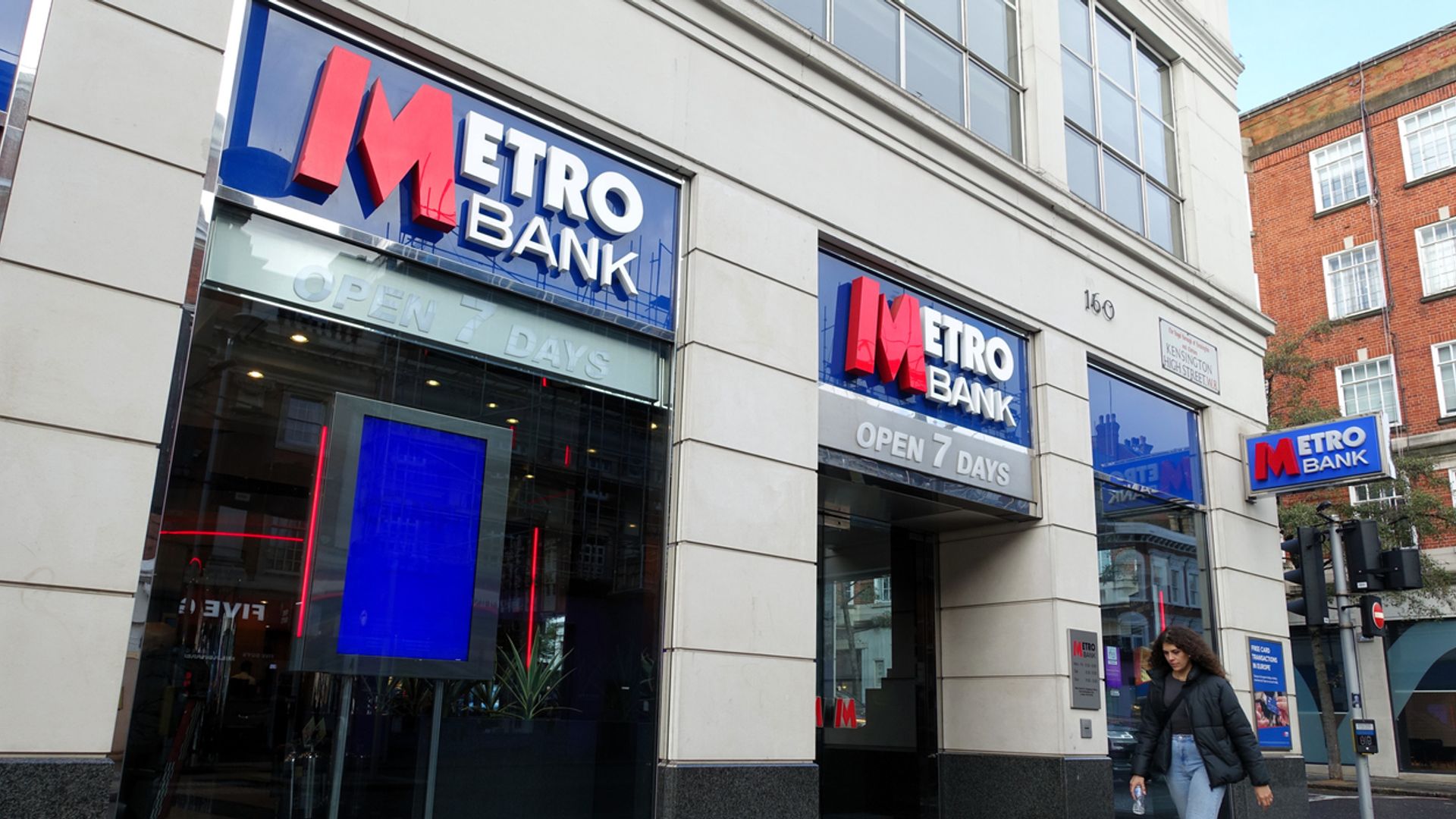
The Smell of Fresh Coffee on the High Street
Walk into a Metro Bank branch on a Saturday afternoon, and you might forget you are standing inside a financial institution. Dogs trot across the polished floor toward water bowls. Children line up to drop coins into a noisy sorting machine called Money Magic. Staff hand out lollipops behind glassless counters designed to make you feel like a welcome guest rather than a suspect asking for a loan.
When Metro Bank launched in 2010, it was the first new high street lender to open in Britain in over a century. The vision was radical in its simplicity: stay open late, print bank cards instantly on site, and treat customers like human beings instead of account numbers. For a public still reeling from the financial crash, it felt like a breath of fresh air in a room that had been stale for decades. Also making headlines lately: Global Value Chains Are Not Thriving They Are Just Getting More Expensive.
Across town, another challenger was sharpening its own tools. Aldermore quietly built its reputation not on free coffee or dog treats, but on backing the people the traditional banking machine routinely ignored: small business owners, property developers, and self-employed builders trying to buy their first homes.
Both institutions were born out of a rebellion against the country's dominant banking oligarchy. Both promised to disrupt a system that seemed untouchable. Further information into this topic are explored by Investopedia.
Now, those two former rebels are looking across the room at each other, weighing the price of survival.
A Two Billion Pound Marriage of Convenience
Behind closed doors, Metro Bank has been exploring a potential merger with rival challenger Aldermore in a deal that could be worth roughly two billion pounds. On paper, the mathematics make immediate sense. Metro brings a network of high-profile physical branches and a loyal base of retail deposits. Aldermore brings a solid balance sheet packed with lucrative specialist mortgages and commercial loans.
Together, they would form a heavy hitter capable of going toe-to-toe with the legacy giants that still control the vast majority of Britain's wealth.
To understand why this potential union matters, step out of the boardroom for a moment and look at the life of someone like David.
David runs a family-owned logistics firm in the Midlands. Imagine him sitting at his kitchen table at eleven at night, staring at a spreadsheet while his coffee grows cold. His business is growing, but his cash flow is stretched thin. He needs three new delivery vans to honor a fresh contract.
He goes to his long-standing legacy bank, where he has held an account for twenty years. A computerized algorithm evaluates his request in four seconds, flags a temporary dip in revenue from two years prior, and rejects his loan application. No human being looked at his balance sheet. No manager called to ask about his expanding customer list.
In desperation, David turns to a challenger bank. A credit officer actually reads his file, speaks to his accountant, understands the local trade, and approves the funding. David gets his vans. His drivers keep their jobs. The local economy keeps humming along.
When challenger banks falter or consolidate, it is people like David who eventually pay the price. Less competition in the market inevitably means tighter lending criteria, higher interest rates, and fewer doors to knock on when the computer says no.
The Crushing Weight of Capital Rules
How did two promising insurgents end up needing each other so badly? The answer lies in the unglamorous, highly technical world of regulatory capital requirements.
Banking is fundamentally a game of balance. A bank takes short-term deposits from savers and turns them into long-term loans for home buyers and businesses. To ensure the system does not collapse when things go wrong, regulators require banks to hold a specific cushion of capital against every loan they issue.
Here is where the game becomes rigged against the newcomers.
The mega-banks—the titans that have dominated the market for generations—are allowed to use their own internal models to calculate the risk of their loans. Because they possess centuries of historical data, regulators permit them to hold significantly less capital against a standard residential mortgage.
A challenger bank, lacking those massive historical data vaults, is forced to use standardized regulatory formulas. These off-the-shelf calculations treat challenger loans as riskier, forcing smaller institutions to set aside much larger cash reserves for the exact same mortgage.
Think of it as two runners entering a marathon. The legacy bank gets to run in high-tech carbon-fiber shoes, while the challenger is forced to wear heavy combat boots.
Metro Bank spent years running as fast as it could in those combat boots. Then came the stumbles. An accounting error in 2019 shocked investors and wiped out a massive portion of its market valuation. Subsequent capital restructurings kept the lights on, but the aggressive growth model of opening giant, expensive high-street branches became increasingly difficult to sustain in a world where everyone manages their money on a smartphone.
Aldermore, owned by South Africa's FirstRand group, maintained a steady course by focusing on higher-yielding specialist markets, but it lacks the brand visibility and deposit-gathering power of a physical retail footprint.
A merger would be a tactical attempt to strip off those heavy boots. By combining balance sheets, the joint entity could streamline operational costs, pool capital resources, and achieve the critical mass required to extract better terms from the market.
The Human Cost of Consolidation
When two large financial entities decide to combine, corporate press releases always trumpet phrases like cost synergies and enhanced shareholder value.
Translate those terms into real life, and the picture looks very different.
Cost synergies almost always mean redundant job roles. It means two head offices merging into one, leaving hundreds of operational staff waiting anxiously to learn if their badges will still work next month. It means analyzing high-street branches to see which locations overlap, raising the very real prospect of shuttered doors on local town centers that have already lost their post offices and department stores.
Consider the teller who knows the elderly customer by name—the customer who walks into the branch every Tuesday because it is the only human conversation they will have all week. If that branch closes in the name of corporate efficiency, something subtle but vital vanishes from the community.
Scale offers survival, but it almost always demands a piece of the soul that made the institution unique in the first place.
The Shifting Boardboard Strategy
Small banks face a stark choice today. They can stay small, nimble, and vulnerable, exposed to every shift in interest rates and regulatory demands. Or they can grow bigger through consolidation, taking on the bureaucratic weight and complexity of the very giants they set out to defeat.
If Metro Bank and Aldermore complete this transaction, it will mark the end of an era for the first wave of post-crash challenger banks. The dream was never just to build another big bank; it was to prove that banking could be fundamentally different.
The reality of modern finance is relentless. Scale rules everything. Without massive balance sheets, the cost of regulatory compliance, technology upgrades, and deposit acquisition will slowly grind smaller players into dust.
As executive teams meet behind closed doors to hash out valuations and legal frameworks, the true test of this potential merger will not be found in the two billion pound price tag. It will be found in whether a bigger, merged bank can remember why it was built in the first place—or whether the former rebels simply become the new establishment.