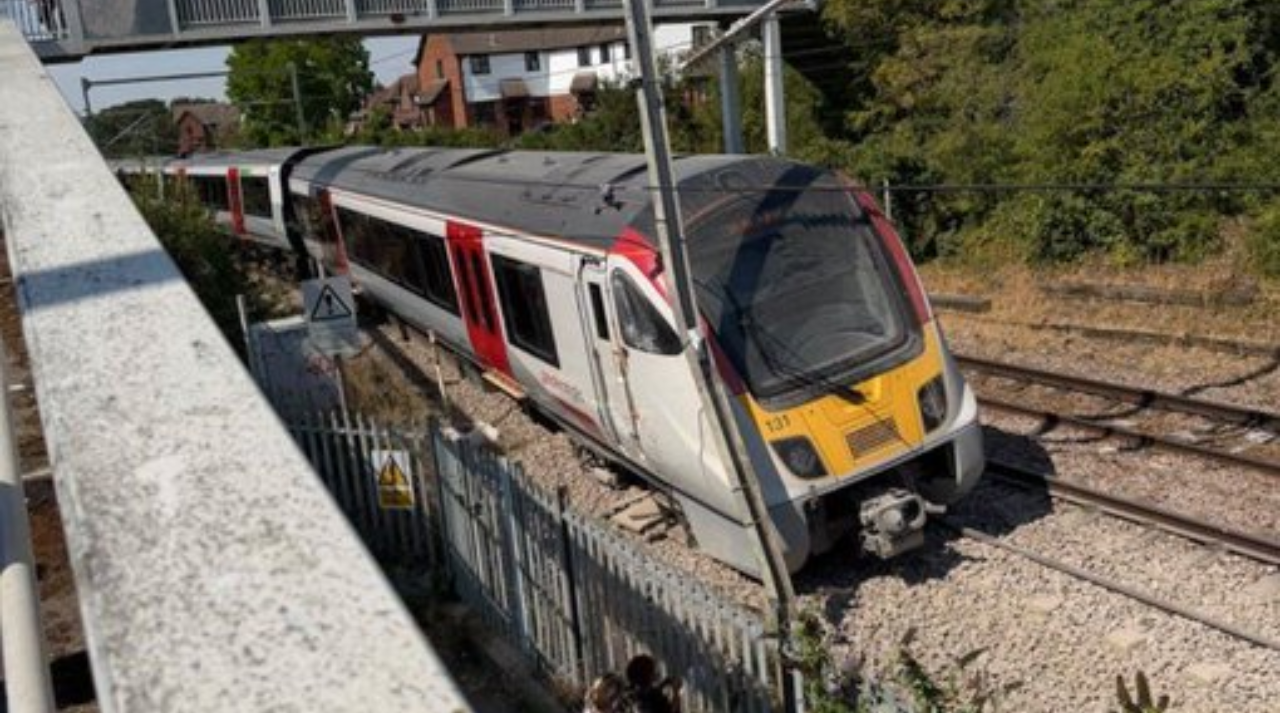
Another day, another breathless news cycle about steel wheels leaving the rails in Southeast England. Two incidents in twenty-four hours. No injuries. Yet the immediate reaction from the peanut gallery is predictable panic, calls for urgent inquiries, and hand-wringing over antiquated infrastructure. Everyone wants to point a finger at a broken system. Everyone wants to demand absolute perfection from a mechanical network operating across a densely populated, centuries-old geography.
They are asking the wrong question entirely.
The lazy consensus in modern rail discourse assumes that a zero-tolerance approach to track anomalies equals optimal safety. It does not. In complex engineering systems, chasing zero failures through hyper-regulation and endless bureaucratic oversight creates a brittle environment where minor incidents trigger maximum hysteria, while systemic adaptation grinds to a halt.
I have spent two decades walking ballast shoulders, auditing asset management plans, and watching boards panic the second a flange climbs a frog. I have seen organizations blow millions on redundant diagnostic layers while missing the forest for the trees. When you treat every routine operational hiccup as an existential crisis, you stop engineering for resilience and start engineering for compliance.
Let us look at the mechanics without the emotional baggage.
The Myth of Absolute Perfection
When a train derails at low speed with zero injuries, the mainstream media treats it like a tragedy waiting for its final act. Safety advocates scream about underfunding. Politicians demand heads roll.
Stop.
A steel wheel running on a steel rail is an inherently dynamic, high-friction, imperfect interface. Thermal expansion, micro-defects in metallurgy, ballast settlement, and minor track geometry shifts happen every single day. Modern rail networks manage millions of axle loads daily. When thousands of tons of locomotive and rolling stock interact with the earth, microscopic variances are guaranteed.
The standard public assumption is that a derailment means someone screwed up. A negligent engineer, a cheapskate operator, a sleeping signalman. This is flat-out wrong. In a probabilistic system, minor off-nominal events are statistical certainties over long enough timelines.
When operators build a culture terrified of minor, non-injury incidents, they incentivize a very specific type of corporate pathology. They encourage paperwork compliance over operational common sense. Crews spend more time ticking boxes to protect themselves from liability than understanding the physical reality of the trackbed beneath them.
Why Over-Regulation Breeds Brittleness
Let us trace what happens when regulators react to back-to-back minor incidents by tightening speed restrictions and adding mandatory inspection layers.
On paper, it sounds prudent. In practice, it clogs the arteries of the network.
- Capacity Compression: When you slow trains down preventatively across an entire region because two isolated incidents occurred, you disrupt timetables, crowd platforms, and force freight onto overcrowded roads—which are statistically orders of magnitude more dangerous than rail.
- Resource Misallocation: Maintenance budgets are finite. Chasing every phantom risk means diverting capital away from high-priority structural renewals toward endless, performative checks that do little to alter baseline risk profiles.
- The Feedback Loop of Fear: Frontline workers stop trusting leadership. When every minor wheel drop is treated like a national disaster, workers learn to bury near-miss data or gloss over minor anomalies out of fear of a witch hunt.
Real safety is not about eliminating every minor anomaly. Real safety is about system resilience. It is about how quickly a network absorbs a shock, keeps passengers safe, and restores service without melting down into institutional panic.
Dismantling the People Also Ask Fallacy
If you look at search queries surrounding recent rail incidents, you see the same panicked tropes repeated by algorithms and anxious commuters alike:
- Are UK trains getting more dangerous?
- Why are derailments happening so often?
- Is privatization to blame for rail infrastructure decay?
Let us answer these head-on, without the political spin.
Are UK trains getting more dangerous? No. Statistically, rail remains one of the safest modes of mass transit ever devised by human engineering. Your drive to the station is infinitely more hazardous than sitting in a carriage while a bogie drops an inch off the running edge.
Why do incidents feel more frequent? Because visibility is higher, the news cycle demands continuous crisis generation, and safety thresholds have narrowed to the point where minor events that would have been ignored in 1974 now trigger national news alerts.
Is privatization the root cause? That is the favorite crutch of ideologues on both sides. Private operators do not control the underlying track architecture in the same way they control onboard catering—infrastructure management in the UK has cycled through various state-backed and semi-privatized models for decades. The problem is not who owns the asset ledger; the problem is an institutional risk-aversion culture that penalizes transparency and rewards bureaucratic theater.
The Uncomfortable Truth About Risk Management
Here is the contrarian reality that nobody in the Department for Transport wants to admit: trying to eliminate every minor derailment through legislative fiat makes the entire system more fragile.
Imagine a scenario where an airline grounded its entire global fleet every time a tire scuffed a runway marking during taxiing. The airline would go bankrupt in a week, and millions of travelers would be stranded. Yet that is precisely how we treat the railway network. A low-speed drop off the rails with zero injuries is the operational equivalent of a minor tire scuff. It demands a technical investigation, not a national panic attack.
When we scream for heads to roll over a zero-injury, low-speed event, we teach system operators to prioritize public relations over engineering reality.
We need to reframe how we talk about rail safety. We need to stop treating every mechanical hiccup as moral failure.
Accept that steel wheels on steel rails operate in the physical world, not a sterile laboratory.
Stop punishing operators for transparency when minor anomalies occur.
And stop letting pearl-clutching headlines dictate national infrastructure policy.
Fix the track, clear the line, let the trains run, and grow up.