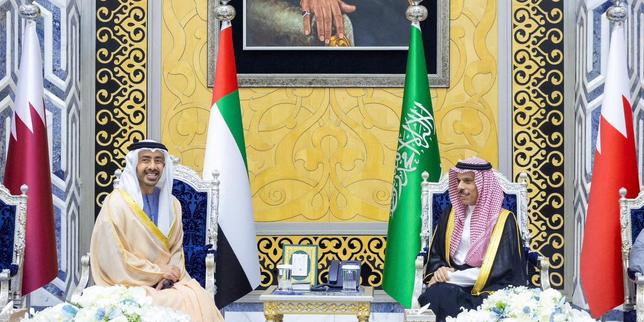
The friction between Abu Dhabi and Riyadh is no longer a quiet boardroom disagreement. It is a fundamental shift in the tectonic plates of Middle Eastern power. For years, the United Arab Emirates (UAE) has signaled its growing discomfort with the constraints of OPEC+, but recent internal maneuvers suggest the nation is preparing for a future where its interests no longer align with the Saudi-led status quo. This isn't just about production quotas. It is a calculated move to monetize massive oil reserves before the global energy transition renders them worthless, even if it means breaking the most powerful cartel in history.
The narrative often focuses on a simple "defiance" of Saudi Arabia, but that misses the structural reality of the Emirati economy. Abu Dhabi has spent billions of dollars expanding its production capacity to 5 million barrels per day. Under current OPEC+ restrictions, nearly a third of that capacity sits idle. For a nation aggressively diversifying its sovereign wealth and building a post-oil infrastructure, leaving billions in potential revenue underground to prop up a price floor favored by Riyadh is becoming an untenable sacrifice.
The Divergent Roads of Two Petro-Giants
To understand the current tension, one must look at the math. Saudi Arabia requires oil prices to stay near $80 per barrel to fund its ambitious Vision 2030 projects, including the trillion-dollar city Neom. Riyadh needs price stability above all else, which necessitates strict production cuts to offset fluctuating global demand.
The UAE operates on a different timeline. While they also seek high prices, their primary objective is market share and volume. They have successfully positioned themselves as a global hub for finance, tourism, and technology. Unlike Saudi Arabia, which is trying to build these sectors from scratch, the UAE is already there. Their goal now is to maximize the "last barrel" of oil. If the world is moving toward a low-carbon future, the UAE wants to be the one selling the remaining demand, utilizing their low-cost extraction methods to outcompete more expensive producers.
This creates a zero-sum game within the alliance. Every barrel the UAE is told to keep in the ground is a barrel they fear they may never get to sell.
The Murban Factor
A critical, often overlooked element in this divorce is the launch of Murban Crude futures on the ICE Futures Abu Dhabi (IFAD) exchange. By creating its own regional benchmark, the UAE has effectively moved to de-link its oil from the pricing whims of others.
- Transparency: Murban is a light, sour crude that is now traded openly.
- Independence: Having a benchmark allows the UAE to sell directly to Asian markets with more flexibility.
- Influence: It challenges the hegemony of the Saudi-weighted benchmarks that have dominated the Gulf for decades.
This was not the move of a loyal subordinate. It was the move of a sovereign player establishing its own financial ecosystem.
The Strategic Cost of Silence
For decades, the UAE followed the Saudi lead to maintain a unified Arab front. That unity has been eroded by a series of geopolitical pivots. From the normalization of relations with Israel via the Abraham Accords to differing strategies in the Yemeni conflict, Abu Dhabi has proven it is willing to pursue a "UAE First" policy.
In the oil markets, this translates to a refusal to be the "swing producer's" silent partner. During recent OPEC+ meetings, Emirati officials have been uncharacteristically vocal about the unfairness of their baseline production levels. They argue that their baseline—the number from which cuts are calculated—is outdated and fails to reflect their massive capital investments in new fields like Upper Zakum.
When the UAE pushes for a higher baseline, they aren't just asking for a few more barrels. They are demanding a redistribution of power. Riyadh views these demands as a threat to the group’s "cohesion," a word often used as a euphemism for Saudi control.
The Invisible Economic War
Beyond the oil rigs, a broader economic competition is simmering. Saudi Arabia recently decreed that foreign companies must move their regional headquarters to Riyadh or lose out on government contracts. This was a direct shot at Dubai, which has long served as the corporate gateway to the Middle East.
Abu Dhabi sees the Saudi attempt to replicate their success not as a friendly competition, but as an aggressive move to cannibalize the UAE's established advantages. If Saudi Arabia is going to compete for the UAE's businesses, the UAE sees no reason to continue subsidizing the Saudi budget by suppressing its own oil production.
The Ghost of Qatar
Analysts often point to Qatar’s exit from OPEC in 2019 as a precedent. However, Qatar was a natural gas powerhouse with negligible oil influence. Their departure was symbolic.
The UAE is different. They are the third-largest producer in the cartel.
If the UAE leaves, or even continues to "quiet quit" by consistently pushing the boundaries of their quota, the cartel’s ability to "manage" the market evaporates. Non-OPEC production from the United States, Brazil, and Guyana is already making it harder for the group to dictate prices. An internal defection from a core member like the UAE would likely trigger a price war similar to the one seen in March 2020, but with no guarantee of a subsequent truce.
Capital Expenditures and the Pressure of Time
The UAE’s national oil company, ADNOC, has earmarked over $150 billion in capital expenditure over the next five years. You do not spend that kind of money to let the resulting infrastructure collect dust.
- Exploration: New unconventional gas and oil finds.
- Downstream: Expanding refinery capacity to export finished products rather than just raw crude.
- Renewables: Investing in hydrogen and solar to claim the "green oil" mantle.
This massive investment creates a "use it or lose it" scenario. The debt and commitments tied to these projects require a steady, high-volume flow of cash. Every month of OPEC-mandated "restraint" eats into the Internal Rate of Return (IRR) for these projects.
The Myth of the Monolith
The Western world frequently views OPEC+ as a monolithic entity controlled by a single switch in Riyadh. This perception is a relic of the 1970s. Today, the organization is a fragile marriage of convenience between nations with wildly different fiscal break-even points and political lifespans.
Russia, the "+" in the alliance, has its own agenda dictated by the need to fund a prolonged military conflict. Their compliance with cuts is often opaque and driven by necessity rather than loyalty to the Saudi crown. The UAE knows this. They see Russia getting away with "maintenance-related" production shifts and wonder why they, a reliable partner with better infrastructure, should be the ones to tighten their belts.
The Logistics of a Departure
Leaving OPEC is not a simple paperwork exercise. It involves a fundamental re-rating of a country's sovereign risk and a shift in how its oil is valued by global refineries. For the UAE, the transition would involve:
- Increased Volatility: Without the "OPEC buffer," UAE crude would be more susceptible to sudden market swings.
- Geopolitical Isolation: Riyadh would likely respond with diplomatic and economic pressure.
- Market Share Aggression: The UAE would have to aggressively price its oil to steal contracts away from established suppliers.
Despite these risks, the alternative—slowly watching their primary resource lose value while their neighbor dictates their economic ceiling—is starting to look worse.
The High-Stakes Poker Game
We are witnessing a high-stakes game of chicken. The UAE uses the threat of departure to extract better terms, higher baselines, and more autonomy. Saudi Arabia uses the threat of a price war to keep everyone in line.
But the UAE has a "get out of jail free" card that the Saudis don't. Their economy is more resilient to a temporary price drop. Their ports, their airlines, and their financial zones provide a diversified cash flow that can weather a storm. Saudi Arabia, despite the hype of Vision 2030, is still an oil-dependent state in the midst of a very expensive transformation.
If a price war breaks out, the UAE might just have the deeper pockets to survive it.
The tension in the Gulf is not a localized spat. It is the first real crack in the foundation of the 20th-century energy order. The UAE is betting that the future belongs to the agile and the independent, not the collective. They are preparing for a world where "cooperation" is just another word for "stagnation."
In the cooling towers of the Ruwais refinery and the glass offices of the Abu Dhabi Global Market, the decision has already been made. The UAE is no longer content to be a junior partner. They are building a future where their valves are wide open, and the rest of the world has to deal with the consequences.
The shift is moving from "if" to "when." Watch the production data from the Al-Dhafra region. When those numbers start to creep up consistently above the agreed ceiling, you’ll know the divorce has moved from the lawyers' offices to the courtroom.