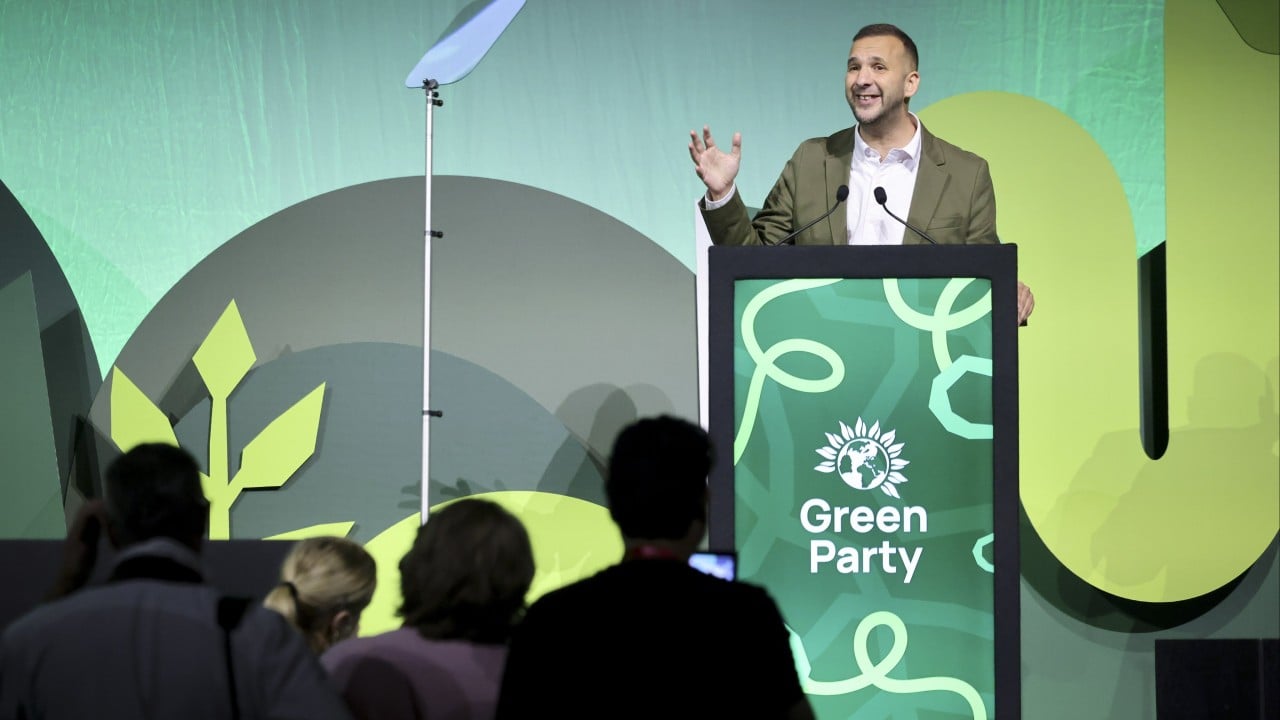
Political parties love symbolic purity tests because they cost nothing and deliver a cheap dopamine hit to the base. The UK Green Party just swallowed this poison pill whole. By formally adopting a policy declaring Zionism to be racism, the party has successfully insulated itself from the messy, grinding labor of actually governing anything while alienating the exact coalition it needs to build a durable majority.
The lazy consensus in the mainstream media frames this move as either a courageous moral stand for human rights or a catastrophic descent into bigotry. Both assessments miss the point. This is not about moral courage. It is about professional activist self-sabotage wrapped in the language of international solidarity.
When a domestic environmental party decides that its primary legislative bandwidth should be consumed by arbitrating a century-old Middle Eastern territorial and national identity dispute, it tells you everything you need to know about its ambitions. It wants to remain a niche protest movement. It wants the purity of opposition without the stain of compromise.
The Lazy Consensus on Political Purity
Let us look at how political commentary usually addresses these moments. Analysts point to factional infighting, internal pressure from vocal campus-style ideologues, and the constant urge for fringe parties to distinguish themselves from mainstream social democrats. They treat the policy as a natural evolution of progressive internationalism.
That framing assumes that political groups act out of rational electoral self-interest. They do not. Left-wing and green movements across Europe are repeatedly hijacked by single-issue maximalism because internal activist structures reward escalation over pragmatism.
To understand why this is a strategic disaster, you have to look at what Zionism actually means to the millions of Jews who hold it as a core component of their identity: self-determination and national survival in an indigenous ancestral homeland, scarred by millennia of European pogroms and the industrial slaughter of the Holocaust. When a political party takes that complex, multi-layered survival framework and flattens it into a singular racial slur, it commits a category error of monumental proportions.
Nationalism and racial supremacy are not synonyms, no matter how hard contemporary campus theorists try to weld them together to fit a neat oppressor-oppressed binary. By ignoring this distinction, the Green Party has traded intellectual rigor for a catchy slogan.
The Mechanics of Alienation
Let us be completely clear about what happens next, because political actions have predictable mechanical consequences.
First, you burn bridges with Jewish communities who have historically been overrepresented in environmental, civil rights, and progressive coalitions. You cannot claim to champion intersectional justice while carving out a mandatory ideological purity test that effectively requires a specific ethnoreligious group to disavow their ancestral heritage as a condition of participation. That is not solidarity. That is an exclusion zone.
Second, you signal to working-class voters who care about local air quality, public transit, energy bills, and ecological restoration that your party is run by detached ideologues playing university debating society. While ordinary citizens worry about the cost of living and the collapse of municipal services, party delegates are spending their weekend drafting foreign policy edicts that carry zero weight in Tel Aviv or Ramallah.
I have watched grassroots political campaigns implode from the inside. The pathology is always the same. A dedicated minority of activists weaponize moral urgency to hijack local branch meetings, driving out moderate contributors who have families, jobs, and actual community ties. The organization shrinks, but the remaining members feel twice as righteous. It is an unsustainable trade-off.
Redefining the Conflict
The standard narrative tells us that opposing Zionism is simply an extension of anti-colonial struggle. This is intellectually lazy. Zionism originated as a national liberation movement for an endangered, stateless people facing total extermination in Europe. Conflating the messy realities of modern Israeli statecraft and military occupation with the foundational concept of Jewish self-determination is a deliberate rhetorical sleight of hand.
You can fiercely criticize Benjamin Netanyahu. You can condemn illegal settlements in the West Bank. You can campaign tirelessly for Palestinian statehood, human rights, and economic self-sufficiency without declaring that the very existence of a Jewish homeland constitutes an inherent racial crime.
When a party collapses those boundaries, it stops being a vehicle for policy and starts becoming a church of ideological conformity. And churches do not win seats in Westminster. They write manifestos that nobody reads and wonder why their vote share stagnates in industrial towns.
The Cost of Performative Radicalism
Real progressive politics requires coalition-building among people who disagree on secondary and tertiary issues. It requires looking at a complex, multifaceted world and finding common ground on tangible metrics of human well-being.
Performative radicalism does the exact opposite. It narrows the tent until only the purest survive, leaving a tiny, insular sect shouting slogans into an empty room.
The UK Green Party had an opening to position itself as a serious, competent alternative to stale establishment politics through an uncompromising focus on ecological transition, energy security, and economic resilience. Instead, it chose the comfort of symbolic warfare. It chose to alienate allies, distract from its core mission, and embrace a policy that achieves nothing for Palestinians while actively poisoning its own domestic credibility.
History will not record this as a bold stand for human rights. It will record it as a masterclass in how to turn a viable political movement into a fringe pressure group.
Stop playing global arbiter when you cannot fix a pothole or win a council seat outside of university towns. Focus on the soil, the air, and the economy you were actually chartered to protect. Until then, expect the electorate to treat your grand declarations with the exact amount of influence they hold in the real world: zero.