We hear a constant stream of news about Ukraine's brilliant drone innovations, from exploding speedboats in the Black Sea to DIY quadcopters taking out multi-million dollar Russian tanks. It's a great narrative. But it ignores a brutal reality. Right now, Russia is winning the tactical engineering war, and it's doing so by scaling simple, deadly fixes while Ukraine struggles with fragmentation.
Serhiy Beskrestnov, a top adviser to Ukraine’s Ministry of Defence widely known by his call sign "Flash," recently broke character from the usual optimistic public briefings. He went public with a stark assessment of nine massive technical deficits that are actively costing Ukraine territory and lives.
When you strip away the political spin, modern warfare isn't just about who has the smartest engineers. It's about who can mass-produce solutions the fastest. Right now, Ukraine's defense ecosystem is brilliant at inventing things in garages, but terrible at building thousands of them under factory conditions. Russia has done the opposite, and it's working for them.
The Guided Bomb Crisis
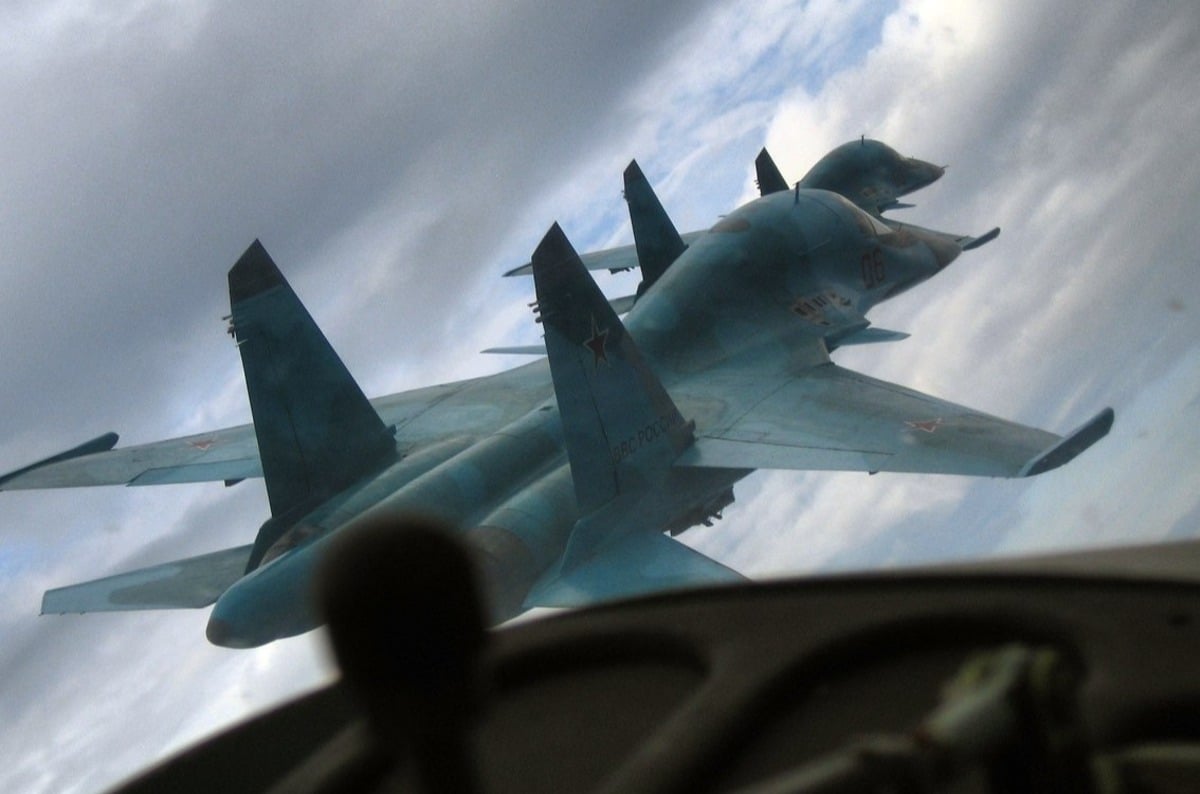
Nothing is tearing through Ukrainian defensive lines right now like Russian guided aerial bombs (GABs). These aren't high-tech missiles. They are massive, old Soviet-era unguided bombs fitted with cheap pop-out wings and GPS guidance kits. Russia drops them from aircraft well outside the range of most Ukrainian air defenses.
Ukraine has no mass-produced, standardized solution to stop these.
The problem is structural. You can't shoot down a two-ton chunk of falling iron with electronic jamming, and Ukraine doesn't have enough Patriot missile batteries to waste on cheap glide bombs. To stop GABs, Ukraine needs to kill the aircraft carrying them before they pull the trigger. That requires domestic long-range ballistic missiles, an area where Ukraine remains entirely dependent on Western allies and their restrictive rules about striking inside Russian territory.
The Battle of the Mesh Modems
The drone war shifted months ago, but the public conversation is still stuck in 2022. Russia is now deploying Mesh modems inside its long-range Shahed and Gerbera strike drones.
In a standard setup, a drone talks directly to a single operator. If you jam that frequency, the drone drops. A Mesh network allows the drones to talk to each other and route signals through an interconnected web of devices spread across the sky. If you jam one drone, it simply routes its data through three others nearby.
Flash explicitly warned that Ukrainian electronic warfare development is moving unacceptably slow against this specific threat. Russian reconnaissance drones are using these networks to feed live targeting data back to artillery units, turning the front line into a zone where anything that moves gets hit within three minutes.
Frontline Cities Are Unprotected
The lack of systemic anti-drone shields has moved past the trenches. Cities close to the border like Kharkiv, Kherson, Zaporizhzhia, and Sumy are experiencing a relentless wave of small drone attacks targeting civilian cars, buses, and infrastructure.
Right now, there's no unified warning system for low-flying FPV (first-person view) drones. An air defense radar built to spot a cruise missile cannot easily track a plastic quadcopter flying fifty feet above the trees. Ukraine desperately lacks mass-produced electronic warfare systems specifically tuned to jam the video frequencies used by these commercial style drones. Russia noticed this gap and has standardized its own video-jamming gear across entire units, while Ukrainian forces rely on mismatched, donated equipment that often jams their own frequencies by mistake.
Blind Interceptors and Exposed Drones
Ukraine has tried using its own drones to hunt down Russian reconnaissance aircraft. It's a cheap, smart way to save expensive surface-to-air missiles. But the tactic is failing due to a lack of tactical radar stations.
Without a dense, overlapping network of small, mobile radars on the ground, Ukrainian interceptor drones are flying blind. They can't find the targets.
At the same time, Ukraine's own medium-range and heavy strike drones are getting knocked out of the sky by Russian anti-drone interceptors. It's a classic technological seesaw. Ukraine built great attack drones, Russia built drones to hunt them, and Ukraine hasn't deployed a reliable defense mechanism to protect its fleet. If Ukraine can't find a way to protect these mid-tier assets soon, its deep-reconnaissance capabilities will collapse.
Hunting the Eyes in the Sky
To fix any of this, Ukraine needs to destroy the Russian tactical radars that act as the eyes of the enemy. Right now, Russian forces are using compact systems like the MSL 20045 radar right at the front, spotting incoming Ukrainian FPV drones from eight kilometers away.
Ukraine does not have a systematic, automated way to locate and destroy these radar pods. Finding them is currently a slow, manual process involving radio-direction finding and visual confirmation by soldiers. By the time a strike is coordinated, the radar has often moved.
Finally, there's the problem of deep strikes. When Ukraine sends drones hundreds of miles inside Russia to hit oil refineries, Russian electronic warfare units completely blanket the area in GPS jamming. Ukraine's long-range drones need alternative navigation systems—like terrain contour matching or optical scene recognition—to find targets without relying on a satellite signal. These technologies exist, but they aren't available at the scale needed to sustain a massive strategic bombing campaign.
Fixing the Factory Pipeline
To turn these nine gaps around, Ukraine’s defense ministry and private tech sector must shift away from the "startup" mentality that characterized the early war. Western allies can help, but the immediate fixes require local industrial changes.
- Enforce frequency standardization: Stop allowing dozens of small workshops to build drones on arbitrary frequencies. The military must dictate strict electronic architecture so defensive jamming teams don't accidentally knock out friendly aircraft.
- Invest in alternative navigation chips: Transition long-range drone procurement exclusively to platforms that utilize visual navigation systems rather than standard GPS modules.
- Prioritize tactical radar production: Shift funding from building more experimental drone prototypes toward scaling simple, rugged ground-based radar units to create a continuous tracking grid along the eastern front.