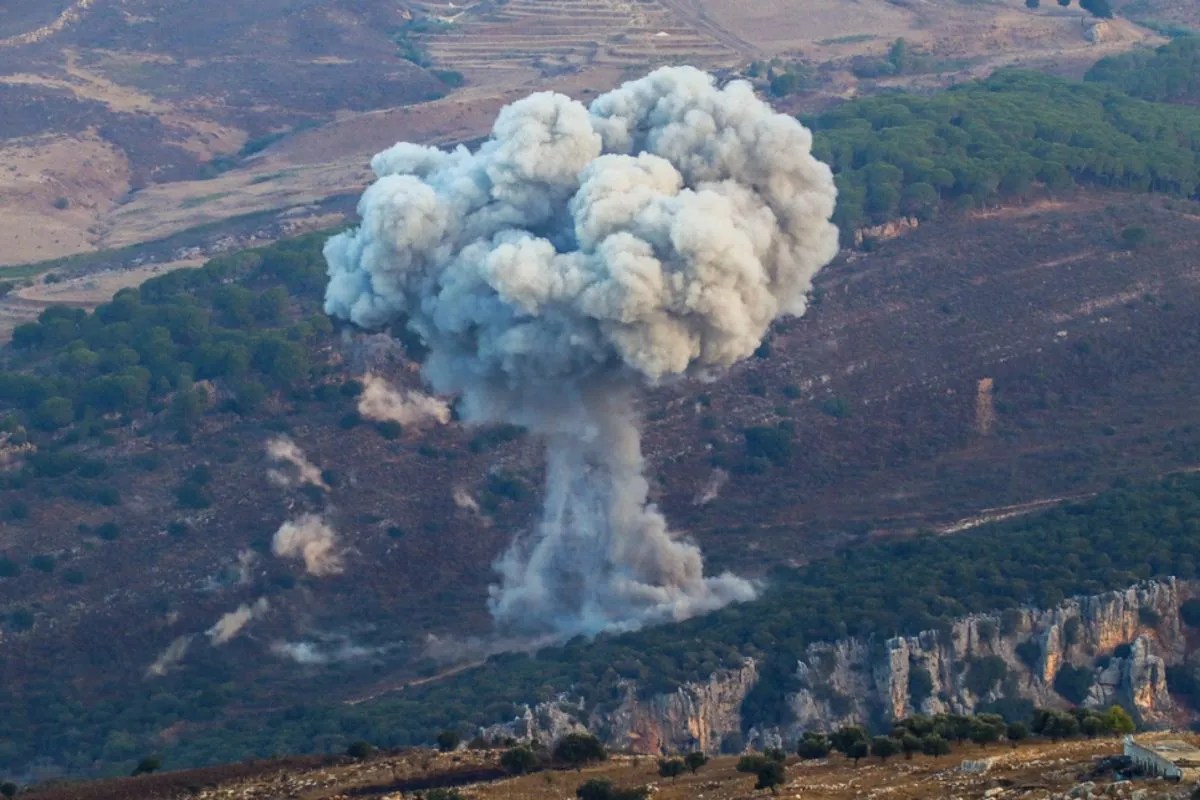
The headlines are carbon copies of one another. "Ukraine Strikes Russian Oil Refineries," "Deep Strikes Paralyze Russian Logistics," "A New Era of Drone Warfare." The consensus is cozy: cheap drones are the David to the Russian Goliath’s slingshot. Military analysts with clean boots talk about "asymmetric advantages" while staring at grainy Telegram footage of exploding storage tanks.
They are missing the point. Entirely.
What we are witnessing isn't the dawn of a new era; it is the desperate acceleration of a war of attrition that Ukraine cannot win through hardware alone. By celebrating the sheer volume of drone strikes, we ignore the brutal reality of the cost-curve. We are watching a high-stakes gambling match where one side is playing with a smaller stack of chips and convinced themselves they’re winning because they just won a few flashy hands.
The Myth of the Cheap Drone
The most dangerous lie in modern defense circles is that drones are "cheap."
When people say $20,000 for a long-range OWA (One-Way Attack) drone is a bargain compared to a $2 million Kalibr missile, they are using "spreadsheet logic." In the real world, the cost isn't just the bill of materials. It’s the electromagnetic spectrum. It’s the localized manufacturing footprint that becomes a target. It’s the brain drain of the few thousand engineers capable of bypassing Russian electronic warfare (EW) suites like Pole-21 or Krasukha-4.
Russia has spent decades preparing for a NATO-style air war. They are the global leaders in signal jamming. When Ukraine launches 50 drones, and 45 are "suppressed" by EW—meaning they drift aimlessly into a field or a civilian apartment block—those drones weren't cheap. They were a total loss of R&D, transport, and tactical surprise.
I’ve seen how these "low-cost" solutions actually work. By the time you factor in the failed sorties, the burned-out launch teams, and the massive investment in Starlink-equivalent alternatives, the price per successful hit begins to rival traditional munitions. We are patting Ukraine on the back for burning through resources that Russia can replace with a single phone call to Tehran or a slight uptick in their domestic assembly lines.
Why Oil Refineries are the Wrong Target
The media loves a good fireball. Hitting a refinery in Ryazan or Nizhny Novgorod looks great on social media. It suggests Russia’s economic heart is bleeding.
It isn't.
Russia is a petro-state with a massive surplus of crude. When you hit a refinery, you aren't stopping the war machine; you are slightly inconveniencing the civilian export market. The Russian military doesn't run on the same commercial-grade diesel that fuels a tractor in Siberia. They have strategic reserves that can last years.
By prioritizing "economic pain" over "operational paralysis," Ukraine is falling into the trap of fighting a long war against an opponent built for long wars. You don't win a boxing match against a heavyweight by occasionally stepping on his toes. You win by stopping his heart or breaking his neck.
A counter-intuitive strategy would ignore the refineries and focus entirely on the rail-to-road transfer points. Russia’s logistics are rail-dependent. If a drone can’t take out a bridge, it should be taking out the specific, hard-to-replace specialized cranes and loading equipment at the hubs. Instead, we see millions of dollars worth of tech spent on denting steel tanks that can be patched in a month.
The Electronic Warfare Wall
Let's talk about the "kill chain." Most observers assume if a drone has the range, it has the capability. This is false.
The Russian EW umbrella is a physical reality that doesn't care about your Twitter threads. As Ukraine scales up, Russia’s automated signal detection scales faster. We are reaching a point of diminishing returns where adding more drones to a strike package doesn't increase the probability of a hit; it just creates more noise for the enemy to track.
- Frequency Hopping: The cat-and-mouse game of radio frequencies is moving so fast that a drone manufactured on Monday is obsolete by Friday.
- Terminal Guidance: GPS-denied environments are the norm, not the exception. If a drone isn't using expensive, high-end optical flow or AI-driven terrain mapping—which spikes the cost—it’s just a flying brick.
- The Attrition of Talent: You can build 10,000 frames. You cannot find 10,000 pilots or mission planners who understand how to navigate a contested EW environment.
The Escalation Paradox
There is a unspoken fear in the corridors of power that these deep strikes are "working" too well. This is the Escalation Paradox.
If Ukraine managed to actually cripple Russia's internal energy grid, the response wouldn't be a Russian withdrawal. It would be the removal of the remaining "gloves." To date, Russia has refrained from destroying certain Western-facing infrastructure in Ukraine that keeps the lights on in Kiev.
The moment a Ukrainian drone causes a truly catastrophic, non-recoverable failure in Russian infrastructure, the return fire will not be drones. It will be the remaining stockpile of hypersonic missiles aimed at the handful of bridges crossing the Dnieper. Ukraine is trading tactical "wins" for a strategic vulnerability that they cannot defend against.
The Actionable Pivot: Stop Chasing the High
If I were advising the Ukrainian Ministry of Digital Transformation, I’d tell them to stop the "Million Drone" PR campaign. It’s a vanity metric.
Instead:
- Weaponize the Logistics of the Drone itself. Force Russia to over-expend on S-400 interceptors. If a $20,000 drone forces the launch of a $1 million interceptor, that is the win. The explosion on the ground is secondary.
- Focus on Sub-Component Sabotage. Stop trying to blow up the whole factory. Use drones to deliver small, specialized payloads that destroy the precision tooling inside the factories. You can replace a roof. You cannot replace a 5-axis CNC machine in a sanctioned economy.
- Go Dark. The publicization of these strikes is a intelligence gift to Russia. Every video uploaded allows their analysts to triangulate launch points and flight paths.
We are cheering for a strategy that is bleeding Ukraine dry under the guise of "innovation." The drone isn't a silver bullet. It's a stop-gap measure that has been elevated to a cult status. Unless the strategy shifts from "making things go boom for the news" to "surgical removal of irreplaceable industrial assets," the drone campaign will be remembered as a massive expenditure of human capital that ultimately failed to move the front lines.
The war won't be won by the side with the most drones. It will be won by the side that stops believing its own propaganda first.
Stop looking at the fireballs. Look at the logistics.